





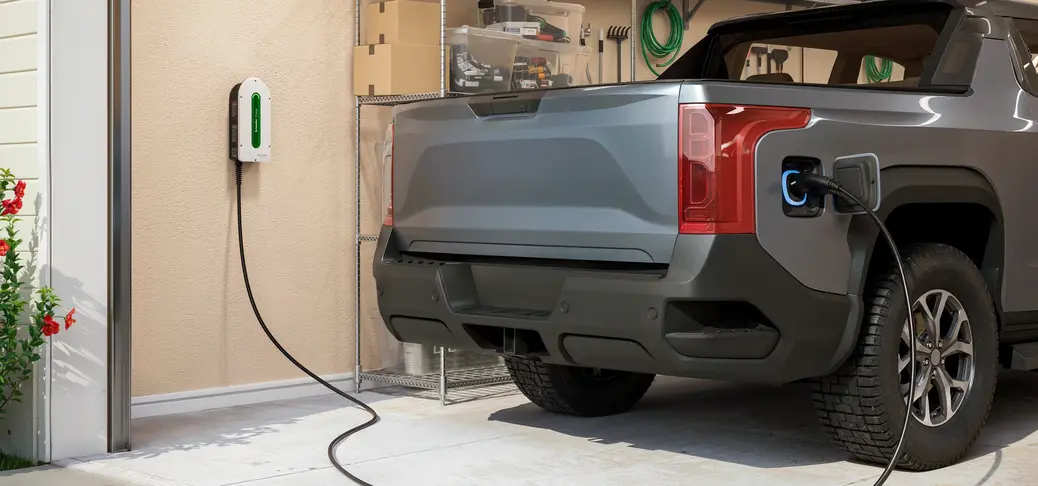
As the Canadian automotive landscape undergoes its most significant transformation in a century, the transition to electric vehicles (EVs) has hit a practical bottleneck: the home garage. With nearly one million plug-in vehicles now navigating Canadian roads, the demand for convenient, residential charging has surged. However, for many homeowners, the dream of “fueling up” overnight is frequently derailed by the prohibitive costs of electrical infrastructure upgrades.
Enter Schneider Electric, which has officially launched "Schneider Charge," a Level 2 home EV charger engineered to bypass the need for costly panel overhauls. By integrating advanced load-management technology, the company aims to democratize EV ownership, ensuring that the transition to sustainable transport doesn’t come with a five-figure hidden price tag.
The Core Innovation: SmartAmp Technology
The primary barrier to home EV charging is rarely the charger itself, but rather the capacity of the home’s electrical panel. In many older or mid-sized homes, the existing electrical service is already near its maximum limit. Adding a high-draw Level 2 charger often necessitates a service upgrade—a process that involves upgrading the utility transformer, replacing the main service panel, and extensive electrical labor. This process can cost homeowners upwards of $9,000, creating a significant barrier to entry.
Schneider Charge addresses this through its proprietary SmartAmp load-management system. This technology acts as an intelligent traffic controller for a home’s electricity. By utilizing current transformers (CTs) installed directly into the home’s electrical panel, the system monitors total household energy consumption in real time.
If the home’s electrical demand spikes—such as when the air conditioning kicks on, the oven is preheating, and the laundry is running—the SmartAmp system automatically throttles the EV charger’s output. When those household loads decrease, the charger seamlessly scales back up. This dynamic adjustment allows homeowners to install a powerful Level 2 charger without exceeding their existing service capacity, effectively eliminating the need for expensive electrical renovations.
Chronology: From Grid Strain to Smart Integration
The evolution of home charging has moved rapidly from basic, "dumb" wall outlets to sophisticated, grid-integrated hardware.
- Early Adoption (2010–2018): EV charging was dominated by slow Level 1 charging (standard 120V outlets) or permanent, non-dynamic Level 2 chargers that required dedicated, high-amperage breakers.
- The Infrastructure Gap (2019–2022): As EV battery sizes grew, the demand for faster home charging increased. Homeowners discovered that their electrical panels were insufficient for 40A or 50A chargers, leading to a rise in "service upgrade" quotes that deterred many prospective EV buyers.
- The Smart Load Revolution (2023–Present): Companies like Schneider Electric began developing software-defined hardware. The development of Schneider Charge focused on removing the reliance on internet connectivity for safety—ensuring the load-management system functions even if the home’s Wi-Fi drops—a critical feature for reliability in Canadian residential environments.
- Launch Phase (2024): Schneider Electric finalized its partnership with the Qmerit installer network to standardize the installation process, culminating in the market launch of the Schneider Charge unit to residential consumers.
Supporting Data: Why Load Management Matters
The economic implications of smart charging are profound. According to industry data, residential charging is the preferred method for over 80% of EV owners. Yet, the Canadian residential housing stock is aging. A large portion of homes are equipped with 100-amp service, which struggles to support the simultaneous operation of modern electric appliances and a high-powered EV charger.
- Power Output: The Schneider Charge delivers up to 11.5 kW / 48A, providing rapid recovery for long-range commutes.
- Climate Resilience: Engineered for the Canadian climate, the unit is rated for operation in temperatures as low as -30°C.
- Connectivity: The Schneider Charge app offers granular control, allowing users to schedule charging sessions to coincide with off-peak, time-of-use (TOU) electricity rates, further reducing the total cost of ownership.
- Compatibility: By offering both NACS (J3400) and J1772 connector options, the unit is future-proofed against the industry’s shift toward the North American Charging Standard.
Official Responses and Strategic Vision
The launch represents a strategic pivot for Schneider Electric, aligning its hardware capabilities with the broader national goal of decarbonizing the transport sector.
"Canadians shouldn’t have to choose between charging at home and taking on an expensive electrical upgrade," said David O’Reilly, vice-president of Schneider Electric Canada. "Our goal is to remove the friction from the EV transition. By building intelligence into the charger, we allow the home’s existing infrastructure to work smarter, not harder."
The company’s decision to partner with Qmerit, a leader in EV infrastructure installation, is a tactical move to ensure safety and compliance. By providing a curated network of certified installers, Schneider Electric aims to provide a "white-glove" experience, ensuring that the SmartAmp CTs are installed correctly and that the home’s electrical system remains balanced and safe.
Implications: The Future of Residential Energy
The arrival of the Schneider Charge has ripple effects that extend far beyond the individual homeowner.
Impact on Real Estate and Retrofitting
As EVs become more prevalent, home charging capacity is increasingly becoming a factor in property valuation. Homes that are "EV-ready" without requiring panel upgrades are positioned to be more attractive to prospective buyers. Schneider’s solution effectively retrofits older homes for the future without requiring the involvement of local utility providers to increase the service drop.
Grid Stability and Demand Response
While the primary benefit is to the homeowner, there is a secondary benefit to the grid. Smart chargers represent the first step toward "Vehicle-to-Home" (V2H) and "Vehicle-to-Grid" (V2G) ecosystems. By managing load in real time, these devices provide the foundation for utility companies to eventually interact with residential chargers to balance grid load during periods of high demand, preventing brownouts and reducing the need for new, carbon-intensive peaking power plants.
Accelerating EV Adoption Rates
The "sticker shock" of electrical upgrades has long been a quiet killer of EV sales. By neutralizing the $9,000 upgrade hurdle, Schneider Electric is addressing the "middle-class barrier." As charging hardware becomes more intelligent and less invasive, the friction involved in making the switch to electric becomes almost non-existent.
The Shift to Software-Defined Hardware
The most significant implication is the shift in how we view electrical infrastructure. Historically, an electrical panel was a static box of wires and fuses. With the integration of software like the Schneider Charge app and real-time load monitoring, the home is becoming a dynamic, managed energy asset. This paves the way for a more holistic approach to home energy management, where solar arrays, battery storage, and EV chargers communicate to maximize efficiency.
Conclusion
The Schneider Charge is more than just a piece of hardware; it is a manifestation of how technology can solve physical infrastructure limitations. By prioritizing the user experience—specifically by removing the need for costly, invasive, and time-consuming electrical upgrades—Schneider Electric has effectively lowered the barrier to entry for the average Canadian household.
As the country continues to march toward its electrification targets, the importance of smart, flexible, and resilient charging solutions cannot be overstated. With its blend of robust, weather-ready hardware and intelligent load-management software, Schneider Charge stands as a critical tool in the decarbonization of the Canadian driveway.
For the consumer, the message is clear: the transition to electric is no longer just for those with modern homes or unlimited budgets. With the right technology, the infrastructure we have is already enough to support the future of mobility. The unit is currently available through electrical distributors and online retail portals, with plans to expand into brick-and-mortar retail locations later this year, signaling a broad push to make the technology accessible to the mass market.
