




In an era of volatile fuel prices and increasing urgency regarding global climate targets, the solution to some of our most pressing economic and environmental challenges may be hiding in plain sight: the posted speed limit sign.
A groundbreaking study published in the journal Communications Sustainability has unveiled a compelling, data-driven argument that the simple act of adhering to traffic laws could catalyze a massive reduction in national fuel consumption and carbon output. Conducted by researchers at the University of Minnesota, the study analyzed a staggering 120 million real-world vehicle trips across the United States, concluding that the cultural habit of speeding is not only expensive for the individual but a significant drain on national resources.
The Magnitude of the Impact: Main Facts
The numbers presented in the study are difficult to ignore. By analyzing the kinetic behavior of millions of vehicles, researchers determined that if every driver in the United States strictly complied with posted speed limits, the nation would save approximately 6.7 million gallons of gasoline every single day.
This translates to a daily savings of $22 million in fuel costs—a windfall for the average American household. Furthermore, the environmental benefits are equally staggering: such compliance would prevent 57,000 tonnes of carbon dioxide from entering the atmosphere daily. To put this in perspective, the researchers noted that this reduction is equivalent to taking roughly 5.5 million passenger vehicles off the road for an entire year.
The Physics of Drag: Why Speeding Fails
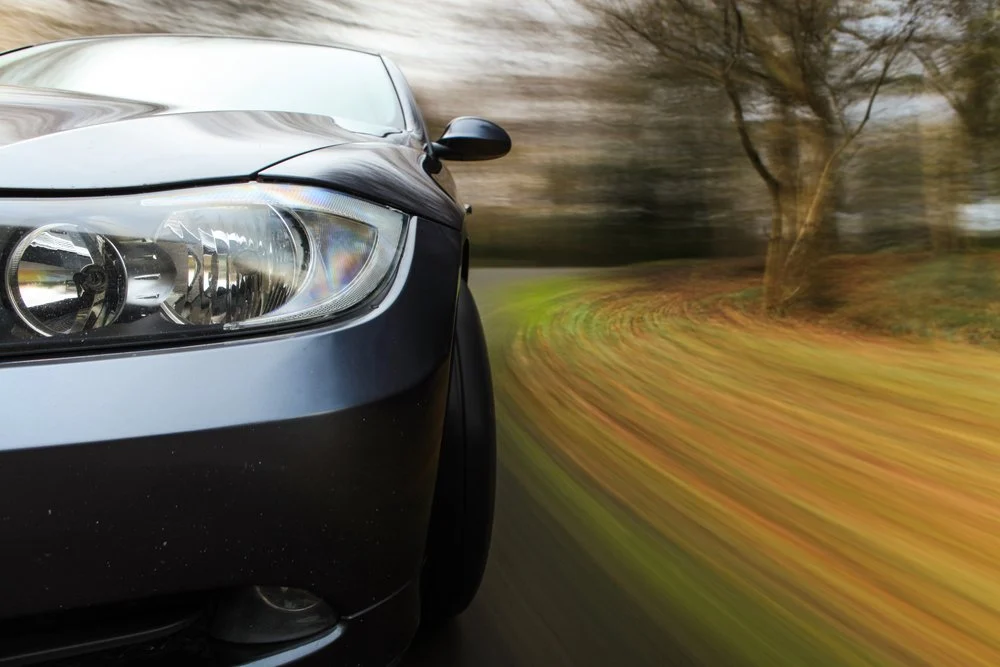
The primary culprit behind these inefficiencies is the fundamental law of physics: aerodynamic drag. As a vehicle’s speed increases, the resistance it encounters from the air rises exponentially, not linearly. This means that a vehicle traveling at 75 mph consumes significantly more fuel than one traveling at 65 mph, as the engine must work harder to overcome the mounting air pressure.
Even minor increases in cruising speed result in a disproportionate penalty in fuel efficiency. The study highlights that the "speeding tax" is a hidden cost, where drivers burn through energy just to push through the air. For many drivers, the trade-off is perceived as a necessary sacrifice for time efficiency, yet the data suggests this perception is a fallacy.
The Myth of the Time Saver: A Chronology of Research
The researchers sought to test the long-held assumption that speeding is a pragmatic choice for time-sensitive commuters. By tracking the duration of over 120 million trips, the team calculated the actual time "saved" by those who exceeded the speed limit.
The results were stark. The study found that drivers who consistently followed posted speed limits would add only about 54 seconds to their daily travel time. Over the course of a week, this amounts to a mere six minutes of additional time on the road. When weighed against the immense fuel costs and environmental damage, the "time-saving" justification for speeding effectively vanishes.
The chronology of the study’s data collection reflects a deep dive into modern driving habits:
- Initial Data Harvest: Over 120 million individual trip records were anonymized and analyzed to establish a baseline of current driving behavior.
- Behavioral Mapping: The team identified that 43.2% of all trips involved at least one speeding event.
- Speed Variance Analysis: The data showed that speeding drivers were, on average, exceeding the limit by a maximum of 11.2 mph and spending nearly 12% of their total trip time in violation of the law.
- Efficiency Modeling: By comparing these real-world trips against a "compliant" model, researchers extrapolated the potential daily and annual savings.
Beyond Compliance: The "Efficient Driving" Paradigm
The study did not stop at mere speed limit compliance. The researchers went a step further to model a more sophisticated, "efficient driving" approach. This model encouraged not just obeying the speed limit, but adopting techniques such as gradual acceleration, smooth deceleration, and strategic coasting rather than the "gas-and-brake" style of driving that characterizes much of modern traffic.
Under this refined scenario, the benefits expanded significantly. The potential daily savings jumped to 8.2 million gallons of fuel, $27 million in consumer costs, and 69,000 tonnes of CO2 emissions. This demonstrates that the mechanical energy wasted by aggressive driving habits is a massive, untapped reservoir of potential conservation.
The Societal and Economic Implications
The implications of these findings are vast, touching on everything from individual household budgets to national climate policy.
Economic Impact
On an annual basis, the study suggests that national compliance with speed limits would save approximately 2.4 billion gallons of gasoline. In a world where fuel prices fluctuate based on geopolitical tensions and supply chain constraints, this level of reduction would act as a powerful buffer for the economy. For the average commuter, this translates to hundreds of dollars in annual savings that could be redirected into the economy.
Environmental Stewardship
The 57,000 tonnes of daily CO2 reduction represents a significant opportunity for the United States to meet its climate commitments. As the transportation sector remains one of the largest sources of greenhouse gas emissions, changing driving behavior offers a "low-hanging fruit" solution that requires no new technology, no expensive infrastructure overhaul, and no subsidies—only a change in driver behavior.
Safety Considerations
While the University of Minnesota study focused primarily on energy and emissions, the researchers noted that speeding carries well-documented safety costs. According to the National Highway Traffic Safety Administration (NHTSA), speed is a factor in approximately one-third of all fatal traffic accidents. By curbing speeding for the sake of fuel efficiency, the secondary benefit of reduced traffic fatalities and injuries would be a profound, life-saving transformation for public safety.
Acknowledging Limitations
In the interest of scientific rigor, the study’s authors acknowledged a key limitation: the research does not account for how traffic dynamics might change if a significant portion of the population suddenly slowed down.
Critics might argue that if everyone drives at the speed limit, traffic flow could potentially tighten or change in ways that might impact travel times differently. However, the study focused on the direct effects of driver behavior on individual vehicle efficiency. The researchers emphasized that even if traffic density shifted, the physical reality of aerodynamic drag remains constant; thus, the fuel savings would likely persist regardless of broader traffic patterns.
Conclusion: A Shift in Perspective
The study published in Communications Sustainability serves as a sobering reminder that our collective habits have an outsized impact on the world around us. We are, quite literally, paying a premium to burn more fuel to reach our destinations a few seconds faster.
As urban centers grapple with congestion and the world seeks to move toward a more sustainable energy future, the path forward may not always require a new engine or a new fuel source. Sometimes, it requires a recalibration of the driver’s mindset. By simply adhering to the limits set on our roads, Americans have the potential to save billions of dollars and make a massive dent in our carbon footprint. The data is clear: the fastest way to a greener future may simply be to slow down.
Image credit: Depositphotos.com
