




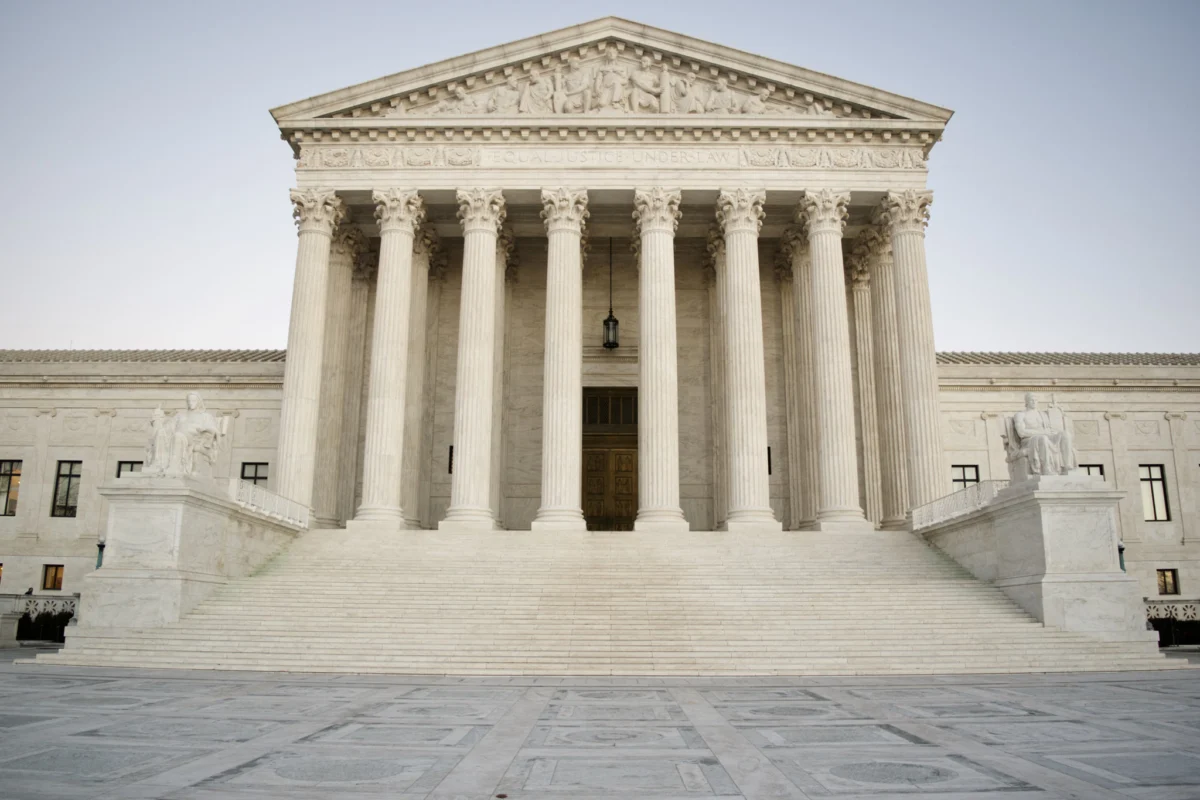
WASHINGTON, D.C. — In a high-stakes legal maneuver that could fundamentally alter the landscape of the upcoming midterm elections, President Donald Trump has formally petitioned the U.S. Supreme Court to intervene in a burgeoning constitutional conflict. The administration is seeking an emergency stay to lift a lower-court injunction that currently prevents the implementation of a sweeping executive order titled, "Ensuring Citizenship Verification and Integrity in Federal Elections."
The petition comes on the heels of a stinging defeat at the U.S. Court of Appeals for the First Circuit, which on Saturday upheld a preliminary injunction shielding 23 states from the federal mandate. At the heart of the dispute is a fundamental question regarding the scope of executive authority and the constitutional sovereignty of states in administering federal elections.
The Core of the Dispute: The Executive Order
Signed in March 2026, the executive order seeks to centralize and tighten federal oversight of the mail-in ballot process—a mechanism that has become a focal point of partisan debate. Under the directive, the Department of Homeland Security (DHS) and the U.S. Postal Service (USPS) would be granted unprecedented administrative authority over state-run elections.
The order mandates three primary pillars of enforcement:
- Standardized Security: States would be prohibited from using any ballot envelopes not explicitly approved by the USPS. These envelopes must feature a "unique Intelligent Mail barcode" to facilitate federal tracking.
- Notification and Vetting: States would be required to notify the USPS of their intent to distribute ballots at least 90 days before an election and must submit a comprehensive list of eligible voters to the federal agency 60 days in advance. Crucially, the order instructs the USPS to withhold delivery of any ballot destined for an individual not appearing on that list.
- Prosecutorial Prioritization: The order directs the U.S. Attorney General to prioritize the investigation and criminal prosecution of any state or local election official who transmits or receives ballots involving individuals flagged as ineligible to vote in federal elections.
Chronology of a Legal Firestorm
The trajectory of this litigation has been rapid, reflecting the urgency felt by both the administration and the state-level plaintiffs as the midterm election cycle approaches.
- March 2026: President Trump signs the executive order, framing it as a necessary measure to ensure the sanctity of federal elections and prevent fraud.
- April 2026: The Democratic National Committee (DNC) files a lawsuit challenging the order, arguing it imposes an unconstitutional burden on the franchise and exceeds the President’s Article II powers.
- June 2026: A coalition of 23 states files a joint lawsuit in the U.S. District Court for the District of Massachusetts, seeking an immediate injunction against the order.
- July 2026 (Early): U.S. District Judge Indira Talwani issues a preliminary injunction, citing the immediate financial and operational harm the order inflicts on state governments.
- July 2026 (Mid-Month): The U.S. Court of Appeals for the First Circuit affirms Judge Talwani’s ruling, citing the irreparable injury to states already in the process of purchasing supplies.
- July 2026 (Present): The administration petitions the Supreme Court for an emergency stay, effectively asking the high court to bypass the normal appeals process and allow the order to take effect.
Constitutional Arguments and Legal Precedent
The 23-state coalition, led by various Democratic Attorneys General, rests its legal challenge on three pillars of constitutional theory: the Separation of Powers, the Elections and Electors Clauses, and the Tenth Amendment’s anti-commandeering doctrine.
The Tenth Amendment and State Sovereignty
The plaintiffs argue that the federal government is attempting to "commandeer" state administrative resources. By forcing states to adopt specific barcode technology and submit voter lists to federal agencies, the states contend the order violates the principle that the federal government cannot compel states to enact or administer a federal regulatory program.
The Elections Clause
The states further argue that the Constitution vests the power to determine the "Times, Places and Manner" of elections primarily in state legislatures, not the executive branch. They contend that because the Constitution grants the President no specific power over election administration, the executive order constitutes a power grab that fundamentally disrupts the federalist balance of power.
The Administration’s Defense
In its filing to the Supreme Court, the Department of Justice (DOJ) argues that the lower court’s injunction is premature. The administration asserts that the lawsuit is "not justiciable" because the order has not yet been fully implemented, suggesting that the states have failed to show a "concrete and particularized" injury.
Supporting Data: The Financial Burden of Compliance
A significant portion of the lower courts’ rulings focused on the tangible, financial impact on the states. Judge Talwani highlighted that for many states, the federal order arrived too late to be integrated into existing procurement cycles.
The state of Massachusetts, for instance, reported that it had already expended $3 million on mail-in ballot envelopes that would be rendered illegal under the new executive mandate. Beyond the raw cost of materials, the court noted that the "hidden costs" of compliance—including the immediate re-training of thousands of local poll workers and the development of new, federally compliant database synchronization protocols—would be an insurmountable hurdle in the months leading up to November.
The First Circuit panel noted that the "administrative chaos" caused by the order would likely lead to voter disenfranchisement, as states would be forced to scramble to meet federal deadlines or risk being unable to mail ballots altogether.
Official Responses and Political Implications
The rhetoric surrounding the petition has been predictably polarized. Administration spokespeople have maintained that the order is a "common-sense integrity measure" intended to modernize the voting process and ensure that the U.S. Postal Service remains an objective arbiter of election materials.
Conversely, the plaintiff states have labeled the order "a transparent attempt to seize control of state elections." In a joint statement, the coalition argued: "If the President is allowed to dictate the mechanics of how states conduct their own elections, the constitutional bedrock of federalism is effectively dissolved."
Legal experts are split on how the Supreme Court may handle the request. While the Court has generally been protective of the executive branch’s broad authority in matters of national security, it has historically been more skeptical of executive interference in matters explicitly reserved for the states.
Broader Implications for Democracy
The implications of the Supreme Court’s decision will extend far beyond the immediate logistical headaches of the 2026 midterms. A ruling in favor of the administration would establish a precedent wherein the President could, through executive fiat, unilaterally reshape the rules of democratic participation. This would likely invite a new era of "election federalism," where the rules of voting vary wildly based on the political alignment of the federal administration.
If the Supreme Court grants the stay, the immediate result will be a chaotic scramble by states to comply with federal regulations in a very short window. If the Court denies the stay, it will effectively preserve the status quo, signaling that the federal government’s reach into the "manner" of elections has a firm, constitutional limit.
As the nation watches, the judiciary once again finds itself in the position of refereeing the fundamental power dynamics between the White House and the states. With the midterms looming, the decision is expected to be one of the most consequential in recent memory, serving as a bellwether for the future of election administration in the United States.
