





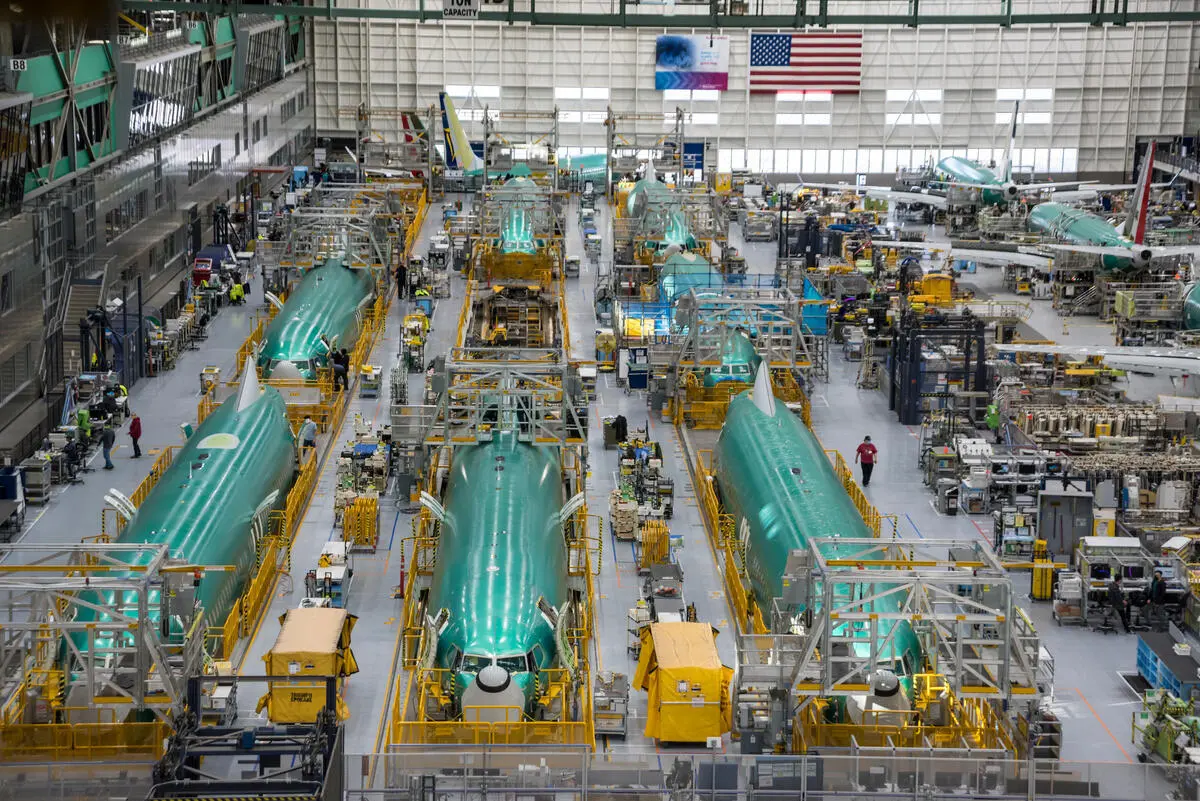
In a long-awaited regulatory development, the Federal Aviation Administration (FAA) has officially granted certification to the Boeing 737 Max 7, the smallest variant of the company’s best-selling, yet historically troubled, 737 Max family. This approval marks a significant technical and reputational milestone for the Chicago-based aerospace giant, coming after a decade of design iterations, safety overhauls, and intense regulatory oversight.
The certification of the Max 7 is not merely a bureaucratic checkbox; it represents the culmination of years of sustained engineering effort to resolve the complex technical issues that grounded the entire Max fleet globally in 2019. By clearing the smallest member of the family for entry into service, the FAA has signaled a degree of confidence in Boeing’s revised design and safety protocols, though the agency remains firm on its commitment to aggressive, on-site supervision of the manufacturer’s operations.
The Long Road to Certification: A Chronology of Challenges
The journey to certifying the 737 Max 7 has been defined by a turbulent history that transformed the aviation industry’s approach to safety.
The Initial Ambition
When Boeing first launched the 737 Max program, the Max 7 was positioned as the successor to the 737-700. It was designed to offer airlines superior fuel efficiency and range, catering to carriers that required a mid-sized jet capable of flying longer, thinner routes. However, the program’s trajectory was fundamentally altered by the global grounding of the Max fleet following the Lion Air Flight 610 and Ethiopian Airlines Flight 302 tragedies.
The Grounding and Redesign
Following the 2019 grounding, the entire 737 Max family was subjected to a level of scrutiny unprecedented in modern aviation. Engineers were forced to revisit the Manoeuvring Characteristics Augmentation System (MCAS), the software feature implicated in the fatal crashes. While the Max 8 and 9 variants were the first to undergo the rigorous recertification process, the Max 7 remained in a state of developmental limbo, requiring additional design reviews and software refinements that mirrored the updates made to its larger siblings.
The Post-Pandemic Push
The COVID-19 pandemic further exacerbated delays, slowing supply chains and limiting the availability of FAA inspectors. Throughout 2021, 2022, and 2023, Boeing navigated a series of technical hurdles regarding the cockpit alerting systems and icing protection requirements. The final certification arrives after months of "sustained work," as described by the FAA, to ensure the Max 7 met the new, elevated safety standards established for the entire 737 Max series.
Technical Specifications and Market Significance
The Boeing 737 Max 7 is designed to seat approximately 138 to 153 passengers, with a maximum capacity of up to 172. Its primary selling point is its range—approximately 3,800 nautical miles—which allows it to operate non-stop on routes that larger jets might find inefficient.
Why the Max 7 Matters
For airlines, the Max 7 fills a critical gap. As legacy fleets of 737-700s reach the end of their service lives, carriers are looking for a direct replacement that offers commonality with the rest of the 737 Max fleet. Pilots who are trained on the Max 8 or 9 can transition to the Max 7 with minimal additional training, offering significant cost savings for airline operators.
Comparative Data
- Length: 116 feet, 8 inches.
- Range: Up to 3,800 nautical miles.
- Efficiency: 20% lower fuel consumption and emissions compared to older 737 models.
- Target Market: Low-cost carriers and point-to-point regional operators.
The certification allows Boeing to begin deliveries to major customers, including Southwest Airlines, which has a massive backlog of orders for the variant. For these airlines, the arrival of the Max 7 is essential for modernizing fleets and controlling operating costs in a fuel-sensitive market.
Official Responses and Regulatory Oversight
The FAA’s statement regarding the certification was notably measured, balancing the approval with a clear message of continued vigilance. "The approval reflects years of sustained work to resolve complex technical issues and complete a thorough review of the airplane’s design and supporting safety analyses," the agency stated on Monday.
The FAA’s "Stay-Put" Policy
Perhaps more important than the certification itself is the FAA’s announcement that it will remain on-site at Boeing’s manufacturing facilities across the United States. This is a departure from historical regulatory practices, where the FAA often delegated a degree of compliance oversight to the manufacturer. By maintaining a permanent presence, the FAA is attempting to regain public and legislative trust by monitoring manufacturing practices and quality control in real-time.
Boeing’s Stance on Transparency
Mike Sinnett, Boeing’s senior vice president of product strategy and development, emphasized the company’s pivot toward a more collaborative relationship with regulators. "We regularly met with the FAA to ensure the company understood the requirements and provided transparency of our progress," Sinnett noted. He characterized the certification as a validation of the company’s rigorous "development programs," suggesting that the internal processes at Boeing have undergone a cultural shift to prioritize safety over speed.
Implications for the Aviation Industry
The certification of the 737 Max 7 has ripple effects that extend far beyond Boeing’s order book.
Restoration of Investor and Public Confidence
For Boeing shareholders, the news is a welcome sign of stability. The Max 7 was the final major piece of the Max family puzzle. With it now cleared, Boeing can focus on stabilizing production rates and addressing the persistent delivery backlogs that have frustrated airline partners for years. However, the company is not out of the woods; recent high-profile incidents involving other Boeing models have left the manufacturer under a microscope, meaning the Max 7 will be watched with heightened scrutiny during its first year of commercial operation.
A New Era of Certification
The FAA’s rigorous process for the Max 7 is likely to become the new industry standard. Future aircraft certifications—not just for Boeing, but for Airbus and Embraer as well—will likely involve longer timelines, more frequent design audits, and a higher degree of direct regulatory involvement. This "new normal" for aviation safety is expected to lead to safer aircraft, though it may also lead to longer lead times for new technology integration.
The Competitive Landscape
While Boeing celebrates this win, the market remains highly competitive. The Airbus A220, a smaller, clean-sheet design aircraft, has been a major competitor for the Max 7. With the Max 7 now cleared for service, the competition between Boeing’s evolutionary 737 design and Airbus’s purpose-built A220 will intensify. Airlines will now be forced to weigh the benefits of fleet commonality (Boeing) against the efficiency and passenger comfort of the A220 (Airbus).
Conclusion: A Turning Point?
The certification of the Boeing 737 Max 7 is a pivotal moment in aviation history. It closes a chapter defined by crisis and opens one that will be defined by the manufacturer’s ability to execute on its promises of quality and safety.
While the engineering team at Boeing has succeeded in proving that the Max 7 is safe for flight, the broader challenge for the company is proving that it can maintain this level of excellence across its entire enterprise. As the first Max 7s begin to carry passengers, the global aviation community will be watching closely—not just the performance of the aircraft’s engines or its flight control systems, but the culture of safety that oversees its operation.
The FAA’s ongoing presence in Boeing facilities is a reminder that the days of "self-certification" are largely over. For Boeing, the path forward is clear: success will be measured by the reliability of the fleet and the absence of further safety concerns. The Max 7 has cleared the runway, but the flight ahead will require careful navigation.
