



WASHINGTON, D.C. — In a move that could reshape modern automotive design, United States safety regulators have announced they will begin developing new federal requirements to ensure drivers and passengers can safely exit vehicles during emergencies.
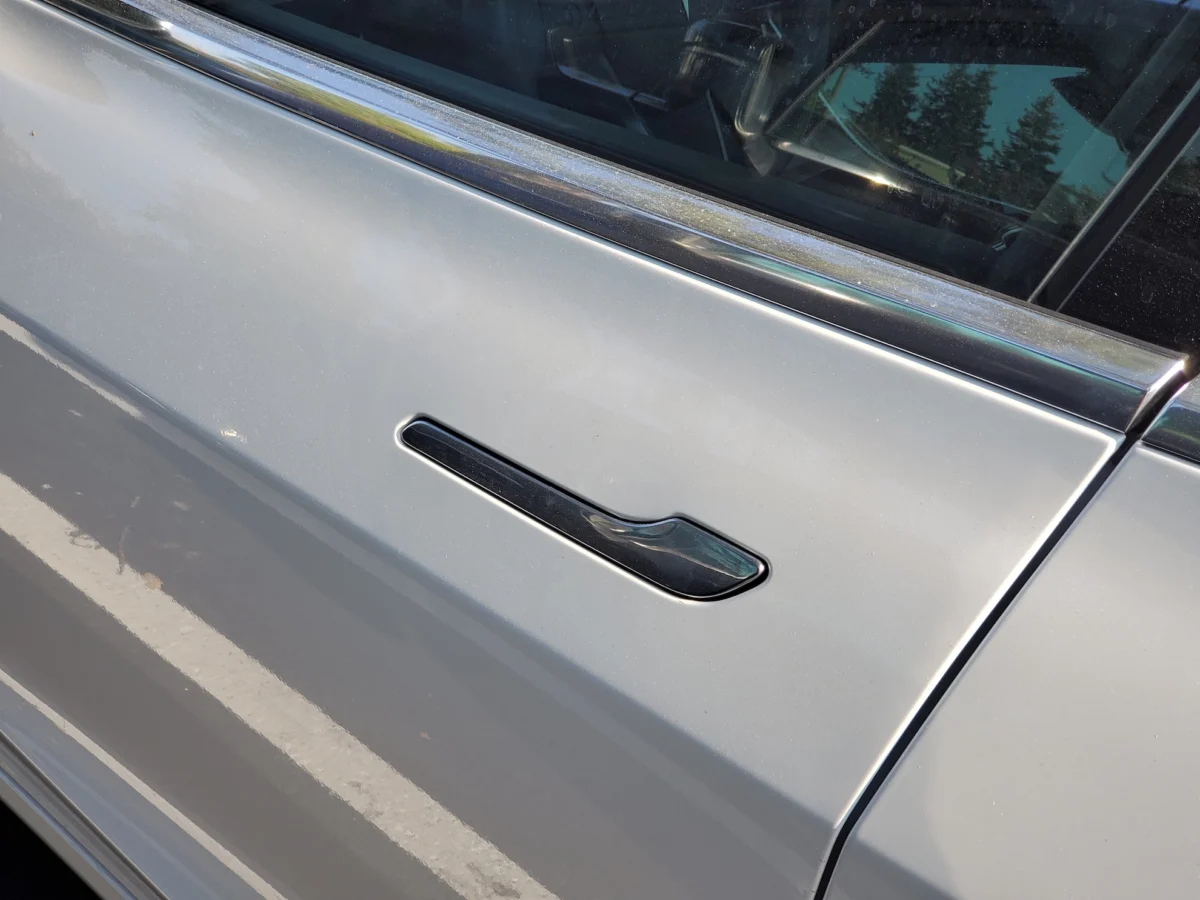
The rulemaking process, initiated by the National Highway Traffic Safety Administration (NHTSA) and detailed in a public regulatory filing, comes in response to mounting safety concerns over flush-mounted, electronically operated door handles. These high-tech entry systems, popularized by Tesla and increasingly adopted across the electric vehicle (EV) industry, have been linked to several high-profile incidents—including fatalities—where occupants became trapped inside vehicles after losing electrical power.
While the agency’s decision represents a critical step toward updating Federal Motor Vehicle Safety Standards (FMVSS), NHTSA cautioned that the initiation of a rulemaking process does not guarantee that final regulations will be implemented. However, the decision signals a growing consensus among regulators that the current safety standards are insufficient for the digital age of automotive engineering.
Main Facts: The Regulatory Push for Egress Standards
On July 23, 2026, NHTSA published a regulatory filing confirming it would begin the process of establishing new safety standards for vehicle doors, locks, and egress mechanisms. The decision was triggered by a formal petition submitted to the agency requesting a safety defect investigation into the emergency mechanical door releases of the 2022 Tesla Model 3.
The petitioners argued that Tesla’s emergency manual release design fails to comply with existing federal motor vehicle safety standards, particularly in high-stress, zero-power scenarios.
Rulemaking vs. Defect Investigation
Rather than opening a narrow, brand-specific defect investigation into Tesla, NHTSA denied the petition’s immediate request but chose a much broader path: initiating industry-wide rulemaking.
The agency explained that the safety challenges associated with electronic door latches and flush-mounted handles are not unique to a single manufacturer. By addressing the issue through rulemaking, any new standards developed will apply to all automakers selling vehicles in the United States, forcing a systemic overhaul of how backup door releases are designed, labeled, and positioned.
Chronology of the Electronic Door Safety Crisis
The transition from mechanical linkages to electronic door latches ("e-latches") has been underway for over a decade, but the safety risks associated with these systems have only recently entered the regulatory spotlight.
[2012–2022]  Rapid adoption of flush, electronic door handles to improve EV aerodynamics.
     │
[Sept 2025]  NHTSA opens investigation into Tesla door handles following 9 lockout reports.
     │
[Oct 2025]   Bloomberg publishes investigation detailing crash entrapments; Rivian announces R2 redesign.
     │
[Late 2025]  Tesla Chief Designer admits the company is working on door handle redesigns.
     │
[Jul 2026]   NHTSA officially denies Tesla-specific petition in favor of industry-wide rulemaking.
The Rise of Flush Handles (2012–2022)
As electric vehicles gained market share, manufacturers prioritized aerodynamics to maximize battery range. Flush-mounted, retracting door handles became an industry hallmark, pioneered by the Tesla Model S and later adopted on the mass-market Model 3, Model Y, and vehicles from rival automakers.
The Lockout Probe (September 2025)
NHTSA opened a preliminary evaluation into Tesla’s door handles after receiving nine distinct reports from owners who experienced sudden door failures. In several of these cases, parents reported being locked out of their vehicles with their young children trapped inside.
The Crash Entrapment Exposé (October 2025)
A damning investigative report published by Bloomberg highlighted a series of terrifying incidents where crash victims and bystanders were unable to open vehicle doors. Unlike standard mechanical handles, electronic handles require electrical current to actuate. In severe collisions where the car’s electrical system was compromised, occupants found themselves trapped in burning or sinking vehicles.
Industry Pivots (Late 2025)
In response to growing public and regulatory scrutiny, electric truck maker Rivian announced it would redesign the interior door handles of its upcoming R2 SUV. The redesign aimed to place the manual release in a highly visible, intuitive location adjacent to the electronic buttons. Around the same time, Tesla’s chief designer, Franz von Holzhausen, publicly acknowledged that the company was working on redesigning its door handle mechanisms.
The Rulemaking Decision (July 23, 2026)
NHTSA formally transitioned the issue from a localized manufacturer problem to an industry-wide regulatory mandate, denying the specific Model 3 petition to pursue systemic rulemaking.
Supporting Data: The Engineering Vulnerability of E-Latches
To understand why federal regulators are intervening, it is necessary to examine the engineering differences between traditional mechanical doors and modern electronic latching systems.
| Feature | Traditional Mechanical System | Modern Electronic System (E-Latch) |
|---|---|---|
| Primary Actuation | Physical cable/rod linkage | Solenoid triggered by electric switch |
| Power Dependency | None (purely mechanical) | High (dependent on 12V/16V low-voltage battery) |
| Emergency Backup | Not applicable (primary is mechanical) | Manual override lever/pull-tab (often hidden) |
| External Access | Pull-to-open handle | Touch sensor, proximity key, or motorized pop-out |
The Low-Voltage Failure Point
In modern EVs and high-tech internal combustion engine (ICE) vehicles, the doors rely on the vehicle’s low-voltage auxiliary battery (typically 12-volt or 16-volt lithium-ion) to power the solenoids that unlatch the doors.
During a severe collision, safety systems are designed to instantly isolate the high-voltage traction battery to prevent electrocution and fire. However, if the impact also damages the low-voltage battery or severs the wiring harnesses routed through the crumple zones, the vehicle loses all auxiliary electrical power. When this occurs:
- The exterior flush door handles remain retracted or unresponsive to touch.
- The interior electronic door release buttons cease to function.
- Emergency responders from the outside cannot open the doors without heavy extrication tools like the "Jaws of Life."
The Human Factors Deficit
While manufacturers include mechanical overrides to comply with existing safety regulations, these backups are often criticized by safety advocates as being poorly designed and counterintuitive.
In many Tesla models, for example:
- Front Seats: The manual release is a physical lever located on the floor-mounted window switch panel. Because it resembles a handbrake or a window control, passengers in panic situations often struggle to locate it.
- Rear Seats: In some models, the emergency release is located inside the door pockets under a removable felt liner, or requires pulling a mechanical cable hidden behind a speaker grille or plastic release tab.
Under panic conditions—such as a dark, smoke-filled cabin following a crash—expecting an occupant to locate and operate these hidden mechanisms is highly unrealistic, human factors experts argue.
Official Responses and Industry Actions
The regulatory filing has drawn immediate reactions from safety advocates, federal officials, and automotive executives.
National Highway Traffic Safety Administration (NHTSA)
In its regulatory filing, NHTSA defended its decision to bypass a narrow defect probe in favor of a broader rulemaking process:
"The agency believes that the safety of occupants attempting to exit a vehicle, or rescuers attempting to assist them, is of paramount importance. Rather than focusing solely on a single model or manufacturer, addressing the design and accessibility of emergency door releases through the formal rulemaking process allows the agency to establish consistent, clear safety standards that will protect all consumers, regardless of the vehicle they drive."
Tesla
While Tesla has not issued an official corporate statement regarding the July 23 filing, the company has previously defended its designs, pointing to its vehicles’ top safety ratings in crash tests. However, the company is quietly preparing for a regulatory shift. Tesla’s Chief Designer Franz von Holzhausen confirmed in late 2025 that engineering teams were actively working on a comprehensive redesign of the company’s door handle and release mechanisms to address usability concerns.
Rivian
Rivian has taken a proactive stance. Following the safety discussions of late 2025, the company announced a pre-emptive redesign of its upcoming R2 SUV platform. Rivian’s updated interior design places the mechanical override lever in the immediate vicinity of the primary electronic button, ensuring that even if power is lost, an occupant’s natural instinct to grab the door handle will lead them directly to the mechanical backup.
Implications for the Automotive Industry
NHTSA’s decision to initiate rulemaking marks the beginning of a complex, multi-year process that will have profound implications for automotive design, manufacturing, and consumer safety.
1. The Redesign of the "Clean" Interior
For the past decade, automotive designers have pursued minimalist, button-free cabin designs. Hidden door handles and flush surfaces were celebrated as triumphs of modern aesthetics. If NHTSA mandates highly visible, labeled, and easily accessible physical door releases, designers will be forced to abandon these ultra-minimalist layouts in favor of tactile, ergonomically obvious safety features.
2. Aerodynamic and Range Trade-offs
On the vehicle exterior, flush door handles play a minor but measurable role in reducing aerodynamic drag, which directly translates to increased highway range for electric vehicles. If regulators mandate that exterior handles must mechanically pop out or remain operable without electrical power during a crash, automakers may have to choose between slightly reduced range or more complex, expensive mechanical engineering solutions.
3. Rewriting Federal Motor Vehicle Safety Standards (FMVSS)
The rulemaking process will likely result in updates to FMVSS 206 (which regulates door locks and door retention components). New amendments could specifically define:
- Visibility Requirements: Mandating that manual release mechanisms be illuminated or painted in a contrasting color.
- Proximity Standards: Requiring the manual backup to be located within a certain distance of the primary electronic switch.
- Intuitive Operation: Banning hidden pull-tabs or mechanisms that require tools or the removal of interior trim to access.
Conclusion
As automobiles transition from mechanical machines into software-defined electronic platforms, the line between convenience and hazard has blurred. NHTSA’s decision to establish new, universal standards for vehicle egress serves as a stark reminder that in the pursuit of high-tech innovation and sleek design, fundamental human safety must remain non-negotiable.
