

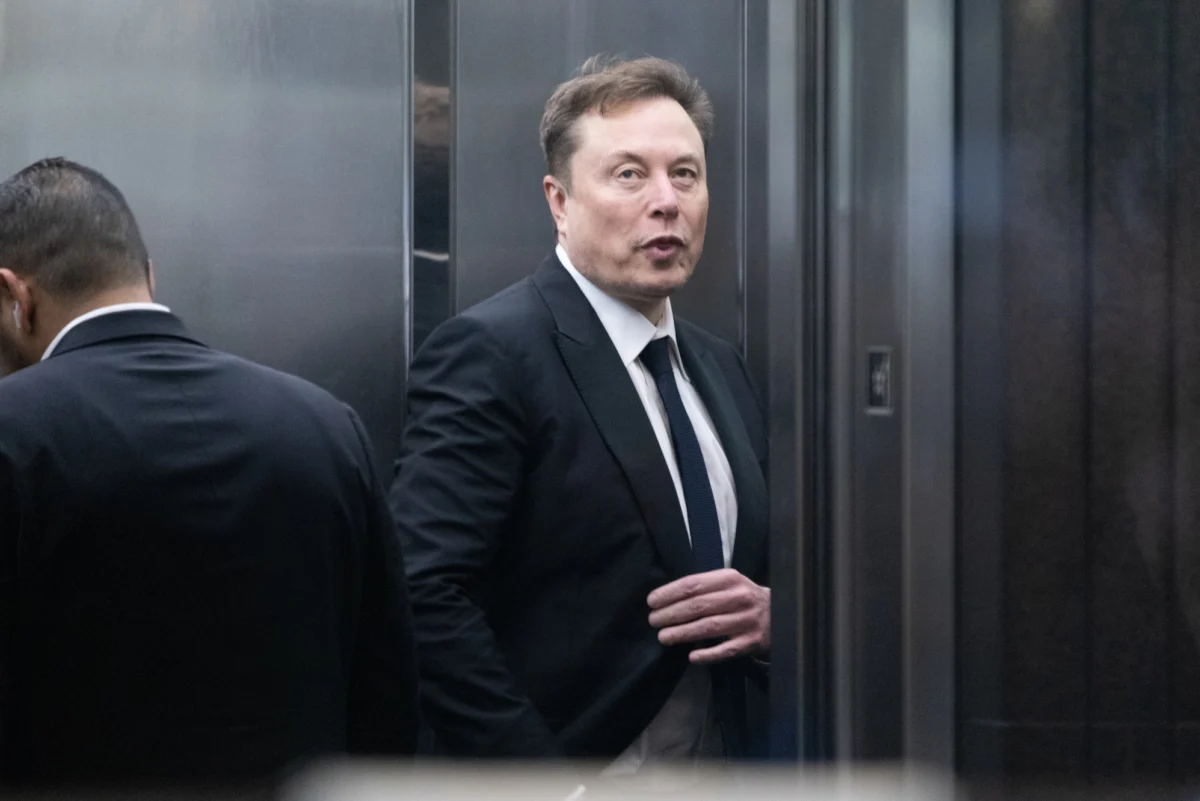
AUSTIN, Texas — Elon Musk, the billionaire founder of Tesla, SpaceX, and The Boring Company, has revived his ambitious vision for ultra-high-speed ground transportation. In a series of statements on his social media platform X (formerly Twitter), Musk claimed that his tunneling startup is actively conceptualizing a "simple precursor Hyperloop" system designed to link the rapidly expanding metropolitan areas of Austin and San Antonio.
According to Musk, the proposed system would dramatically compress travel times along the highly congested Interstate 35 corridor, reducing the roughly 80-mile journey between the two Central Texas cities to under 30 minutes.
The announcement has reignited intense debate among urban planners, transportation engineers, and local policymakers. While proponents view the project as a revolutionary solution to Texas’s mounting traffic woes, critics caution that the proposal may join a growing list of unfulfilled infrastructure promises from the enigmatic entrepreneur.
Main Facts of the Proposal
The core of Musk’s latest transit proposition lies in a technological hybrid: a "precursor Hyperloop." In theory, a fully realized Hyperloop involves passenger pods traveling through sealed, low-pressure tubes utilizing magnetic levitation to achieve near-supersonic speeds of up to 700 mph. A "precursor" system, however, suggests a transitional technology—potentially combining the narrow, concrete-lined tunnels of The Boring Company’s existing "Loop" systems with partial depressurization or advanced propulsion to achieve speeds higher than standard underground road transport, though likely short of true Mach-level velocity.
The primary details of the announcement include:
- The Route: Connecting Austin, the state capital and home to Tesla’s Gigafactory Texas, with San Antonio, the nation’s seventh-most populous city.
- The Promise: A transit time of less than 30 minutes. Driving between the two downtown centers currently takes between 75 and 120 minutes depending on notorious I-35 traffic.
- The Developer: The Boring Company (TBC), Musk’s infrastructure and tunnel construction services firm founded in 2016.
- The Catalyst: Musk’s comments were prompted by an AI-generated video shared on X, which depicted a utopian, highly industrialized sci-fi future complete with off-world human colonies. Reposting the video, Musk declared, "This is the future we shall bring into being," before pivoting to the concrete proposal for the Texas transit corridor.
Chronology of Elon Musk’s Hyperloop and Tunneling Ventures
To understand the feasibility of the Austin-to-San Antonio proposal, it is necessary to examine the decade-long timeline of Musk’s involvement in high-speed transit and the operational history of The Boring Company.
[2013] Musk publishes "Hyperloop Alpha" whitepaper, open-sourcing the concept.
  │
[2016] The Boring Company (TBC) is founded to solve urban traffic via tunneling.
  │
[2017-2019] TBC announces high-profile projects in Chicago, LA, and NY-to-DC.
  │
[2021] TBC opens the "Vegas Loop" beneath the Las Vegas Convention Center.
  │
[2022-2024] Major municipal projects in Chicago and Maryland are quietly abandoned.
  │
[Sept 10, 2026] TBC raises $3 billion in a funding round led by UAE investors.
  │
[Sept 20, 2026] Musk announces the Austin-San Antonio "precursor Hyperloop."
The Genesis: The 2013 Whitepaper
In August 2013, Musk published a 57-page whitepaper titled "Hyperloop Alpha." He described the system as a "fifth mode of transportation" (alongside planes, trains, cars, and boats) that would be immune to weather, collision-free, twice the speed of a conventional airplane, and self-powering via solar panels. Declaring himself too busy with SpaceX and Tesla to build it himself, Musk open-sourced the design, encouraging other startups and academic institutions to develop the technology.
The Pivot to Tunneling (2016–2020)
Frustrated by Los Angeles traffic, Musk founded The Boring Company in late 2016. The company’s initial marketing focused on two distinct concepts:
- The Loop: An underground public transit system where passengers are carried on autonomous electric platforms (skates) inside tunnels at speeds up to 150 mph.
- The Hyperloop: The vacuum-tube system for longer-distance, inter-city travel.
Between 2017 and 2019, TBC entered talks with several major municipalities. Plans were announced for an express loop to Chicago’s O’Hare International Airport, a high-speed tunnel system beneath Los Angeles, and a massive East Coast Hyperloop connecting Washington, D.C., Maryland, Philadelphia, and New York City.
Unfulfilled Promises and the Las Vegas Oasis (2021–2025)
By 2022, nearly all of TBC’s major municipal projects outside of Nevada had quietly stalled or been canceled. Investigative reports, including a prominent exposé by The Wall Street Journal, revealed that the company had repeatedly backed out of preliminary agreements or failed to secure necessary environmental and regulatory permits.
The sole exception remains Las Vegas, Nevada. In 2021, TBC opened the Las Vegas Convention Center (LVCC) Loop. Rather than autonomous high-speed pods or vacuum tubes, the system utilizes human-driven Tesla Model 3 and Model Y vehicles traveling through 1.7 miles of paved, 12-foot-diameter tunnels at speeds capped at roughly 35 to 40 mph. While TBC has secured approvals to expand this system into a broader "Vegas Loop" connecting the Strip and Harry Reid International Airport, it remains a low-speed subterranean roadway rather than a Hyperloop.
The 2026 Financial Rebirth
Despite past setbacks, TBC secured a massive financial lifeline on September 10, 2026, raising $3 billion in a funding round led by prominent sovereign wealth and investment entities from the United Arab Emirates (UAE). This capital injection valued the tunneling firm at a premium, providing the liquidity necessary to transition from localized municipal "Loops" back to capital-intensive, long-distance Hyperloop research and development. Ten days later, Musk made his announcement regarding the Texas corridor.
Supporting Data and Technical Challenges
The proposed Austin-to-San Antonio corridor presents a unique mix of demographic demand and daunting geological and engineering hurdles.
The Demographic Demand of the Texas Triangle
The metropolitan areas of Austin and San Antonio are rapidly merging into a single, massive metroplex.

| Metric | Austin Metro Area | San Antonio Metro Area | Combined Corridor |
|---|---|---|---|
| Estimated Population (2026) | ~2.6 Million | ~2.8 Million | ~5.4 Million |
| Projected Population (2050) | ~4.0 Million | ~3.8 Million | ~7.8 Million |
| Daily I-35 Commuters | N/A | N/A | ~150,000+ vehicles/day |
With Interstate 35 consistently ranked among the most congested highway corridors in the United States, the economic cost of traffic delays in the region runs into billions of dollars annually. Conventional high-speed rail projects, such as the long-delayed Texas Central project linking Dallas and Houston, have struggled with land acquisition and political resistance, leaving a vacuum for alternative high-speed transit proposals.
Geological and Environmental Hurdles in Central Texas
Constructing an underground transit system through Central Texas presents severe engineering difficulties:
- The Edwards Aquifer: The region sits atop the Edwards Aquifer, a highly sensitive karst limestone aquifer that provides drinking water to millions of Texans. Tunneling through this formation risks contaminating the water supply and disrupting subterranean ecosystems. Any tunneling project would face intense scrutiny from the Environmental Protection Agency (EPA) and local groundwater conservation districts.
- Geotechnical Variability: The geography between Austin and San Antonio transitions from hard Edwards limestone to highly expansive clay soils. Tunnel boring machines (TBMs) would need to be continuously adapted to handle both rock formations and shifting, water-saturated soils.
- Right-of-Way and Depth: To achieve the straight paths required for high-speed travel, TBC would need to tunnel deep beneath private property, necessitating thousands of subterranean easements and sparking complex legal battles over property rights.
Official Responses and Public Reaction
The reaction to Musk’s announcement has been split along familiar lines, reflecting the broader polarization surrounding his various business ventures.
The Boring Company’s Stance
Shortly after Musk’s post on X, the official account for The Boring Company shared the statement, writing that the company "would be excited and honored to build this massive infrastructure project." Inside sources suggest that TBC engineers have already begun preliminary routing studies using data acquired during the construction of the Tesla Gigafactory in Austin, which features its own localized underground utility tunnels.
Silence and Skepticism from Public Officials
Local municipal leaders and state agencies have reacted with marked caution. The Texas Department of Transportation (TxDOT) has not issued an official endorsement of the project. Historically, Texas officials have welcomed Musk’s capital investments—most notably the relocation of Tesla’s corporate headquarters to Austin and the expansion of SpaceX’s Starbase facility in Boca Chica—but state planners remain highly skeptical of privately funded subterranean transit.
An anonymous senior official within the Austin Transit Partnership noted:
"While we welcome innovative solutions to our regional mobility crisis, we must prioritize proven, high-capacity public transit. Low-capacity tunnels utilizing individual passenger vehicles do not solve the fundamental geometry problem of urban congestion."
Implications: Speculative Technology vs. Public Infrastructure
The renewed push for a Texas Hyperloop raises fundamental questions about the future of American infrastructure, the role of sovereign wealth in domestic transit, and the philosophical drivers behind modern tech conglomerates.
The Influence of Sovereign Wealth
The $3 billion funding round led by the United Arab Emirates is highly significant. The UAE has long expressed interest in Hyperloop technology, having partnered with various foreign startups to study routes between Abu Dhabi and Dubai. By backing The Boring Company, Gulf investors are positioning themselves at the forefront of proprietary transit technologies. However, this reliance on foreign capital for critical domestic infrastructure projects is likely to attract regulatory scrutiny from federal bodies, including the Committee on Foreign Investment in the United States (CFIUS).
The Private-Public Transit Debate
Musk’s critics argue that his hyperloop and tunnel proposals serve a secondary, more cynical purpose: disrupting public transit initiatives. In her recent critiques of the tech industry, prominent historian Jill Lepore argued that tech leaders like Musk often operate as "bad readers" of the science fiction that inspires them.
Lepore suggests that Musk’s visions are heavily influenced by mid-century pulp science fiction and comic books—genres that frequently champion rugged individualism and private, technological solutions over collective public institutions. Critics point out that by promoting futuristic, speculative systems like the Hyperloop, tech executives can inadvertently or intentionally undermine public support and funding for traditional, high-capacity light rail and bus rapid transit systems that are ready to be built today.
The Technical Reality: Loop vs. Hyperloop
Ultimately, the success of the Austin-San Antonio "precursor Hyperloop" will depend on whether The Boring Company can transition from a slow-speed utility tunneling company to a true high-speed aerospace-grade transit developer. If the "precursor" system is merely an elongated version of the Las Vegas Loop—wherein Teslas drive through narrow tubes at highway speeds—it will do little to alleviate the mass transit needs of five million Central Texans.
If, however, the influx of UAE capital allows TBC to successfully commercialize a depressurized, automated tube system, the Austin-to-San Antonio corridor could become the global testing ground for the next era of ground transportation. Until ground is broken and environmental permits are secured, the project remains, like much of the Hyperloop’s history, a compelling vision of a science-fiction future waiting to be realized.
