


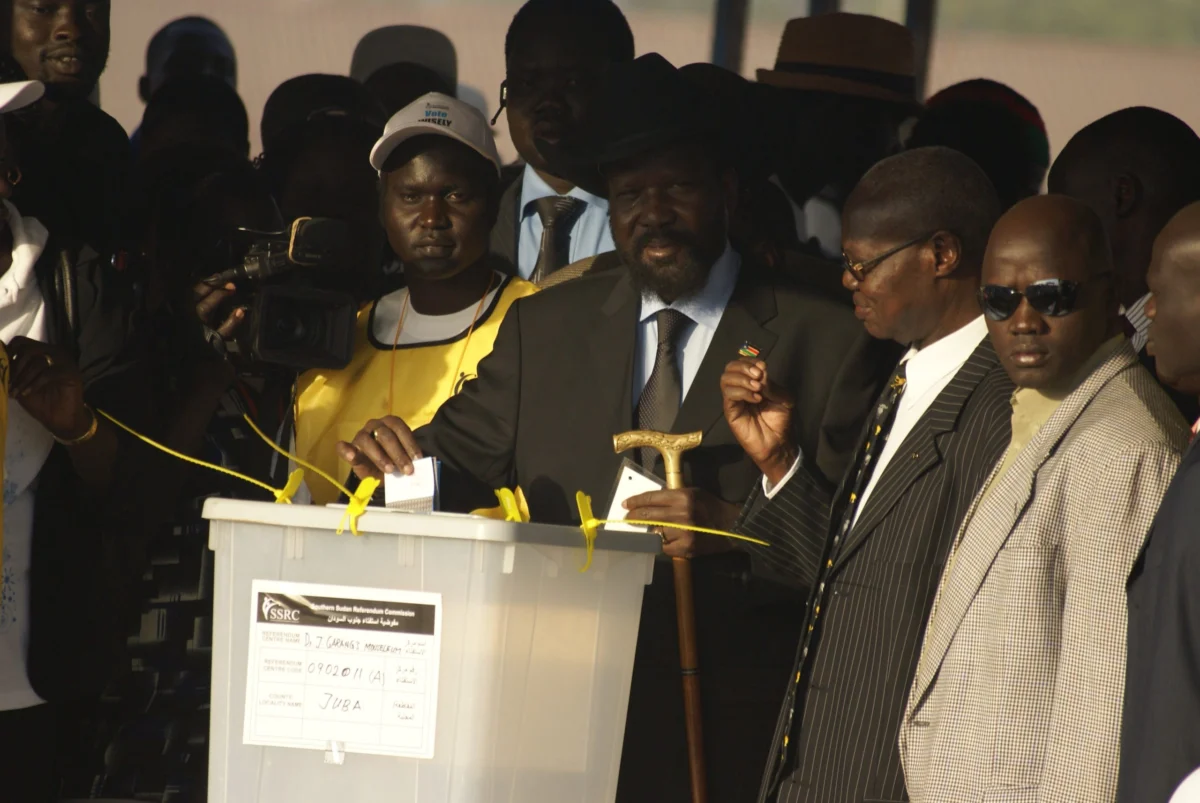
As South Sudan moves toward the December 22, 2026, national elections—the first since the nation gained independence from Sudan in 2011—the international community is watching with a mixture of hope and profound trepidation. Amnesty International, the global human rights watchdog, issued a stern ultimatum this week: the legitimacy of these historic polls hinges entirely on the authorities’ ability to foster a safe, inclusive, and open civic space.
With the country teetering between a nascent democratic transition and the threat of renewed full-scale conflict, the rights group’s call serves as a stark reminder that an election is not merely the act of casting a ballot, but the culmination of guaranteed freedoms that South Sudan has historically struggled to provide.
The Mandate for Human Rights: Amnesty’s Call to Action
Tigere Chagutah, Amnesty International’s regional director for East and Southern Africa, issued a pointed statement on Tuesday, emphasizing that the "long-awaited" elections must be preceded by a tangible improvement in the human rights climate.
"Ahead of these historic elections, South Sudanese authorities must ensure that a conducive environment exists for people to vote and stand in elections," Chagutah noted. He specifically highlighted that this environment must be free from "discrimination and arbitrary or unnecessary and disproportionate restrictions."
The organization’s appeal is multi-faceted. Beyond the physical act of voting, Amnesty is demanding:
- Freedom of Expression: An immediate end to the intimidation and harassment of journalists, bloggers, and media outlets.
- Freedom of Association: Allowing civil society organizations to operate without the threat of closure or state-sanctioned retaliation.
- Right to Peaceful Assembly: Ensuring that political opponents and ordinary citizens can gather and organize without fear of state-led violence or security clampdowns.
Chagutah’s warning is grounded in the country’s grim track record. South Sudan has long utilized repressive measures—including surveillance, arbitrary detention, and the suppression of dissent—to maintain political control. According to Amnesty, the legitimacy of the December 22 outcome will be judged not by the speed of the vote count, but by whether the South Sudanese people were permitted to engage in the public discourse "freely, safely, and equally."
A Chronology of Postponement and Turmoil
The path to the 2026 elections has been paved with significant hurdles, political maneuvering, and recurring cycles of violence. To understand the stakes of this December, one must examine the timeline of South Sudan’s difficult transition:
- 2011: South Sudan gains independence from Sudan following a historic referendum.
- 2013: A brutal civil war erupts, shattering the fledgling nation’s stability and forcing the first of many electoral delays.
- 2018: A tenuous peace agreement is signed, offering a roadmap for a transitional government and eventual elections.
- 2018–2025: The electoral date is postponed five times due to ongoing insecurity, lack of census data, and the absence of a permanent constitution.
- July 2026: President Salva Kiir Mayardit enacts a controversial law amending the 2018 peace agreement, removing requirements for a national census and a finalized constitution to clear the legal path for the December vote.
- August 2026: The UN Commission on Human Rights in South Sudan reports an intensification of clashes, warning that the electoral timeline is exacerbating existing fault lines.
- September 12, 2026: The UN issues a fresh warning, citing atrocities against civilians and the collapse of security in various regions.
- September 22, 2026: President Kiir officially dissolves the transitional government, signaling a decisive, albeit controversial, push toward the December 22 polling date.
Supporting Data: The Cost of Instability
The structural integrity of these elections is threatened by more than just political rhetoric. Data from the UN and independent monitors paint a picture of a nation where the democratic process is struggling to breathe under the weight of violence.
The UN Commission on Human Rights in South Sudan has repeatedly warned that the pre-election period is not merely a time of political campaigning but a period of "intensified clashes." These conflicts are not abstract; they have manifested in systematic atrocities against civilians. Reports indicate that the competition for local power and the mobilization of ethnic and political militias have led to a surge in internal displacement and the destruction of infrastructure necessary for a functional electoral process.
Furthermore, the legal framework under which these elections are occurring has been criticized by civil society as a "shortcut." By removing the constitutional requirement for a national population census, the government has essentially bypassed the demographic data required for fair electoral district mapping. Critics argue this maneuver—while perhaps intended to "break the deadlock"—risks disenfranchising significant portions of the population and undermining the long-term sustainability of the democratic institutions the election is supposed to build.
Official Responses and Political Strategy
The government of President Salva Kiir has maintained that the decision to proceed with the December 22 elections is an act of political necessity. By dissolving the transitional government, the President has effectively stated that the "transitional" period has become a barrier to progress.
Proponents of the current strategy argue that waiting for a permanent constitution or a national census—both monumental tasks—would have indefinitely trapped the country in a state of political limbo. From the perspective of the executive, the election is a tool to break the cycle of "extension upon extension."
However, the international community, led by bodies like the UN and groups like Amnesty, remains skeptical. The central tension lies in the definition of "progress." For the government, progress is the holding of a vote. For human rights advocates, progress is the creation of a system where citizens are safe enough to hold their leaders accountable.
Implications for the Future
The implications of the December 2026 elections extend far beyond the borders of Juba. If successful—and if perceived as credible—the elections could represent a turning point, moving South Sudan away from the shadow of the 2013 civil war and toward a more stable governance structure.
Conversely, if the election is marred by voter intimidation, restricted civil space, or violence, the fallout could be catastrophic. An illegitimate election could provide a pretext for further uprisings, solidify the influence of armed actors who feel excluded from the process, and potentially push the country into a cycle of conflict that exceeds the intensity of the 2013–2018 war.
The Verdict of the International Community
The UN’s recent warnings regarding the danger to civilians are a clear signal that the international community is monitoring the situation with high alarm. The "democratic transition" is currently being tested against the reality of a country that has yet to resolve the core grievances that fueled its internal conflicts.
As December 22 approaches, the eyes of the world remain fixed on the South Sudanese authorities. The challenge for President Kiir and his administration is to prove that they are not merely running an election, but that they are creating a platform for the South Sudanese people to choose their future without the shadow of the gun. Amnesty International’s call is a final warning: if the civic space remains restricted, the vote may conclude, but the instability will only deepen.
In the coming weeks, the world will watch to see if the rhetoric of transition is matched by the reality of protection. For a nation born of struggle and hardened by war, the December election is a test of whether it can finally pivot from survival to governance.
