

In an era where the “Space Economy” is transitioning from the realm of government-funded research into a multi-trillion-dollar commercial reality, one of the most significant bottlenecks remains the humble power system. While satellite manufacturers have made leaps in miniaturization and launch vehicle reusability, the core technology powering these orbital assets has remained stubbornly stagnant—often bespoke, expensive, and outdated.
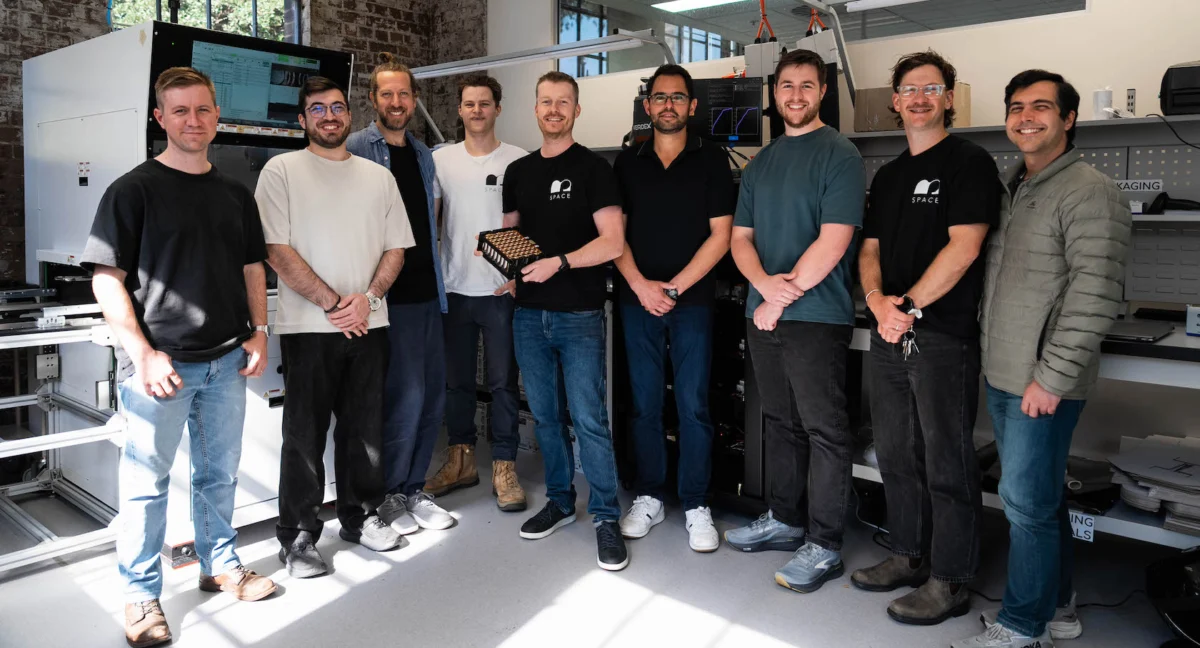
Sydney-based startup MP Space is looking to change that. Founded by former Tesla engineers Jay Manley and Sam Paterson, the company has just closed a $23 million (AUD) Seed funding round, marking a pivotal moment for Australia’s growing aerospace sector. The capital injection, led by the heavyweight venture firm Blackbird, is set to propel the company’s mission to standardize and industrialize spacecraft power systems, effectively dragging satellite energy management out of the “bespoke dark ages.”
The Main Facts: A $23 Million Launchpad
The Seed round was significantly oversubscribed, underscoring the massive investor appetite for space-hardened infrastructure. Joining Blackbird in the round were Systemiq Capital, Speedinvest, and MFV Partners. Notably, the raise also served as the debut Australian investment for London-based VC firm Seraphim Space, a specialist in the global space tech ecosystem.
MP Space is not merely building a single component; they are developing an integrated hardware and software platform designed to generate, store, and manage power in the extreme environment of space. By bringing an “automotive-grade” manufacturing mindset to the aerospace industry, the duo aims to replace the hand-crafted, high-cost power units that have dominated the market for decades with scalable, reliable, and standardized systems.
Chronology: The Tesla-to-Space Trajectory
The story of MP Space began in early 2024, born from the realization that the rapid expansion of Low Earth Orbit (LEO) constellations was being throttled by outdated power architecture.
- Q1 2024: Jay Manley and Sam Paterson, leveraging their deep technical experience at Tesla—where they specialized in battery energy storage systems (BESS) and power electronics—officially incorporated MP Space. The vision was clear: apply the mass-production methodologies of the EV revolution to the niche, high-margin space market.
- Mid-2024: The company began rapid prototyping of its power management units, targeting the specific thermal and radiation-hardened requirements of space.
- Late 2024: The startup secured early-stage design wins, proving that their hardware could withstand the rigors of mission-critical environments.
- October 2026: The $23 million Seed round closes. The company announces that its technology has already been selected for service in missions involving more than 500 spacecraft, a staggering validation of their early-stage market fit.
Supporting Data: Why Power Matters
To understand the significance of MP Space, one must look at the math of the modern space economy. Historically, space power systems were designed for “boutique” missions—single, multi-million-dollar satellites that required bespoke power solutions.
Today, the industry is dominated by constellations—clusters of dozens, hundreds, or even thousands of satellites working in unison. In this environment, the legacy model of custom-building power electronics for every single unit is economically unsustainable.
- Efficiency Gains: By utilizing advanced semiconductor materials and software-defined power management, MP Space claims to offer higher power density, allowing satellites to run more advanced payloads (such as high-resolution cameras or onboard AI processors) without increasing their physical footprint.
- Scalability: The “Tesla approach” to manufacturing means that MP Space is building for production runs rather than single prototypes. This creates a predictable supply chain for satellite operators who are tired of the months-long lead times associated with traditional aerospace suppliers.
- The 500-Spacecraft Benchmark: The fact that the company’s tech is already slated for over 500 spacecraft suggests that MP Space has moved past the "academic" phase of R&D and into the "industrial" phase of delivery.
Official Responses and Strategic Vision
The leadership team at MP Space remains focused on the pragmatic application of their expertise. Jay Manley, CEO and Co-Founder, has consistently emphasized that the company’s goal is to become the “Intel Inside” of the space power industry.
“The space sector is at a crossroads,” Manley stated during the funding announcement. “We are seeing a massive explosion in the number of assets we are putting into orbit, yet we are still managing those assets with 20th-century power logic. Our technology is designed to bridge that gap, providing the reliable, high-performance power foundation that these missions need to survive and thrive.”
Investors have echoed this sentiment. Blackbird, which has been a primary driver of the Australian deep-tech ecosystem, cited the team’s “Tesla pedigree” as a key differentiator. The ability to take a complex engineering problem and break it down into a repeatable, high-quality manufacturing process is the specific skill set that VCs believe will make MP Space a global leader.
Seraphim Space’s entry into the Australian market via this investment is also a strong signal to the international aerospace community. By backing an Australian startup, the London-based fund is acknowledging that the Southern Hemisphere is no longer just a peripheral player in space tech, but a core hub for innovative manufacturing.
Implications: The New Space Industrial Complex
The implications of MP Space’s success extend far beyond their Sydney headquarters.
1. The Industrialization of Space
For decades, “space-grade” has been synonymous with “expensive and slow.” MP Space is part of a broader shift toward “NewSpace,” where speed, cost-effectiveness, and reliability are prioritized. If MP Space succeeds in making their power systems a commodity, it will lower the barrier to entry for smaller satellite operators, fostering a more competitive and innovative orbital market.
2. Boosting the Australian Aerospace Sector
Australia has historically struggled to retain its best engineering talent, with many aerospace professionals heading to the US or Europe. By securing $23 million to build a manufacturing facility and expand its engineering team locally, MP Space is helping to anchor a high-tech manufacturing base in Sydney. This creates a flywheel effect: as more startups like MP Space succeed, they attract more capital, talent, and infrastructure to the region.
3. The Future of Orbital Infrastructure
As we look toward the future—including missions to the Moon, Mars, and beyond—power will remain the most critical variable. Without efficient, light, and durable batteries and power controllers, deep-space exploration is impossible. MP Space’s roadmap suggests they are not just looking at LEO; they are positioning themselves to provide the power infrastructure for the next generation of lunar outposts and long-range exploration vehicles.
Conclusion
The transition of the space industry from government-led exploration to private-sector industrialization requires companies that can solve the "boring" problems—the ones that don’t make headlines but are essential for mission success.
By taking the lessons learned from the electric vehicle revolution and applying them to the vacuum of space, Jay Manley and Sam Paterson have identified a critical pain point that the rest of the industry is desperate to solve. With a fresh $23 million in the bank, a growing roster of mission wins, and a clear path toward mass production, MP Space is well-positioned to ensure that as the orbital economy grows, it does so with a reliable, efficient, and standardized heartbeat.
The “bespoke dark ages” of space power are coming to an end. In their place, a new, electrified era of satellite operations is taking flight, engineered in Sydney and destined for the stars.
