



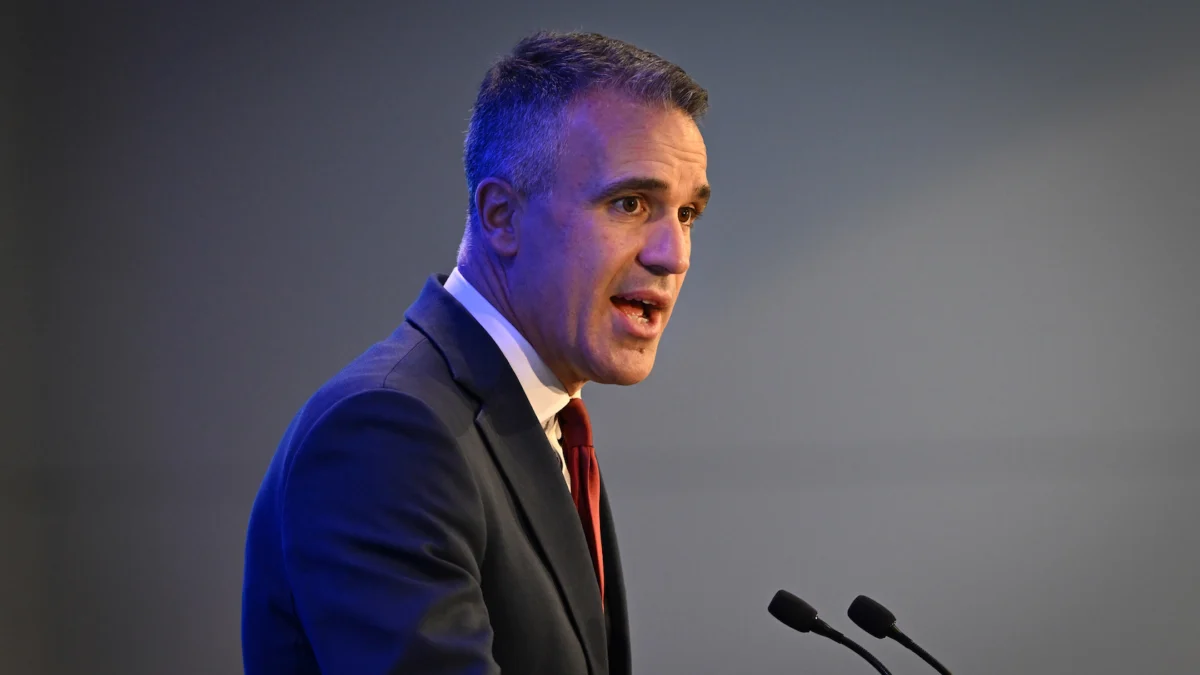
In a move that marks a significant pivot in his digital policy agenda, South Australian Premier Peter Malinauskas has signed a landmark memorandum of understanding (MoU) with OpenAI, the architect behind the transformative ChatGPT platform. This high-profile agreement, inked at the company’s San Francisco headquarters alongside co-founder and president Greg Brockman, signals an aggressive ambition to integrate generative artificial intelligence into the state’s economic and educational framework.
The development is particularly striking given Malinauskas’s recent international prominence as a champion of restrictive social media regulation. Having spearheaded a world-first legislative push to ban social media access for minors in Australia, the Premier is now positioning his state as a collaborative hub for the very technology sector he previously sought to constrain. This duality—the "disciplinarian" of social media and the "facilitator" of AI innovation—frames a complex narrative regarding how Australian state governments intend to manage the digital future.
The Core Facts: A Strategic Alignment
The MoU represents a first-of-its-kind commitment between an Australian state or territory government and a global Tier-1 artificial intelligence corporation. The agreement is designed to serve as a bridge between Silicon Valley’s rapid innovation cycle and South Australia’s burgeoning tech ecosystem.
Under the terms of the agreement, the South Australian government and OpenAI have committed to a multi-pronged collaboration focused on:
- Workforce Development: Establishing programs to upskill the South Australian labor force, ensuring citizens are equipped for an AI-augmented economy.
- Research Acceleration: Leveraging OpenAI’s technical expertise to support local research initiatives, particularly in fields where South Australia holds a competitive advantage, such as space, defense, and green energy.
- Investment Attraction: Creating a regulatory and collaborative environment that encourages OpenAI and its partners to view South Australia as a viable destination for regional operations.
- Ethical Integration: Implementing a framework that emphasizes the responsible deployment of AI tools within the public sector.
"We want to lead with ambition and care," Premier Malinauskas stated on Sunday. The sentiment reflects a desire to avoid the "regulatory lag" that has historically plagued government responses to technological disruption, suggesting instead a proactive, co-designed approach.
A Chronology of Digital Policy
To understand the significance of this signing, one must look at the recent trajectory of the Malinauskas administration’s digital strategy.
- Mid-2023: The South Australian government initiates a series of internal policy reviews regarding the impact of algorithmic social media platforms on adolescent mental health.
- Early 2024: Premier Malinauskas gains national headlines by proposing a world-first ban on social media access for children under the age of 14, citing evidence of "catastrophic" harm.
- August 2024: The "Social Media Ban" proposal gains momentum, leading to a national cabinet discussion where the Premier advocates for federal intervention to enforce age verification.
- September 2024: Recognizing that technology is a two-sided coin, the Premier pivots toward engagement with the generative AI sector.
- October 2024: The US trade mission concludes with the historic signing of the OpenAI MoU in San Francisco, marking a transition from reactive social media regulation to proactive AI partnership.
This sequence suggests that the administration has adopted a "contain and cultivate" strategy: containing the harms of legacy social media platforms while actively cultivating the benefits of the next generation of generative AI.
Supporting Data: The AI Opportunity
The economic imperative behind this agreement is grounded in substantial data regarding AI’s potential impact on the Australian economy. According to a report by the Tech Council of Australia, the AI sector could contribute up to $200 billion to the national economy by 2030 if supported by appropriate policy frameworks.
South Australia, historically reliant on manufacturing, agriculture, and mining, is currently undergoing a "Silicon-ization" of its economy. The state’s "Lot Fourteen" innovation precinct has already attracted global firms like Google Cloud and Amazon Web Services. The OpenAI partnership acts as a catalyst for this existing momentum.
Current labor market analytics indicate that the demand for AI-literate professionals in Australia has surged by over 40% year-on-year. By partnering directly with the developer of ChatGPT, South Australia positions its education sector—including the University of Adelaide and the University of South Australia—to be early adopters of AI-integrated curricula. This is expected to provide a pipeline of graduates who are not merely consumers of AI, but builders of AI-native applications.
Official Responses: Navigating the Tech-Government Divide
The reception of the MoU has been largely positive, though not without its critics.
The State Government Perspective:
Premier Malinauskas has framed the agreement as a necessary step to ensure South Australia remains competitive in an increasingly automated global market. "We cannot afford to sit on the sidelines while the rest of the world unlocks the productivity gains of artificial intelligence," the Premier noted during his briefing in San Francisco. "Our goal is to ensure that when we talk about AI, we are talking about it as a tool for public good, for education, and for economic resilience."
The OpenAI Perspective:
Greg Brockman, speaking on behalf of OpenAI, emphasized the company’s desire to work with governments that are willing to engage constructively. "We believe that AI should benefit all of humanity," Brockman said. "Collaborating with a government that is both forward-thinking and committed to the ethical deployment of these tools allows us to test our models in real-world, civic environments."
The Critics’ Perspective:
Civil liberties advocates and some academic observers have raised concerns regarding the transparency of such agreements. The "black box" nature of proprietary AI models leads to questions about how government data will be handled, the potential for algorithmic bias in public services, and whether an MoU signed with a US corporation truly benefits local taxpayers in the long term. Critics warn that "courting Big Tech" often comes with hidden costs, including the reliance on foreign infrastructure for critical state functions.
Implications: A New Model for Governance
The implications of the South Australia-OpenAI partnership extend far beyond the borders of Adelaide.
1. The End of the "Regulatory Only" Approach
For years, governments have focused almost exclusively on the "regulation" aspect of the tech debate—GDPR, the Online Safety Act, and antitrust lawsuits. Malinauskas’s approach signals a shift toward "constructive engagement." By signing an MoU, the state effectively earns a seat at the table where development decisions are made, rather than merely attempting to police the output of those decisions after the fact.
2. The Decentralization of Tech Policy
Traditionally, digital policy in Australia has been a federal preserve. By striking an international partnership at the state level, South Australia is testing the limits of constitutional jurisdiction. This could lead to a future where individual states compete to become "AI-friendly" jurisdictions, offering tailored incentives to attract the research hubs of global AI giants.
3. Ethical Governance and Public Trust
The most significant challenge remains the "care" aspect of the Premier’s statement. As South Australia begins to integrate ChatGPT-like models into healthcare, social services, and public administration, the state must establish robust oversight mechanisms. The success of this MoU will not be measured by the number of press releases, but by the state’s ability to demonstrate that these AI tools are transparent, equitable, and secure.
4. Setting the Standard for Future MoUs
As other states and territories look to emulate this model, South Australia’s experience will serve as a template. Will the partnership lead to the promised economic boom, or will it result in a state government overly reliant on a single, private, and rapidly evolving technology provider?
Conclusion
The signing of the MoU between South Australia and OpenAI is a watershed moment in Australian public policy. It marks the formal recognition that artificial intelligence is not merely a product to be regulated, but a foundational infrastructure to be developed and integrated.
While the Premier’s efforts to ban social media for children highlight his commitment to social protection, his partnership with OpenAI highlights his commitment to economic modernization. Whether this two-pronged approach will succeed in creating a safer, more prosperous South Australia remains to be seen. However, by engaging directly with the vanguard of the AI revolution, the state has ensured that it will be a primary participant—rather than a passive spectator—in the most significant technological transformation of the 21st century.
As the project moves into the implementation phase, all eyes will be on the "ambition and care" promised by the Premier. If South Australia can navigate the inherent risks of AI while harnessing its immense productivity potential, it may well provide a blueprint for how mid-sized global economies can thrive in the age of intelligence.
