



In a verdict that underscores the rapidly shrinking space for political dissent in Hong Kong, the Court of First Instance delivered a landmark ruling on Friday, finding prominent activists Chow Hang-tung, Lee Cheuk-yan, and the now-defunct Hong Kong Alliance in Support of Patriotic Democratic Movements of China guilty of "incitement to subversion." The ruling, delivered by a panel of three judges specifically designated to oversee national security cases, marks a definitive turning point in the legal and historical narrative of the territory, effectively criminalizing the annual commemoration of the 1989 Tiananmen Square massacre.
The Core of the Verdict: Memory as Subversion
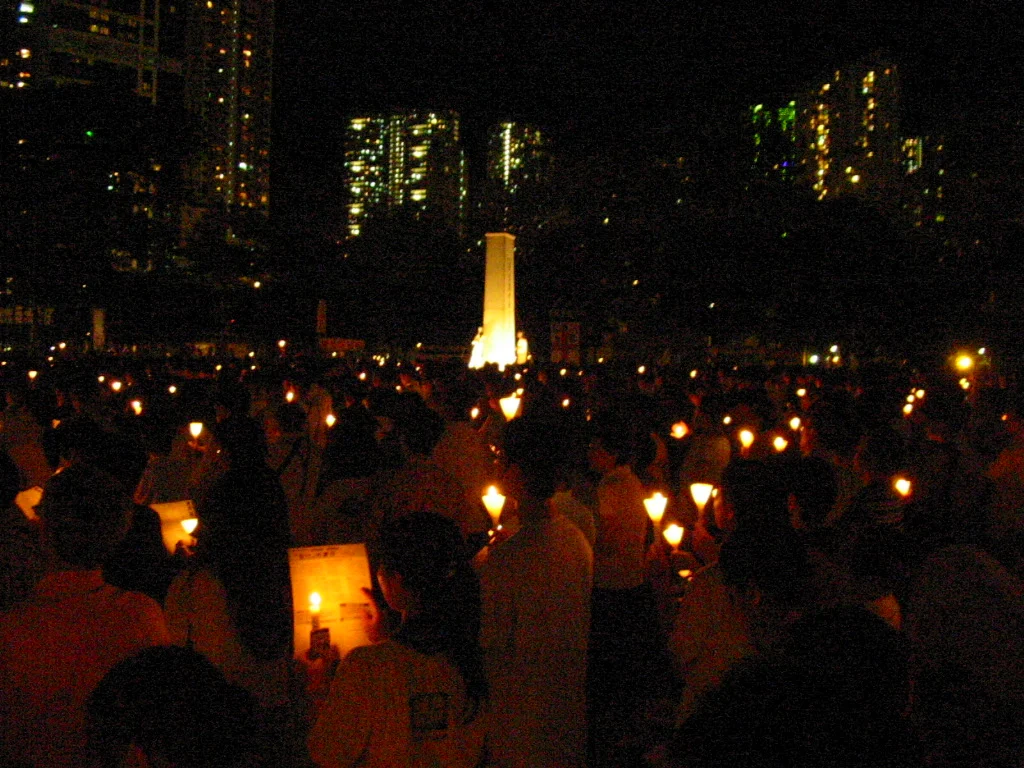
The court’s decision hinges on a controversial interpretation of the Beijing-imposed National Security Law (NSL). The defendants, who had for decades organized candlelight vigils in Victoria Park to honor those who perished during the 1989 military crackdown in Beijing, were accused of using their platform to incite the overthrow of the Chinese Communist Party (CCP).
The judges unanimously held that the Alliance’s core slogan—"End the one-party dictatorship"—was inherently subversive. In their written judgment, the court rejected the defense’s argument that advocating for democratic change is a protected form of expression. Instead, the court posited that since the 2018 amendment to the Chinese Constitution enshrined the leadership of the CCP as the fundamental pillar of "socialism with Chinese characteristics," any call to end that leadership is, by definition, an attempt to undermine the "basic system" of the state.
"There can be no ‘natural end’ to the leadership of the Chinese Communist Party," the ruling stated, effectively bridging the gap between political speech and criminal conspiracy. For the defendants, who face up to 10 years in prison, the verdict is not merely a legal defeat but a symbolic erasure of the historical memory they sought to preserve.
A Chronology of Suppression
The path to this week’s verdict was paved by years of legal maneuvering, mass arrests, and the systematic dismantling of civil society organizations.
- June 4, 1989: The Tiananmen Square massacre occurs in Beijing. For the next three decades, the Hong Kong Alliance holds annual, peaceful candlelight vigils in Victoria Park, drawing tens of thousands of participants.
- 2020: The central government in Beijing imposes the National Security Law on Hong Kong, bypassing the local legislature.
- February 28, 2020: Lee Cheuk-yan is charged in connection with unauthorized assemblies, beginning a long period of incarceration.
- September 8, 2021: Chow Hang-tung is arrested for her role in the Alliance. She remains in custody for 1,808 days until the delivery of this verdict.
- September 2021: The Hong Kong Alliance is formally accused of "incitement to subversion" under Article 22 of the NSL.
- November 2025: The Hong Kong government officially disbands the Alliance, citing national security concerns.
- August 2026: The Court of First Instance delivers the guilty verdict, solidifying the legal precedent that the Chinese Constitution is the ultimate source of authority in Hong Kong.
Legal Interpretations and the "One Country, Two Systems" Tension
The case presented a significant constitutional conundrum regarding the applicability of Chinese national law within Hong Kong. Under Article 18 of the Basic Law—the territory’s mini-constitution—national laws do not automatically apply in the Special Administrative Region. However, the court’s ruling suggests a shift in judicial philosophy.
The judges argued that the Chinese Constitution serves as the ultimate source of legal authority for the entire nation, including Hong Kong. By characterizing the Chinese Constitution as the bedrock upon which the "One Country, Two Systems" principle rests, the court effectively lowered the threshold for applying mainland legal standards to local political activity. Legal scholars have noted that this interpretation potentially renders the "Two Systems" aspect of the governing framework subservient to the "One Country" mandate, effectively harmonizing Hong Kong’s legal system with the political requirements of the mainland.
Chow Hang-tung’s defense had relied on Article 2 of the Chinese Constitution, which states that "all power in the People’s Republic of China belongs to the people." The court dismissed this, arguing that the 2018 amendment, which cemented the CCP’s leadership, must be read as the governing lens through which all other constitutional articles are interpreted.
Official Responses and Public Reaction
The Hong Kong government greeted the ruling with an immediate expression of support. Chief Executive John Lee issued a statement welcoming the verdict, emphasizing that the rule of law in Hong Kong remains robust and that national security must be "guarded with absolute vigilance." Lee reiterated that the defendants’ long-standing campaign was not merely historical commemoration, but a calculated effort to foster hostility toward the state.
Conversely, international human rights organizations have decried the verdict as a death knell for political expression in the city. Amnesty International labeled the decision "dismaying," describing it as part of a "deliberate campaign" to scrub the Tiananmen massacre from public record. The organization noted that by targeting the organizers of the vigils, the state is attempting to ensure that future generations in Hong Kong remain ignorant of the 1989 crackdown.
"This is not about justice," a spokesperson for an international legal watchdog said. "This is about the state deciding which parts of history are permissible and which are dangerous."
Implications for the Future of Hong Kong
The conviction of Chow, Lee, and the Alliance signals a profound change in the political climate of Hong Kong. The implications are far-reaching:
1. The Death of Public Commemoration
With the Alliance disbanded and its leaders convicted of subversion, the possibility of any public, organized commemoration of the Tiananmen massacre has effectively evaporated. The "candlelight tradition" that once distinguished Hong Kong as the only place on Chinese soil where the event could be openly remembered is now legally prohibited.
2. The Expansion of "Subversion"
By ruling that advocating for the end of one-party rule constitutes "incitement to subversion," the court has provided the government with a powerful, broad-reaching tool. This precedent could be applied to any political group, student union, or activist organization that calls for systemic reform, effectively chilling all forms of organized political opposition.
3. Judicial Integration
The court’s emphasis on the supremacy of the Chinese Constitution in local proceedings suggests a permanent shift in how Hong Kong’s courts will navigate future disputes between civil liberties and national security. The judiciary is increasingly functioning as a guardian of the state’s political structure rather than an independent arbiter of individual rights.
4. The Erasure of History
The legal proceedings have served to reframe the 1989 protests not as a democratic movement but as a challenge to the state’s legitimacy. By criminalizing the memory of the event, the authorities are engaging in a process of historical revisionism that seeks to align Hong Kong’s cultural identity with that of the mainland.
Conclusion
The conviction of the Hong Kong Alliance leaders serves as a grim marker in the history of the territory. As the legal system continues to adapt to the mandates of the National Security Law, the space for dissent continues to narrow. For those who once gathered in Victoria Park, the light of the candles has been extinguished, not by a lack of will, but by the weight of a legal system that has redefined the boundaries of acceptable thought.
As the defendants await their sentencing, the international community looks on, contemplating the long-term viability of the "One Country, Two Systems" framework. Whether this ruling represents the final chapter of Hong Kong’s democratic experiment remains a subject of intense global debate, but one thing is certain: the legal landscape of the city has been irrevocably altered, and the history of 1989 is now firmly outside the bounds of the law.
