





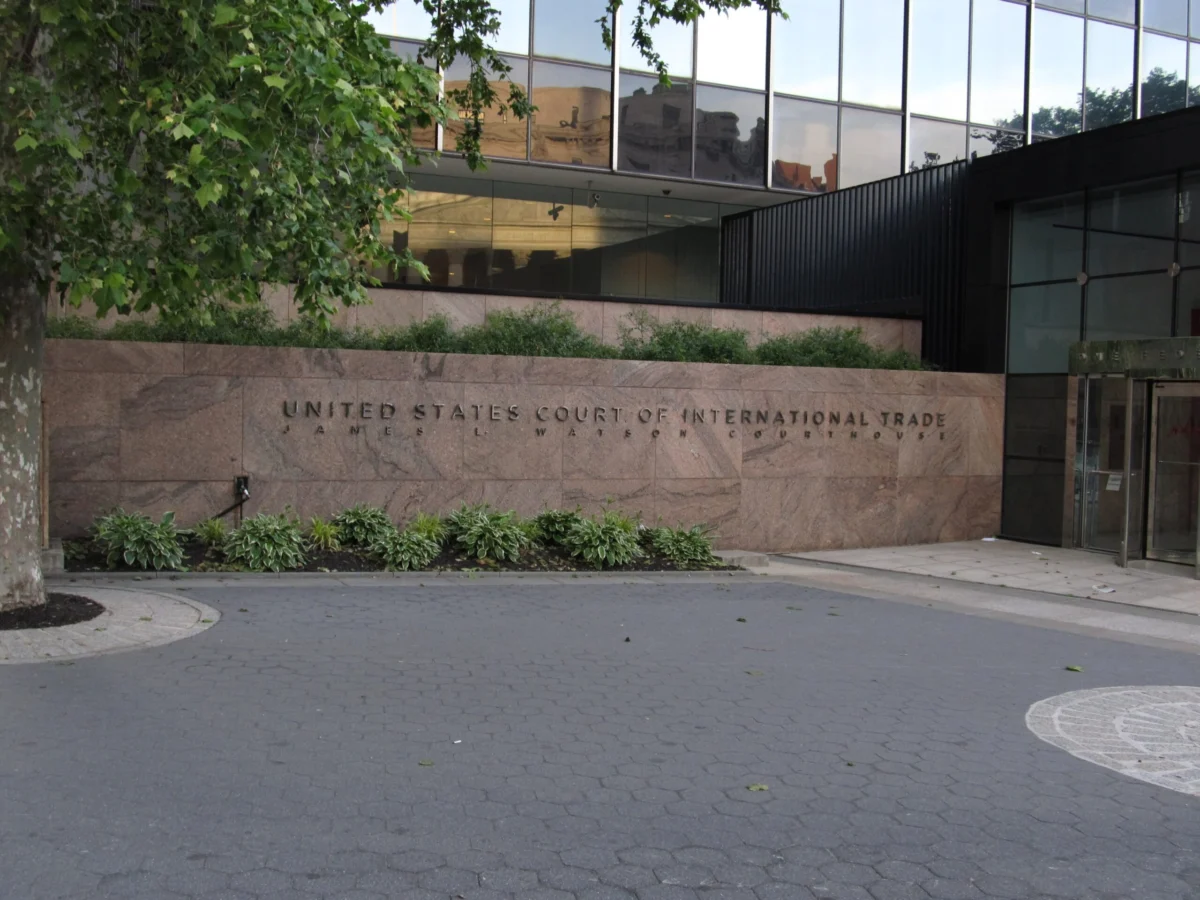
In a major escalation of the ongoing constitutional tug-of-war between state governments and the executive branch, a coalition of 25 states—predominantly led by Democratic attorneys general—filed a high-stakes lawsuit this Monday in the United States Court of International Trade (CIT). The legal action seeks to enjoin the Trump administration from implementing a sweeping new regime of global tariffs, which the plaintiffs argue constitutes a gross abuse of executive authority and an illegal circumvention of the legislative intent behind the Trade Act of 1974.
The lawsuit serves as the latest chapter in a multi-year saga regarding the scope of presidential power in economic policy, specifically challenging the administration’s use of Section 301 of the Trade Act to impose levies ranging from 10 to 12.5 percent on goods from 60 countries, including key economic partners within the European Union.
The Core Legal Conflict: Arbitrary Enforcement vs. Statutory Authority
At the heart of the litigation is the administration’s stated rationale for the tariffs: the alleged prevalence of forced labor in the production chains of the targeted nations. The Trump administration invoked Section 301—a provision historically used to combat unfair trade practices—following a series of investigations launched in June 2026.
However, the plaintiff states argue that this humanitarian justification is a mere "pretextual facade." In their filing, the coalition contends that the tariffs are "arbitrary, capricious, and contrary to the law," asserting that the scope of the sanctions is so broad that it renders the underlying statute unrecognizable. The complaint states:
"The Plaintiff States oppose forced labor in all its forms and support protections for workers around the globe. But the Administration cannot use forced labor as a pretext to continue its illegal tariff scheme. The tariffs the USTR (US Trade Representative) imposed are so broad that they defy the USTR’s own stated aims and make a mockery of the statute used to justify them."
The plaintiffs are seeking a permanent injunction, requesting that the CIT declare the tariff action unlawful and effectively block the administration from enforcing or collecting these duties at the border.
Chronology: A Multi-Year Struggle Over Executive Trade Power
To understand the gravity of this filing, one must examine the turbulent timeline of the Trump administration’s trade policies over the past several years.
The First Term Precedent
During his initial term in office, President Trump utilized Section 301 to levy tariffs on approximately $200 billion worth of Chinese imports, citing intellectual property theft and unfair technological competition. While these actions were met with significant legal resistance, the administration ultimately prevailed in those court battles. Those successes established a blueprint that the White House has repeatedly attempted to emulate: using the broad language of trade statutes to bypass Congressional oversight.
The Supreme Court Intervention (February 2026)
The current legal standoff follows a monumental defeat for the administration in early 2026. The US Supreme Court struck down a previous set of tariffs, ruling that the President had improperly attempted to invoke the International Emergency Economic Powers Act (IEEPA) to justify them. The Court held that IEEPA does not grant the President the authority to implement tariffs, deeming such an action an unlawful expansion of executive power.
The Retaliatory Pivot
Following the Supreme Court’s rebuke, the administration briefly implemented a "temporary tariff plan" in February 2026, framed as an emergency measure to "address fundamental international payment problems." That 10 percent import tax served as a stopgap measure that expired just days before the current Section 301 plan was unveiled, signaling the administration’s determination to continue its protectionist agenda despite judicial pushback.
Supporting Data: Economic Implications and Scope
The reach of the current tariff scheme is unprecedented in its breadth. By targeting 60 different economies, the administration has moved beyond targeted trade wars into a global overhaul of import costs.
- Tariff Magnitude: The rates are tiered between 10 percent and 12.5 percent.
- Geographic Scope: The measures impact nations across the globe, with a specific focus on the European Union, a move that has already sparked diplomatic tensions.
- Legal Basis: The reliance on Section 301 requires the administration to prove that the targeted countries are engaged in "unjustifiable, unreasonable, or discriminatory" trade practices. The states argue that by linking this to forced labor, the administration is stretching the statute to cover matters of international human rights that were never intended to be the primary target of Section 301 trade remedies.
Official Responses and Administrative Strategy
The Trump administration has remained steadfast in its position, maintaining that the President holds plenary power when it comes to trade and national security. A spokesperson for the Office of the United States Trade Representative (USTR) stated that the administration is "fully prepared to defend its authority to protect American workers and hold foreign entities accountable for unethical labor practices."
Internally, White House advisors have signaled that the administration views these lawsuits as "political obstructionism" by states attempting to undermine the national economic agenda. They argue that the judiciary should defer to the executive branch on matters of foreign policy and trade, citing the complexity of global supply chains and the need for swift, decisive action.
Conversely, the coalition of attorneys general argues that this is not a matter of politics, but of fundamental constitutional law. Their legal team is emphasizing that the "non-delegation doctrine"—the principle that Congress cannot delegate its lawmaking powers to the executive branch—is being violated by an administration that is essentially writing its own tax laws through executive decree.
Broader Implications: A Test for the Judiciary
The case before the CIT is poised to become a landmark decision regarding the limits of the administrative state. The implications are far-reaching:
- Constitutional Balance: If the CIT rules in favor of the states, it will reaffirm the judiciary’s role as a check on executive overreach, particularly in the realm of economic regulation.
- Global Trade Stability: Should the court uphold the tariffs, it could lead to a permanent shift in how the US conducts trade, likely triggering retaliatory measures from the EU and other affected nations, potentially destabilizing global supply chains.
- The "Forced Labor" Pretext: This case will test whether the court will permit the executive branch to use human rights, environmental, or labor standards as a vehicle to achieve broad, unilateral protectionist goals that lack clear Congressional authorization.
As the litigation proceeds, industry analysts are bracing for volatility. Retailers, manufacturers, and logistics firms, who have been caught in the crossfire of these policy shifts for years, are now watching the CIT with bated breath. For many businesses, the outcome of this lawsuit will determine whether they must continue to absorb the costs of these tariffs or if they can expect a return to a more predictable, statutory-based trade environment.
The case, Multistate Coalition v. United States, is expected to move through the discovery phase in the coming months, with a preliminary hearing likely to be scheduled before the end of the year. For now, the administration continues to collect the duties, leaving the nation in a state of high-stakes economic suspense.
