





Executive Summary: The Race Against the Clock
As the fiscal calendar edges toward the September 30 expiration of the current federal budget, a familiar tension has gripped Capitol Hill. Senate Majority Leader John Thune (R-S.D.) has signaled an aggressive timeline to finalize a government funding package, aiming to avert a federal shutdown. However, the path forward is obstructed by a contentious reconciliation package that has drawn sharp criticism from both sides of the aisle and ignited a firestorm among transportation stakeholders.
With the House of Representatives currently in recess until August 31, the Senate is effectively operating in a pressure cooker. The stakes extend far beyond mere administrative continuity; at issue is the stability of the nation’s infrastructure planning, the integrity of long-term transit projects, and the political capital of a legislative body balancing competing demands for fiscal restraint and essential public investment.
Chronology: The Road to the September 30 Deadline
The current legislative urgency is the culmination of months of stop-gap measures and fiscal negotiations. To understand the gravity of the current situation, one must examine the timeline of the federal budgetary process:
- Fiscal Year 2026 Context: The government has been operating under a series of temporary funding measures designed to bridge gaps between broader policy objectives. As the September 30 deadline approaches, the pressure to pass a permanent or long-term appropriations bill has shifted from a theoretical goal to an immediate necessity.
- The Reconciliation Push: In recent weeks, leadership attempted to package various budgetary amendments into a reconciliation bill—a procedural tool designed to expedite passage by bypassing the standard filibuster threshold in the Senate.
- The August Recess Dynamic: The House’s departure for its August recess has created a legislative "silo" effect. While the Senate remains in session to hash out the details of the funding package, the House remains sidelined until the end of the month, meaning any bill passed by the Senate will face an immediate, high-stakes review upon the House’s return.
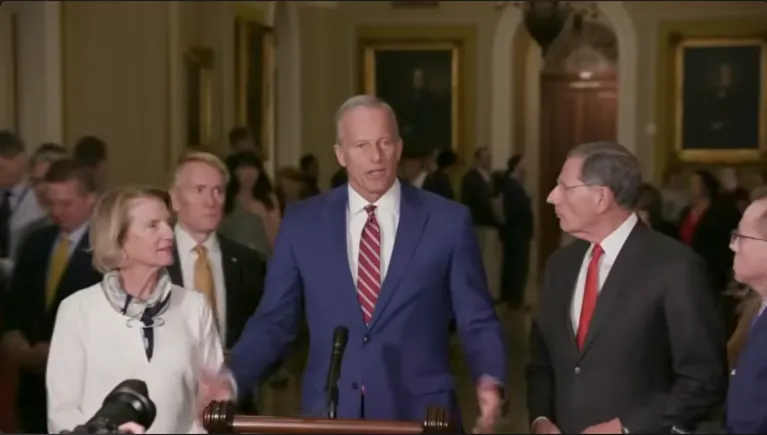
- Tuesday’s Declaration: Senator Thune’s remarks at Tuesday’s press conference crystallized the urgency, with the Majority Leader publicly committing to finishing the work “between now and the end of this week, or however long we’re here.”
Supporting Data and the Infrastructure Dilemma
The central point of contention within the current reconciliation package is the status of surface transportation funding. For years, the federal government has utilized "extensions" to keep programs afloat, a strategy that advocates argue is becoming increasingly untenable.
The Cost of Uncertainty
Transportation agencies and state departments of transportation rely on multi-year federal funding cycles to bid on contracts and begin construction. When funding is tied to short-term extensions rather than long-term reauthorizations, the following economic impacts are typically observed:
- Inflationary Pressures: Contractors often build "risk premiums" into their bids when federal funding is uncertain, leading to higher costs for taxpayers.
- Stalled Procurement: Local transit agencies, fearing a sudden withdrawal of federal grants, often postpone the purchase of electric buses or the initiation of rail expansions.
- Labor Instability: The civil engineering and construction sectors require long-term workforce planning; inconsistent funding cycles often lead to layoffs or a reliance on temporary staffing, degrading the quality of public projects.
While the American Traffic Safety Services Association (ATSSA) has characterized the extension as a "necessary measure," the data suggests that these short-term fixes do not replace the need for a comprehensive, five-year or ten-year infrastructure bill.
Official Responses: A Divided Washington
The debate over the reconciliation package has revealed deep ideological fissures regarding how the federal government should manage its capital investments.
The Criticism from Policy Advocates
Steven Higashide, Director of the Clean Transportation Program at the Union of Concerned Scientists, has been a vocal critic of the current legislative direction. In an email statement released Tuesday, Higashide argued that the proposed cuts within the reconciliation bill are counterproductive.
"States, transit agencies, and local communities are already suffering from instability caused by the White House’s politically motivated grant cancellations and delays," Higashide stated. He warned that the specific language in the current bill would further strip agencies of the ability to engage in long-term capital planning, effectively "coding" instability into the federal budget.
The Pragmatic Perspective
Conversely, industry groups representing safety and construction professionals are focused on the immediate necessity of keeping the lights on. Stacy Tetschner, President and CEO of ATSSA, acknowledged the fragility of the current situation.
"An extension is a bridge, not a destination," Tetschner noted. While the ATSSA supports the extension as a stop-gap to ensure roadway safety programs—such as high-visibility signage, guardrail maintenance, and intersection improvements—do not lapse, their rhetoric highlights a broader frustration. The industry is calling on Congress to stop using "bridge" legislation and start passing "destination" legislation: robust, long-term reauthorizations that provide the stability necessary to modernize the nation’s aging infrastructure.
Implications: The Long-Term Consequences
The resolution of this legislative battle will have lasting implications for the American economy and the federal government’s role in infrastructure.
The Threat of a Shutdown
A government shutdown on October 1 would be more than a logistical headache; it would signal a breakdown in the legislative process during an election-adjacent cycle. Shutdowns historically result in the furlough of thousands of federal employees, the suspension of non-essential services, and a significant hit to consumer and investor confidence. For the transportation sector, a shutdown could freeze grant disbursements, effectively halting active construction projects nationwide.
The Reconciliation Risk
The decision to utilize the reconciliation process is fraught with peril. Because reconciliation bills are limited in scope, they are often prone to "logrolling," where unrelated amendments are attached to secure enough votes for passage. This process invites opposition from both ends of the political spectrum: fiscal conservatives concerned about the total price tag, and progressives concerned about the erosion of specific grant programs.
Should the Senate pass the bill, the House of Representatives will face an immense amount of pressure upon its return on August 31. If the House amends the bill, it must return to the Senate, creating a "ping-pong" effect that could consume the entire month of September, further narrowing the window before the fiscal cliff on the 30th.
The Future of Infrastructure Policy
Beyond the immediate budgetary crisis, the rhetoric surrounding this bill highlights a shift in federal priorities. The tension between "politically motivated" grant processes—as described by critics—and the need for fiscal austerity creates a challenging environment for the Department of Transportation. Moving forward, the legislative body will need to decide whether to continue the current pattern of erratic, short-term extensions or to pursue a bipartisan infrastructure strategy that decouples long-term capital projects from the volatility of annual budget squabbles.
Conclusion: A Window of Opportunity
As Senate Majority Leader Thune and his colleagues continue their work this week, the nation watches to see if they can navigate the narrow path between fiscal responsibility and government continuity. The challenge is clear: they must produce a document that is palatable enough to pass a divided Senate, viable enough to survive the House, and stable enough to prevent the atrophy of the nation’s infrastructure.
For now, the extension remains the most likely outcome—a temporary bridge to prevent a collapse. However, as industry leaders have made clear, the country is quickly approaching a point where bridges alone will no longer suffice. The upcoming weeks in Washington will determine not only the immediate fate of federal funding but also the trajectory of national infrastructure development for the next several years.
