




Executive Summary: A Major Gateway Under Strain
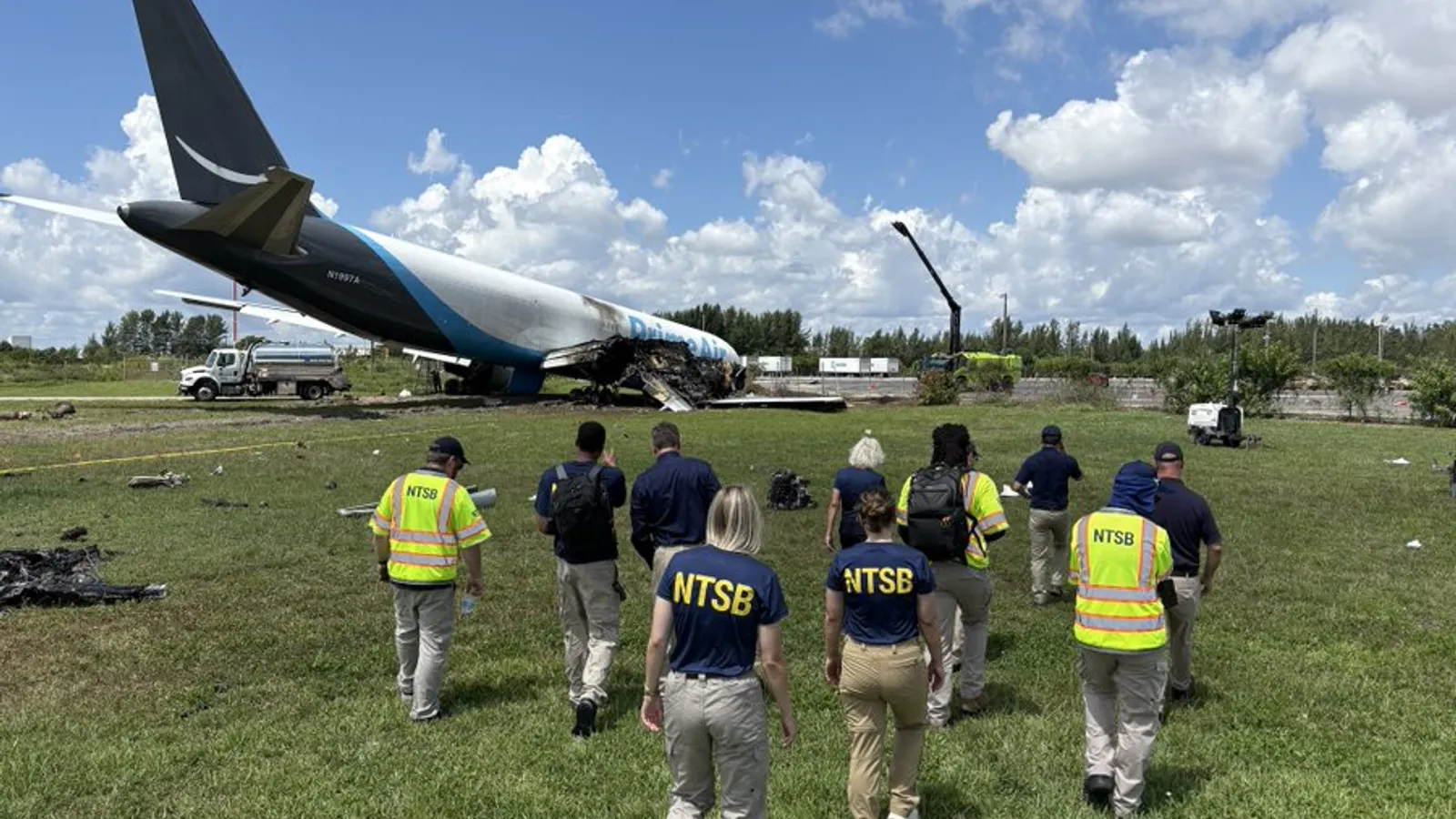
Miami International Airport (MIA), a vital artery for global trade and the primary gateway for air cargo moving between North and Latin America, is currently grappling with the aftermath of a tragic aviation accident. Early this week, an Amazon Prime Air Boeing 767-300 freighter—operated by 21 Air—suffered a catastrophic runway excursion upon landing. The incident, which occurred after the aircraft arrived from San Juan, Puerto Rico, has claimed the lives of five individuals, according to the Miami-Dade Sheriff’s Office.
While regular cargo operations have begun to stagger back to life, the airport remains in a state of operational flux. As of Tuesday, two of the airport’s four runways remain shuttered, pending a comprehensive site investigation by the National Transportation Safety Board (NTSB). The disruption has sent shockwaves through the global supply chain, particularly for sectors reliant on the rapid transit of perishable, pharmaceutical, and high-tech goods. Industry experts warn that while the airport is not facing a total shutdown, the compounding effects of the closure—including backlogs, warehouse congestion, and labor strain—will be felt across the hemisphere for days, if not weeks, to come.
Chronology of the Incident and Immediate Response
The sequence of events began on Sunday, when the Amazon Prime Air freighter lost control during its landing sequence, overrunning the runway. The immediate aftermath prompted an emergency response from local authorities and a swift suspension of operations to ensure the safety of the airfield.
The NTSB Investigation
The NTSB, led by Chairwoman Jennifer Homendy, has assumed control of the site. In a press conference held on Monday, Homendy emphasized the complexity of the scene, stating that the area was not yet "completely safe" for investigators to fully access the wreckage.
"We hope that we can move through it swiftly because we know it is impacting flight operations here, but we have to make sure that we’re able to get access to the aircraft first," Homendy stated. The necessity of documenting the debris field and the structural integrity of the aircraft means that the two affected runways will remain closed until the federal agency deems the area cleared. This lack of a specific reopening timeline has created a climate of uncertainty for airlines and logistics providers alike.
Operational Status and Air Traffic Disruption
The ripple effects of the runway closures were immediate. According to flight tracking data from FlightAware, Monday saw an staggering 181 flight cancellations and 408 delays. These figures reflect the sheer scale of MIA’s daily throughput; as one of the world’s busiest cargo hubs, even a partial reduction in runway capacity creates a bottleneck that reverberates across international schedules.
Carrier-Specific Impacts
While the airport experienced widespread disruption, major logistics players have reported varying degrees of stabilization:
- FedEx Express: The carrier confirmed that its flights are currently operating as normal, suggesting that its dedicated infrastructure at the airport has allowed it to navigate the turbulence with minimal long-term impact.
- DHL Express: Despite experiencing a difficult Sunday, which saw three inbound aircraft diverted to alternative airports, the company has officially declared that its network has returned to normal operations.
- Broader Cargo Market: Data from FlightRadar24 indicates that widebody cargo service to and from Latin America has resumed. However, reduced runway capacity continues to plague the airport, forcing longer arrival holds and causing a cascade of missed flight connections.
The Logistics Perspective: A Fragile Ecosystem
Derek Lossing, founder of Cirrus Global Advisors, characterizes the situation as a "significant short-term capacity and reliability event." In an analysis provided to Supply Chain Dive, Lossing highlighted the vulnerability of MIA’s highly specialized cargo profile.
The "All Hands on Deck" Scenario
The disruption is not merely about late flights; it is about the physical limitations of ground handling. "Flights arriving late—even a couple of hours—has a major impact where ground handlers can only shift labor slightly," Lossing explained. "It will be all hands on deck to process the delayed cargo."
The primary concern for the logistics industry is the buildup of inventory. When flights are delayed, they do not simply vanish; they create a queue. Warehouses at MIA, which are already optimized for high-velocity turnover, face the risk of becoming overwhelmed. This backlog, in turn, reduces the processing speed for sensitive cargo that requires immediate handling, such as perishables and pharmaceuticals.
The Downstream Multiplier Effect
Lossing warned that the scale of MIA’s international footprint is exactly what makes this short-term disruption so impactful. Because a high percentage of MIA’s cargo is destined for further distribution, one delayed arrival can derail several downstream logistics commitments. "Perishables, pharmaceuticals, and other temperature- or time-sensitive shipments face the greatest immediate exposure," he noted.
Economic and Strategic Significance of MIA
To understand the gravity of the current situation, one must look at the airport’s global standing. According to data from the Airports Council International, MIA ranked as the fifth-busiest airport in the world in 2025 based on handled cargo volumes.
By the Numbers
- Annual Throughput: Last year, MIA handled 3.4 million tons of air cargo.
- Commodity Mix: The airport is a critical hub for perishables (flowers, produce), pharmaceuticals, e-commerce, and high-tech components.
- International Dependency: Approximately 85% of MIA’s cargo volume is international, with 87% of that tonnage transported via freighter aircraft rather than in the belly of passenger planes.
Strategic Hubs
MIA is not merely a regional airport; it is the essential "Latin America Gateway." Carriers have spent years investing in this infrastructure. For example, FedEx Express completed a major expansion of its MIA hub in 2021 to bolster capacity for the U.S., Canada, Latin America, and the Caribbean. Similarly, A.P. Moller-Maersk established an air cargo hub in Miami in 2024, specifically designed to capitalize on the connectivity between North and South American markets. These investments underscore why any disruption at MIA is effectively a disruption to the economic health of the entire hemisphere.
Looking Ahead: Recovery and Long-term Implications
The duration of the runway closure remains the "make or break" variable for the logistics sector. According to Lossing, the recovery process will depend heavily on the next 72 hours.
The 24-to-72-Hour Window
"If the runways reopen relatively quickly, I would expect most of the disruption to manifest as 24-to-72-hour delays and backlog recovery rather than a lasting capacity problem," Lossing predicted.
However, should the NTSB investigation require a more prolonged presence on the tarmac, the consequences will compound. The industry would likely face:
- Spoilage Risk: Increased risk to cold-chain shipments that cannot be processed in time.
- Cost Inflation: A spike in prices for emergency charter capacity and last-mile trucking recovery.
- Operational Repositioning: A sustained need to reroute aircraft and crews, which could take weeks to fully normalize across global networks.
Advice for Shippers
For those businesses relying on the Miami gateway, the immediate recommendation from experts is proactive communication. Shippers with perishable cargo are strongly advised to maintain constant contact with their freight forwarders and airlines. The window for flexibility is narrow, and the ability to pivot to alternative routing or trucking solutions will be the deciding factor in mitigating financial losses.
Conclusion
The crash of the Amazon Prime Air freighter is a tragedy first and foremost, with the loss of five lives remaining the focus of the ongoing investigation. However, the operational strain placed on Miami International Airport highlights the inherent fragility of modern global supply chains. While the airport has demonstrated resilience by resuming widebody operations, the road to total normalization will be complex. As the NTSB continues its vital work, the logistics community remains on high alert, bracing for a period of adjustment that will test the capacity and coordination of one of the world’s most critical transit hubs.
