





By Global News Desk
The precarious stability of the Middle East fractured further this weekend as the region plunged into a dangerous new phase of direct military confrontation. Following the collapse of a tenuous ceasefire last week, Iran and the United States have engaged in a relentless cycle of strikes and counter-strikes, with both sides increasingly targeting critical civilian and military infrastructure. The intensity of the conflict has sent shockwaves through global energy markets, heightening fears of a catastrophic, all-out war.
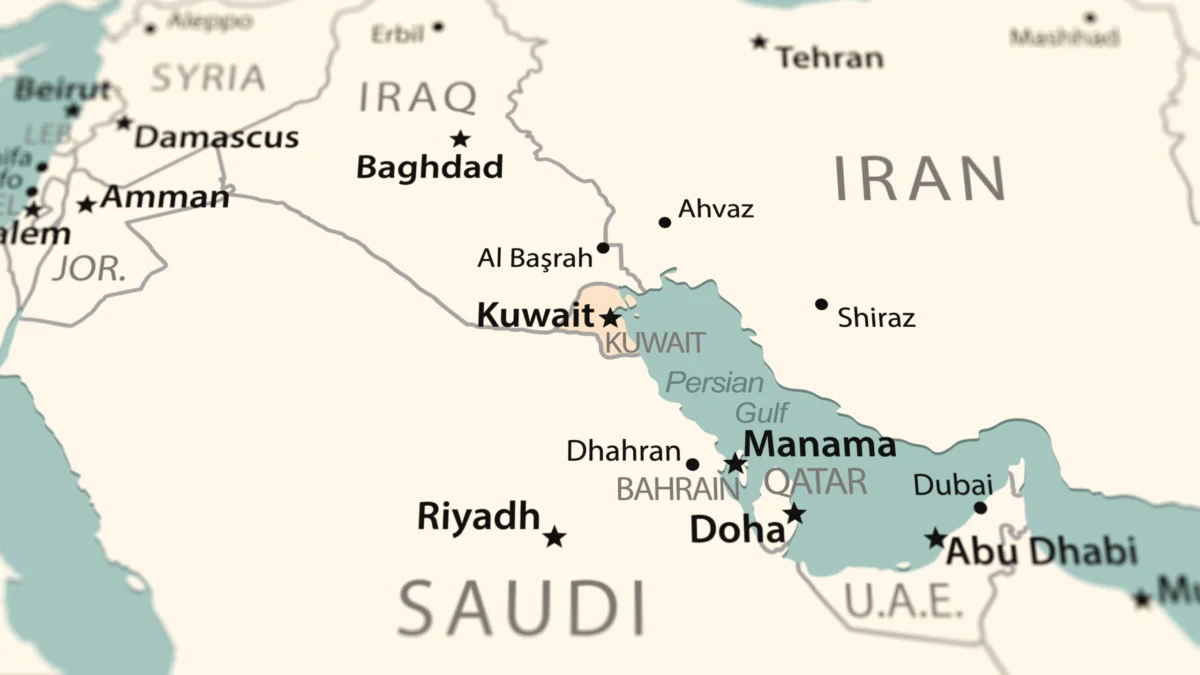
As of Saturday, the U.S. military has completed seven consecutive nights of aerial bombardment against Iranian military sites, including logistics hubs, underground weapons caches, and maritime surveillance facilities. In a defiant and coordinated response, Iran’s Islamic Revolutionary Guard Corps (IRGC) has expanded its reach, launching waves of missiles and drones against U.S. allies in the Gulf, effectively turning the region into a sprawling, high-stakes theater of war.
Chronology of Escalation: A Week of Fire and Fury
The breakdown of the ceasefire has triggered a rapid-fire sequence of tactical escalations. The past 168 hours have seen the conflict shift from localized skirmishes to a systematic campaign of infrastructure destruction.
The U.S. Offensive
The U.S. Central Command (CENTCOM) has maintained a relentless operational tempo. Over the past week, U.S. forces have focused on degrading Iran’s ability to project power. By targeting radar arrays, command-and-control centers, and logistics nodes in southern Iran, Washington aims to erode Tehran’s defensive capabilities. Recent strikes in Hormozgan Province have caused significant damage to transportation networks, including the destruction of two major bridges and a road tunnel. Reports from Iranian state media suggest these strikes have had a mounting human cost, with seven fatalities reported in Bandar Khamir alone, where rail and airport facilities were also struck.
The Iranian Counter-Response
Tehran has moved to match the U.S. intensity by striking deep into the territories of Washington’s regional partners. On Saturday, Kuwait bore the brunt of this offensive. The IRGC claimed responsibility for successful strikes on the U.S. military support center at Camp Arifjan and the destruction of critical radar facilities at Ali Al Salem Air Base. Furthermore, Iranian forces targeted the Sheikh Isa Air Base in Bahrain—a key hub for U.S. combat aircraft—and a regional intelligence data center.
Perhaps most alarming for military analysts is the claim from Iranian state television that a missile and drone strike on the Al Azraq base in Jordan resulted in the destruction of at least two U.S. fighter aircraft and three additional support planes. While these claims remain unverified by Reuters or independent observers, they highlight the aggressive posture Tehran has adopted to signal its capacity to strike beyond its own borders.
The Humanitarian and Economic Toll
While military bases have become primary targets, the conflict is increasingly encroaching upon civilian life. The targeting of water and power infrastructure has created an urgent humanitarian crisis.
The Water Crisis
In southern Iran, the city of Jask has been left reeling. Local reports indicate that missiles struck power facilities and desalination pumps, leaving approximately 10,000 residents across 20 villages without access to potable water. This pattern of targeting essential services is being mirrored across the Gulf.
In Kuwait, the impact has been equally severe. The country’s Electricity, Water and Renewable Energy Ministry confirmed that a major power generation and desalination plant was struck on Saturday. This marks the second time in 48 hours that Kuwait’s vital water infrastructure has been hit, forcing the suspension of operations at Kuwait International Airport and threatening the water security of the nation.
Economic Shockwaves: Oil and Global Markets
The Strait of Hormuz, the world’s most critical chokepoint for energy transit, is once again at the center of the storm. With one-fifth of the world’s oil supply flowing through the waterway, the recent naval blockades and threats to shipping have sent prices surging. Oil futures climbed more than 4% on Friday, reaching their highest levels in over a month.
The economic instability poses a significant challenge for U.S. President Donald Trump, who faces a critical congressional election in November. As the Republican Party struggles to maintain its legislative majority, the rising cost of fuel and the threat of a prolonged conflict could erode public support, providing political ammunition for his opponents.
Official Responses and Diplomatic Stagnation
The international community has watched the escalation with growing alarm, though diplomatic avenues for de-escalation appear effectively paralyzed.
The United Nations Perspective
U.N. Secretary-General Antonio Guterres has issued a stern warning regarding the conduct of the belligerents. His spokesperson noted that the Secretary-General is "deeply concerned" by the targeting of civilian infrastructure. The U.N. has repeatedly reminded both parties that the systematic destruction of facilities essential to the survival of the civilian population may constitute a violation of international humanitarian law. However, these calls for restraint have so far fallen on deaf ears.
Tehran’s Justification
The IRGC’s rhetoric remains uncompromising. In a statement released Saturday, the Guard justified their strikes by citing a "Quranic command" of proportional response. "Since there is no international institution to prevent the savagery of the U.S. military, we have no path before us except the command: ‘Whoever attacks you, attack them in the same manner,’" the statement read. Tehran has explicitly warned that U.S. allies should expect further strikes as long as they provide staging grounds for U.S. operations.
Washington’s Strategic Calculus
The White House has maintained a hawkish stance. President Trump has repeatedly threatened to launch broad-based air strikes on Iran’s infrastructure, and administration officials have refused to rule out a potential ground assault on Iran’s islands or coastal regions. Behind closed doors, U.S. officials argue that these attacks are necessary to provide the President with a range of options to force Iran to the negotiating table—or, failing that, to permanently cripple their military reach.
Implications: A Region on the Precipice
The current trajectory suggests that the region is entering an era of unpredictable volatility. The implications of this conflict extend far beyond the immediate damage to radar sites or desalination plants.
- Strategic Overextension: By forcing the U.S. to defend multiple points across the Gulf—from Kuwait to Bahrain to Jordan—Iran is successfully stretching American military resources, testing the limits of U.S. missile defense systems.
- The "Yemen Factor": Intelligence analysts warn that if the conflict continues to escalate, Iran may activate its proxies in Yemen. Such a move would likely lead to a broader disruption of shipping in the Red Sea, potentially forcing a global supply chain crisis that would dwarf current oil price fluctuations.
- The Risk of Total War: The collapse of the ceasefire has removed the last guardrails of the conflict. With both sides now targeting infrastructure that sustains human life, the threshold for a return to all-out, state-on-state warfare has been lowered significantly.
As the world watches, the situation remains fluid. The combination of domestic political pressures in the United States, Iran’s commitment to an "eye-for-an-eye" strategy, and the vulnerability of regional energy infrastructure suggests that the coming days will be decisive. Whether this conflict can be contained or will spiral into a regional conflagration remains the defining question of the current geopolitical moment. For the residents of the Gulf, and for the global economy at large, the cost of this escalation is already proving to be profound.
