





By Policy Desk | July 30, 2026
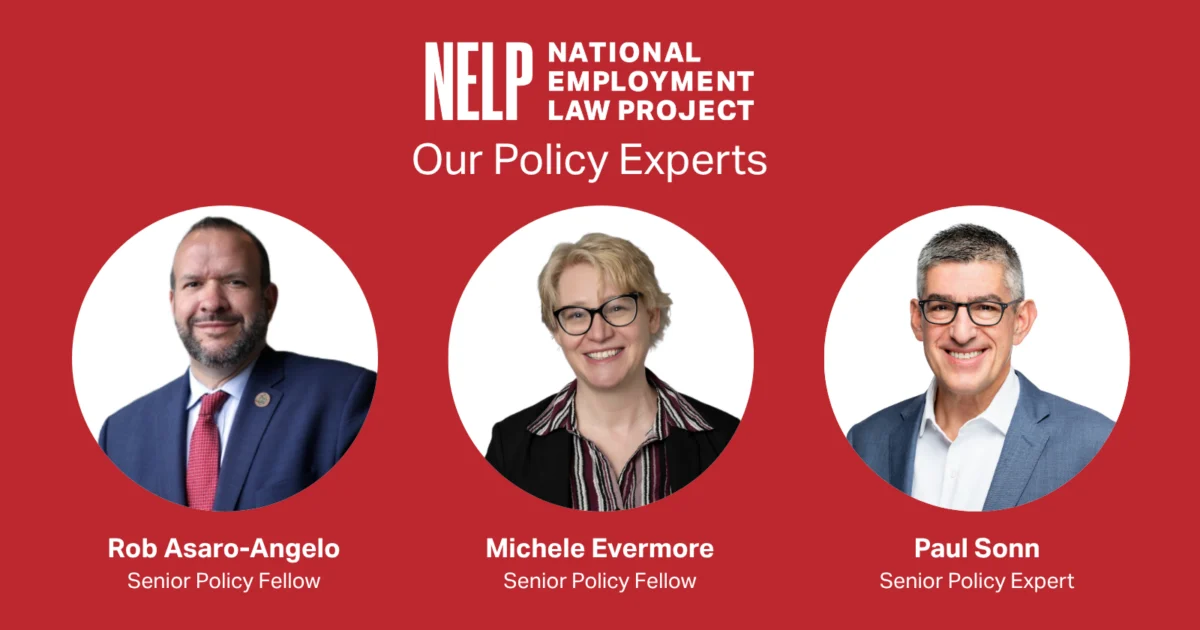
The National Employment Law Project (NELP), a preeminent force in the American labor rights movement, announced a major strategic expansion today with the appointment of three nationally recognized policy experts to senior leadership roles. As the U.S. labor market faces unprecedented disruption from artificial intelligence, shifting economic conditions, and a renewed focus on wage equity, these appointments signal a deliberate pivot toward high-impact, systemic policy reform.
The organization, which has spent over five decades championing the rights of the American workforce, is positioning these leaders to address the "next generation" of labor challenges. By integrating deep expertise in state enforcement, social insurance modernization, and wage advocacy, NELP intends to bolster its capacity to defend worker protections in an increasingly volatile digital economy.
The Strategic Appointments: Profiles in Leadership
The three new appointments represent a "who’s who" of American labor policy, bringing together a mix of executive government experience, academic rigor, and grassroots campaign strategy.
Rob Asaro-Angelo: Strengthening the Enforcement Engine
As the new Senior Policy Fellow for Worker-First Protections, Rob Asaro-Angelo brings a wealth of experience from the highest levels of state government. Most recently, Asaro-Angelo served as the Commissioner of the New Jersey Department of Labor and Workforce Development (NJDOL) from 2018 to 2026.
Under his tenure in New Jersey, Asaro-Angelo was a central architect of one of the most worker-friendly legislative agendas in the country. He oversaw the implementation of a $15 minimum wage, the passage of the Temporary Workers’ Bill of Rights, and expansive protections for domestic workers. His mandate at NELP will be to bridge the gap between policy design and practical implementation. He will focus on empowering state agencies to combat wage theft and labor standard violations, ensuring that the law on the books matches the reality on the shop floor.
Michele Evermore: Modernizing the Safety Net
The pandemic exposed deep cracks in the nation’s Unemployment Insurance (UI) system, a reality that Michele Evermore, the new Senior Policy Fellow for Economic Security and Worker Transitions, has spent years rectifying. Returning to NELP, Evermore’s appointment is widely viewed as a signal that the organization will prioritize the modernization of social insurance.
Evermore’s pedigree includes service at the U.S. Department of Labor under the Biden administration, where she helped navigate the complexities of UI modernization. As a senior fellow at the National Academy of Social Insurance and a former researcher at The Century Foundation, she is arguably the nation’s leading authority on the mechanics of jobless benefits. Her work will center on building a resilient safety net capable of supporting workers through job transitions—an increasingly vital task as AI and automation continue to reshape traditional industries.
Paul Sonn: The Architect of Wage Growth
Paul Sonn, a veteran of NELP and a foundational figure in the "Fight for $15," steps into the role of Senior Policy Expert for Wages and Affordability. Having served as the director of the NELP Action Fund, Sonn is credited with designing and defending some of the first city-level minimum wage laws in the United States.
Sonn’s new role will move beyond traditional wage hikes to address the broader scope of "affordability policy." He is tasked with developing strategies that ensure wages keep pace with the rising cost of living while pioneering "just cause" job protections. His recent focus on creating guardrails for the integration of AI in the workplace positions him at the vanguard of the next frontier of labor law.
A Chronology of Influence: From 1969 to 2026
To understand the weight of these appointments, one must look at the trajectory of the National Employment Law Project.
- 1969: NELP is founded as a legal services support organization, providing litigation support to neighborhood legal aid offices across the U.S.
- 1990s–2000s: The organization shifts toward a more proactive policy advocacy model, pioneering "Living Wage" ordinances in cities like Baltimore and Los Angeles.
- 2012: NELP provides critical legal and strategic support for the launch of the "Fight for $15," a movement that would eventually transform the national conversation on low-wage labor.
- 2020–2022: During the COVID-19 pandemic, NELP plays a central role in the national response, helping to shape the federal expansion of unemployment benefits and ensuring that essential workers were included in safety regulations.
- 2026: The organization initiates a strategic reorganization, bringing in the trio of Asaro-Angelo, Evermore, and Sonn to focus on the intersection of AI, climate-transition jobs, and systemic wage inequality.
Supporting Data: The Need for Reform
The impetus for this expansion is rooted in hard data. Despite historically low unemployment rates, the quality of jobs available to American workers remains a point of contention.
According to data tracked by NELP and its partners, wage theft remains a multi-billion dollar issue, with low-wage workers disproportionately affected. Furthermore, the rapid adoption of algorithmic management in the workplace has introduced new forms of "digital" wage theft and discriminatory hiring practices that current statutes are ill-equipped to handle.
The appointment of these three experts is designed to address this "regulatory lag." By focusing on state-level enforcement, NELP aims to create "labor laboratories"—states that pilot and prove effective, enforceable policies that can eventually be scaled to the federal level.
Official Responses and Internal Vision
In a statement addressing the new hires, Rebecca Dixon, NELP’s President & CEO, emphasized that the team was chosen not just for their expertise, but for their history of winning "visionary campaigns."
"We are thrilled to have such extraordinary leaders as Rob, Michele, and Paul taking on these significant new roles," Dixon said. "Among the nation’s most renowned worker advocates, each is an accomplished architect of both visionary policies and winning campaigns. Together, they will be the nucleus of a team that advances transformative policies for workers across the country."
The sentiment within the organization is one of momentum. Staffers suggest that the combination of Asaro-Angelo’s administrative experience, Evermore’s technical mastery of social insurance, and Sonn’s legislative track record creates a comprehensive ecosystem of advocacy.
Implications for the Future of Work
The implications of these appointments extend well beyond the nonprofit sector. As corporations and policymakers grapple with the impact of artificial intelligence, the "rules of the road" are currently being written.
1. The AI Workplace Guardrails
With Paul Sonn leading the charge on AI guardrails, NELP is signaling that the organization will become a primary watchdog for how technology is deployed in the workplace. This includes advocating for transparency in algorithmic management—ensuring that workers are not penalized by "black box" metrics that they cannot challenge.
2. State-Level Enforcement as the New Frontier
Rob Asaro-Angelo’s focus on state enforcement suggests a strategic realization: that federal gridlock in Washington, D.C. makes state houses the most fertile ground for labor victories. By training state agencies to be more effective in their enforcement of wage and hour laws, NELP is betting that improved administration of existing law can provide as much relief to workers as passing new legislation.
3. The "Worker-First" Social Safety Net
Michele Evermore’s focus on UI modernization is crucial for the coming decade. As the economy shifts away from legacy manufacturing toward service and tech-integrated roles, the nature of "job transition" is changing. NELP is preparing to lobby for systems that provide not just temporary income, but the infrastructure for retraining and secure transitions, ensuring that workers are not left behind by the green energy or tech transitions.
4. A Unified Advocacy Front
By centralizing these functions, NELP is creating a pipeline for policy that starts with research, moves through legislative design, and ends with rigorous enforcement. This holistic approach—addressing the wage, the safety net, and the protection of the worker simultaneously—is designed to create a cumulative effect that improves the lives of millions.
As the organization looks toward the next decade, the message is clear: the National Employment Law Project is moving from a defensive posture to an offensive, strategic one. With these three leaders at the helm, the organization aims to ensure that as the American economy evolves, the power dynamics of the workplace evolve with it—in favor of the worker.
