





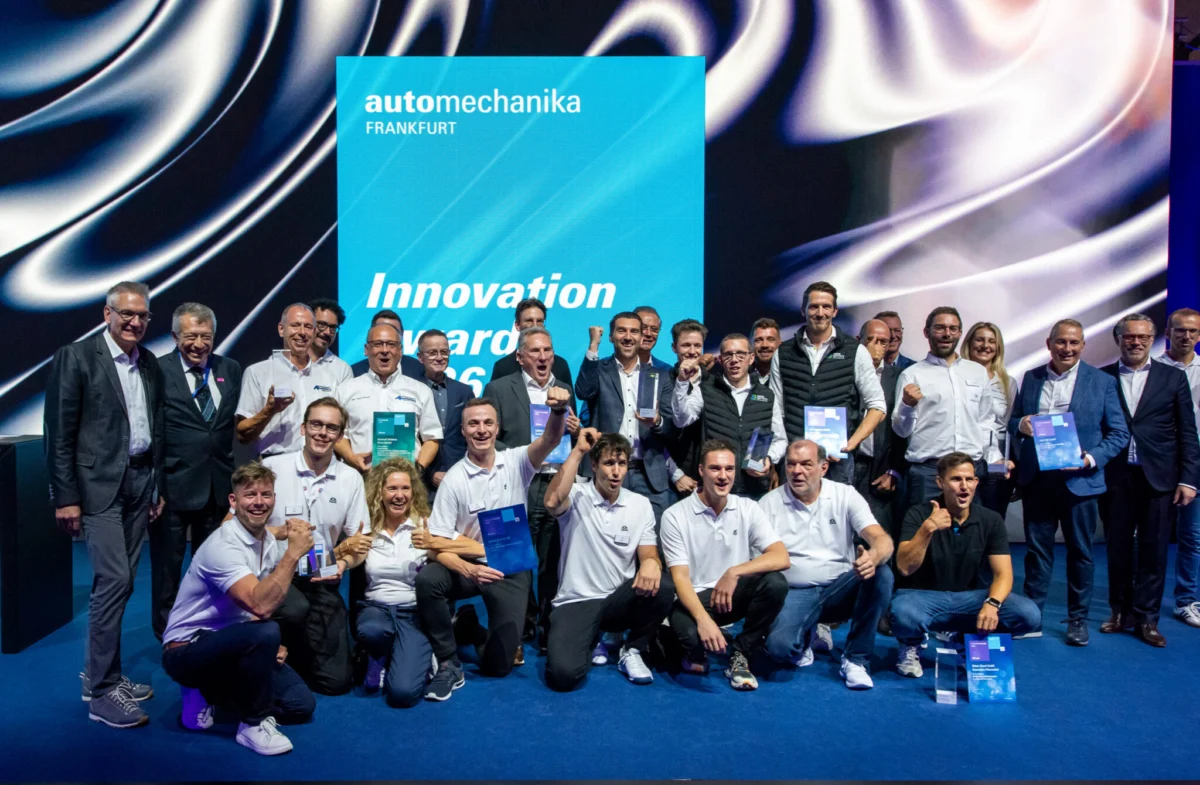
The automotive industry is currently navigating its most significant transformation since the invention of the combustion engine. As the global shift toward electrification, digitalization, and autonomous systems accelerates, the aftermarket—the vital ecosystem responsible for maintaining, repairing, and upgrading vehicles—is evolving at a breakneck pace. This shift was on full display at Automechanika Frankfurt, where the prestigious Innovation Awards served as a litmus test for the industry’s future, highlighting the technologies poised to define the next decade of mobility.
From artificial intelligence-driven diagnostics to circular economy initiatives that breathe new life into electric vehicle (EV) components, the winners of the Automechanika Innovation Awards represent the cutting edge of automotive engineering. By recognizing 10 categories of excellence, the event underscored a clear industry mandate: innovation is no longer just about performance; it is about sustainability, efficiency, and the seamless integration of digital intelligence into the workshop floor.
The Main Facts: Celebrating Excellence in Innovation
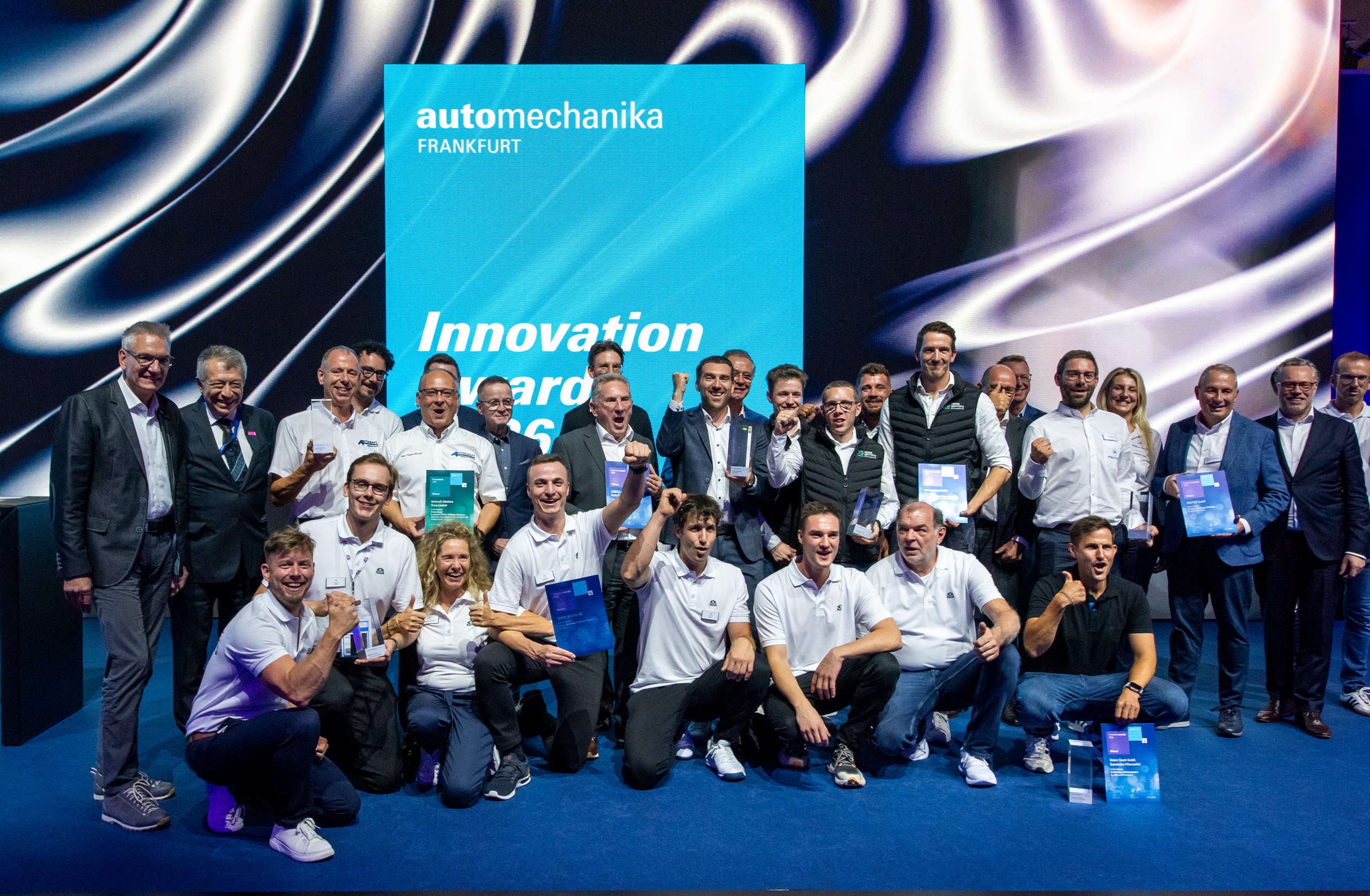
On the opening day of Automechanika Frankfurt, an international panel of 17 industry experts gathered to honor the visionaries reshaping the automotive landscape. Following a rigorous selection process that whittled down 185 entries to 47 finalists, the jury identified the most impactful solutions across 10 distinct categories.
The criteria for selection were stringent, reflecting the complex demands of the modern aftermarket. Entrants were evaluated based on their innovation, cost-effectiveness, user benefits, functionality, relevance to the aftermarket, safety, durability, quality, and environmental sustainability.
The winners include a diverse array of industry giants and nimble disruptors:
- AI Solutions & Digitalisation: Bosch Mobility Aftermarket, for its ESI[tronic] AI Assistant.
- Smart Workshop & Service Solutions: MAHA, for its autonomous vehicle inspection robot, MAIA.
- Sustainable Drive Solutions: BORG Automotive, for its remanufactured eDrive Motor process.
- Advanced Parts & Vehicle Technologies: MEYLE, for its high-durability (HD) brake disc.
- Green Award: Autocraft Solutions Group, for its "Autocraft REVIVE®" EV battery repair program.
Other industry leaders honored included Knorr-Bremse, CARTEC Autotechnik Fuchs, POLYTOP, GEN-Y Hitch, SKF, and rema.germany. These companies are not merely improving existing products; they are fundamentally redefining the service lifecycle of modern vehicles.
Chronology of the Awards: From Submission to Global Stage
The journey to the Innovation Awards stage began months prior to the trade show, as manufacturers and technology developers submitted their latest breakthroughs. The sheer volume of entries—185 in total—highlighted the intense competitive pressure within the aftermarket to provide solutions for increasingly complex vehicle architectures.
Phase 1: Screening and Jury Evaluation. A 17-member international jury, comprised of automotive engineers, trade journalists, and aftermarket specialists, undertook the daunting task of assessing the technical merits and market potential of each entry. This phase prioritized not only the "wow factor" of the technology but its practical applicability in a workshop environment.
Phase 2: Finalist Selection. With 47 solutions reaching the final round, the bar was raised significantly. Finalists were evaluated on their ability to solve specific, real-world problems.
Phase 3: The Unveiling. The awards ceremony, held on the opening day of Automechanika Frankfurt, provided a platform for these innovations to be seen by the global automotive community. Throughout the duration of the trade show, which concludes on September 12, the winning and nominated products are showcased in the "Innovation4Mobility" area, allowing visitors to engage directly with the technologies that are setting the industry standard.
Supporting Data: Understanding the Impact of Winning Technologies
To understand why these specific innovations were chosen, one must look at the technical challenges they solve.
The AI Revolution in Diagnostics
Bosch’s ESI[tronic] AI Assistant represents a fundamental shift in how workshops handle complex repairs. Modern vehicles are essentially rolling computers; as electronic control units (ECUs) proliferate, the diagnostic data can become overwhelming for technicians. By utilizing a chatbot-style interface linked to Bosch’s massive, proprietary knowledge base, the assistant allows technicians to engage in a dialogue with the vehicle’s diagnostic data, significantly reducing the "time-to-repair."
Autonomous Inspection: The MAIA System
MAHA’s MAIA (MAHA Autonomous Inspection Assistant) tackles the bottleneck of vehicle inspections. By integrating body damage detection, headlight measurement, and contactless wheel alignment into a single autonomous robotic platform, MAHA has created a solution that minimizes human error and maximizes throughput in busy workshops. This is a critical development for fleet operators and high-volume service centers who require consistent, data-driven inspection results.
The Circular Economy: Sustainability in Action
The Green Award presented to Autocraft Solutions Group for its REVIVE® EV Battery Workshops is particularly significant. As the first generation of mass-market EVs reach the end of their primary battery life, the industry faces a potential environmental crisis regarding battery waste. Autocraft’s process—which repairs and remanufactures high-voltage modules rather than replacing the entire pack—serves as a template for a sustainable aftermarket, reducing costs for vehicle owners and lowering the carbon footprint of EV ownership.
Similarly, BORG Automotive’s focus on remanufactured eDrive Motors addresses the need for sustainable drive solutions. By applying the principles of remanufacturing to the heart of the electric powertrain, BORG ensures that critical components are salvaged and restored to OEM specifications, rather than relegated to the scrapyard.
Official Responses: Defining the Industry’s North Star
The leadership at Messe Frankfurt views these awards as more than just a marketing accolade; they are a vital barometer for the health and direction of the industry.
Michael Johannes, Brand Manager for Automechanika at Messe Frankfurt Exhibition GmbH, emphasized the transition from conceptual theory to practical application during his keynote. "An idea becomes an innovation when it makes a difference in practice: when it improves processes, conserves resources, opens up new possibilities, or solves a specific problem," Johannes stated.
He further elaborated on the role of the trade show in guiding the industry through the current era of transformation. "The entries impressively demonstrate how actively the industry is shaping change—with solutions for workshops, the retail sector, industry, and the mobility of tomorrow. Particularly in times of transformation, it is all the more important to give these innovations visibility and to connect the industry’s key players."
For Johannes and the jury, the winners are not just lucky recipients of a trophy; they are the beacons for a sector that is currently navigating the "Great Transition" toward electric and connected mobility.
Implications: The Road Ahead for the Aftermarket
The implications of these innovations are far-reaching. As the industry moves forward, several key themes emerge from the winners:
1. The Death of the "Generalist" Technician
The complexity of modern vehicle systems, as highlighted by the Bosch ESI[tronic] AI Assistant, suggests that the future of the automotive technician will be a hybrid of mechanical expertise and data fluency. Workshops that fail to integrate AI-assisted diagnostics will find it increasingly difficult to compete with those that can interpret complex fault codes in real-time.
2. Automation as a Scalability Tool
The success of the MAIA robot signals that the workshop of the future will be significantly more automated. As labor shortages continue to impact the automotive sector globally, robotic assistants that can perform repetitive, high-precision tasks like wheel alignment and tire inspection will become essential assets rather than luxury items.
3. Sustainability as a Competitive Advantage
Sustainability is no longer a "nice-to-have" corporate social responsibility metric; it is becoming a business model. The success of companies like Autocraft and BORG Automotive proves that there is significant market demand for remanufactured, high-value components. As environmental regulations tighten, the "circular aftermarket" will likely grow into one of the most profitable segments of the industry.
4. The Integration of Digital and Physical
Finally, the Innovation Awards highlighted that the boundary between the digital and physical worlds is effectively gone. Whether it is a brake disc from MEYLE that incorporates advanced material science or a battery repair process that relies on cloud-based diagnostics, the winning technologies rely on a synthesis of hardware excellence and digital connectivity.
Conclusion
As Automechanika Frankfurt concludes its run, the message left behind is one of guarded optimism and aggressive innovation. The 2026 awards have set a new benchmark for what the aftermarket must achieve to stay relevant. By embracing artificial intelligence, lean automation, and circular manufacturing, the aftermarket is ensuring that it remains the backbone of the global automotive economy.
The winners of these awards are not just answering the challenges of today; they are building the infrastructure for the mobility of tomorrow. For the professionals, technicians, and engineers in attendance, the Innovation4Mobility area serves as a roadmap. The transition is underway, and as the winners of this year’s awards demonstrate, the future of the automotive aftermarket is not just about keeping cars on the road—it is about keeping them intelligent, sustainable, and performing at their peak.
