



The maritime transport industry, long criticized for its carbon-intensive reliance on diesel engines and sluggish innovation, is poised for a significant disruption. New Zealand-based marine technology firm Vessev has announced a successful A$27 million (approx. NZ$29.5 million) Series A funding round, signaling a bold ambition to redefine how passengers navigate urban waterways in Australia, the United States, and beyond.
By combining cutting-edge aerospace-grade engineering with sustainable electric propulsion, Vessev aims to turn the humble ferry commute into a high-speed, zero-emission experience. As major coastal cities struggle with road congestion and the urgent need for decarbonization, the startup’s hydrofoiling vessels—the VS-9 and the upcoming VS-12—are being positioned as the future of blue-highway transit.
The Core Investment: Fueling Global Expansion
The Series A round was led by prominent venture capital firm Blackbird, a major player in the Australasian tech scene. They were joined by existing and new institutional backers, including GD1 and Rypples, alongside a robust roster of previous investors such as K1W1, Icehouse Ventures, Shasta Ventures, and NZVC.
The infusion of A$27 million is earmarked for three primary strategic pillars:
- Scaling Manufacturing: Transitioning from prototype development to commercial-grade mass production of the VS-9 and the development of the larger VS-12.
- Market Penetration: Expanding the go-to-market team to establish a footprint in Australia and the United States, targeting cities with high-density waterfront populations.
- Technological Integration: Enhancing Vessev’s proprietary onboard software and telemetry platform, which provides real-time data on battery health, foil performance, and autonomous navigation assistance.
A Chronology of Innovation: From Concept to Commercialization
Vessev’s journey began with a simple premise: why do modern ferries still operate like heavy, inefficient vehicles from the mid-20th century?
- 2021–2022: The Incubation Phase: Vessev (formerly known as SeaChange) focused on deep R&D, leveraging New Zealand’s world-class marine engineering expertise—the same heritage that birthed the America’s Cup foiling technology.
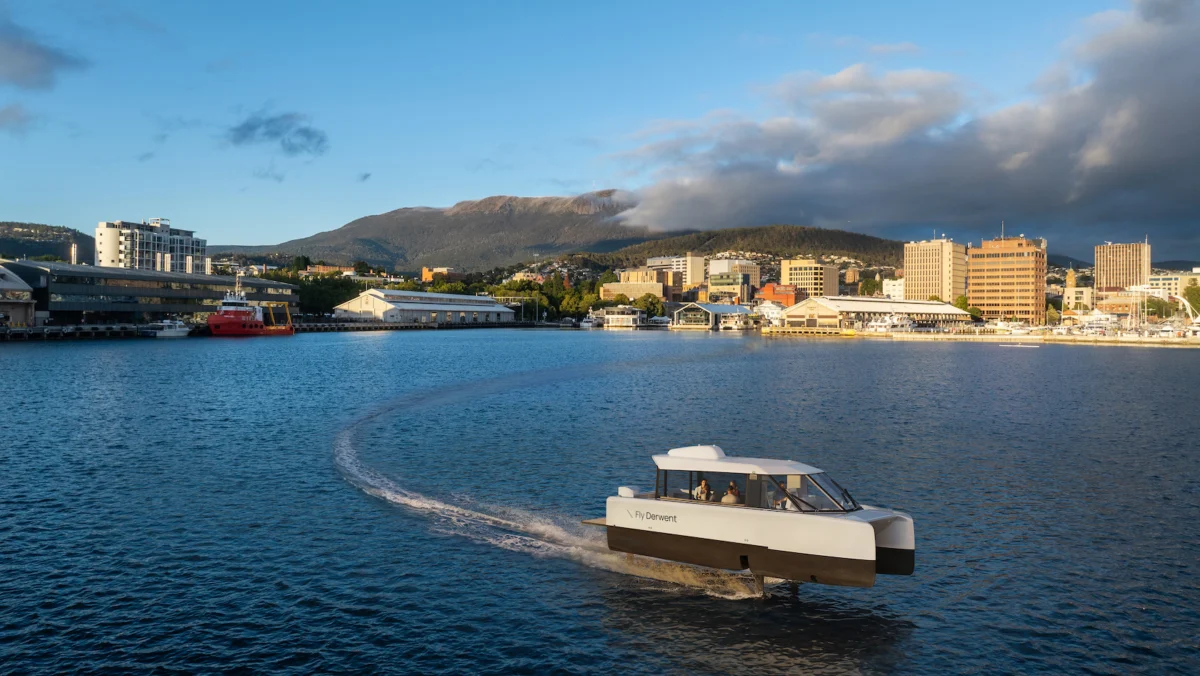
- 2023: The VS-9 Prototype Debut: The company unveiled the VS-9, a passenger vessel designed to "fly" above the water. Testing on the Derwent River in Hobart and in New Zealand waters proved that the vessel could maintain stability and comfort even in choppy conditions.
- 2024: Proof of Concept: The VS-9 proved its utility in commercial-adjacent trials, showcasing its ability to cruise at 25 knots (46 km/h) with a 50-nautical-mile (93 km) range.
- 2025–2026: The Path to Scale: With the Series A secured, Vessev is now transitioning into the commercial deployment phase. The focus has shifted from "can it work?" to "how quickly can we deploy a fleet?"
Engineering the Future: The Hydrofoil Advantage
At the heart of Vessev’s offering is the hydrofoil system. By utilizing high-strength carbon fiber foils, the vessel lifts its hull entirely out of the water once it reaches a specific speed. This mechanism eliminates the "hull drag" that typically plagues traditional displacement ferries.
Why Hydrofoiling Matters:
- Energy Efficiency: By reducing drag, Vessev vessels consume significantly less energy per passenger-mile compared to conventional electric or diesel ferries. This allows for longer ranges and smaller, lighter battery packs.
- Wake Reduction: Traditional ferries create large wakes that can erode shorelines and disrupt local ecosystems. Because the VS-9’s hull is elevated, it leaves virtually no wake, making it environmentally friendly for sensitive coastal environments.
- Passenger Comfort: The "flying" motion is remarkably smooth. Because the vessel is not slapping against waves, it eliminates the seasickness-inducing vertical acceleration common in standard boats.
Technical Specifications
| Feature | VS-9 | VS-12 (In Development) |
|---|---|---|
| Capacity | 10 Passengers | 30 Passengers |
| Cruising Speed | 25 knots (46 km/h) | 25+ knots (Est.) |
| Range | 50 Nautical Miles (93 km) | TBD |
| Hull Material | Carbon Fibre | Carbon Fibre |
Official Perspectives: The Investors’ View
For Blackbird and other investors, Vessev represents a unique convergence of "Deep Tech" and "Green Tech."
"We are backing Vessev not just because they have built a boat, but because they have built a platform for the future of urban mobility," said a spokesperson for the investment consortium. "The marine industry is the next great frontier for electrification. Vessev has the engineering rigor to handle the complexities of maritime certification while delivering a user experience that is fundamentally superior to the current diesel-chugging alternatives."
The company’s leadership has emphasized that this funding is a vote of confidence in the scalability of their manufacturing processes. By moving away from the bespoke, one-off boat-building model toward a modular, scalable assembly line, Vessev plans to drive down the total cost of ownership for ferry operators worldwide.
Implications: A New Era for Waterfront Cities
The implications of Vessev’s expansion are far-reaching, particularly for cities like Sydney, San Francisco, Seattle, and Auckland.
1. The Decarbonization of Transit
Maritime transport is often the "forgotten" sector in climate discussions. By replacing legacy diesel ferries with electric hydrofoils, municipal operators can slash their operational emissions to near zero. As cities strive to meet net-zero targets by 2040 or 2050, the electrification of the "blue lane" becomes non-negotiable.
2. Solving "The Last Mile" (or The First Mile)
In cities where geography is defined by water, commuting is often limited by bridge capacity and road congestion. High-speed, frequent hydrofoil shuttles can turn water routes into a high-capacity transit backbone. Because these vessels can operate at higher speeds than traditional ferries, they become a time-competitive alternative to driving, encouraging commuters to leave their cars at home.
3. The Digital Shipyard
Vessev’s investment in a "telemetry platform" suggests that they are not just selling hardware, but a service. Through real-time monitoring, operators can predict maintenance needs before they result in downtime. This "vessel-as-a-service" model could lower the barrier to entry for smaller, private operators who lack the capital for large maintenance teams.
Challenges Ahead: The Road to Global Adoption
Despite the technological promise, Vessev faces significant hurdles. Maritime regulations are notoriously slow to adapt to new technologies. Obtaining certification for autonomous-capable, high-speed passenger vessels in jurisdictions like the US and Australia requires navigating complex safety and licensing frameworks.
Furthermore, the company must compete against established shipbuilding giants who are beginning to experiment with their own electric solutions. However, Vessev’s "digital-first" approach—treating the boat as a software-defined asset—may give them the agility to outperform legacy manufacturers.
Conclusion: A Flying Commute
As the VS-9 makes its mark on the Derwent River and eyes the busy harbors of the Pacific, it represents more than just a new way to get to work. It represents the reclamation of our waterways as efficient, clean, and enjoyable thoroughfares.
With A$27 million in the bank and a clear vision for the VS-12, Vessev is signaling that the era of the slow, smoky ferry is ending. The future of commuting, it seems, is lifting off—quite literally—above the water. As Vessev continues to scale, the global maritime industry will be watching closely to see if this New Zealand startup can turn the tide on urban transport.
