

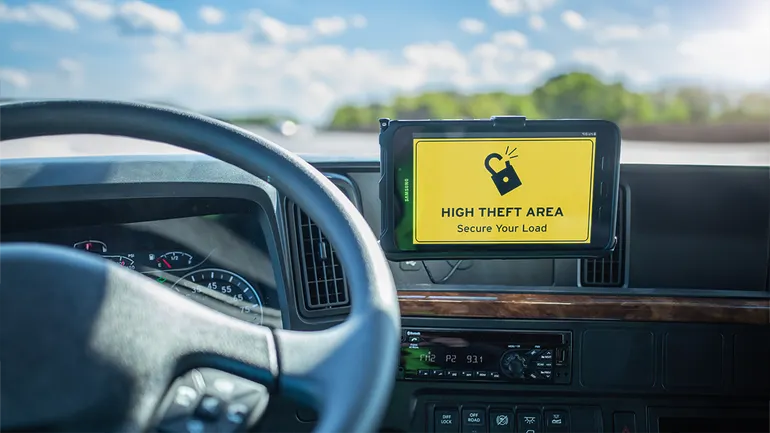
It is 1:00 a.m. on a desolate stretch of highway in Southern California. The rhythm of the road is hypnotic, punctuated only by the low hum of a heavy-duty engine and the occasional sweep of headlights against the dark desert landscape. Behind the wheel of his semi-truck, a driver carries a high-value trailer loaded with critical server components—a target that, in the wrong hands, could be worth a fortune on the black market. His mind is set on a truck stop just 40 miles ahead, a planned respite from a long, grueling shift.
At 1:30 a.m., a roadside sign flickers into view, signaling that his exit is just two miles away. But before he can signal to pull off, his Electronic Logging Device (ELD) display lights up with a sharp, urgent notification from Fleetworthy’s Safety+ platform. The alert is clear: the stop ahead is a known high-theft hotspot. With a simple tap, the driver alters his plans, bypassing the vulnerable location and proceeding toward a safer destination.
In that single moment, technology transformed a potentially disastrous cargo theft into a routine delivery. This is the new reality of modern logistics, where the difference between a successful shipment and a multi-million-dollar loss is often measured in milliseconds.
The Rising Tide of Cargo Crime
Cargo theft is no longer limited to opportunistic smash-and-grabs. It has evolved into a sophisticated, highly organized criminal enterprise. As supply chains have become more complex and globalized, the strategies required to combat them have become a constantly moving target. Today, freight is uniquely vulnerable the moment it hits the open road, leaving much of the burden of security on the shoulders of the individual driver.
When a driver pulls into a rest stop, they are often alone, tired, and operating in an environment where they are the primary deterrent against theft. Modern criminals employ a range of tactics, from brazen "drop-and-hook" operations—where thieves swap a trailer in minutes—to forced entry under duress and insidious, "low-and-slow" pilferage that may go undetected for hundreds of miles.
The threat landscape is shifting faster than traditional logistics management can keep up. Highways and truck stops that were historically considered "safe zones" are now frequently flagged as emerging hotspots. Even the most seasoned operators, who rely on anecdotal evidence or word-of-mouth warnings from peers, find it difficult to maintain an accurate, real-time map of danger.
Cargo Theft by the Numbers: An Economic Crisis
The financial impact of this criminal activity is staggering. According to recent industry data, cargo theft losses have surged to an estimated $725 million annually. These figures represent more than just the value of the goods; they account for the secondary costs of insurance claims, supply chain disruptions, lost productivity, and the eroding trust between shippers and carriers.
The data reveals that the primary drivers of this surge are a combination of increased demand for black-market consumer electronics, pharmaceutical supplies, and a lack of secure parking infrastructure. As theft patterns shift, fleets are discovering that static security policies—such as printed maps or outdated lists of "do-not-stop" locations—are woefully inadequate. The industry is reaching a consensus: if you aren’t using data-driven, real-time intelligence, you are effectively leaving your freight to chance.
Four Critical Touchpoints for Prevention
To combat these threats, leading fleets are adopting a multi-layered, proactive approach. Technology acts as the bridge between corporate policy and the driver on the ground. When the right information is delivered at the exact moment of need, the outcome changes.
1. Proactive Geofencing and High-Risk Zone Alerting
The most effective way to prevent theft is to avoid it entirely. John Van Nortwick, Senior Director of Sales Solutions Engineering at Fleetworthy, emphasizes the cognitive load placed on drivers. "If they’re driving in the middle of the night, they’re tired. Are they going to remember that this specific truck stop in Texas is one of the 150 their fleet has told them not to stop at?"
The Safety+ platform addresses this by automating the warning process. Through integrated CargoNet intelligence, the system monitors three primary tiers of risk: the 50 riskiest truck stops in the nation, the 50 riskiest counties, and a daily, dynamic update based on incidents from the previous 24 hours. By delivering this data directly to the driver’s cab, fleets ensure that the "no-go" list is always top-of-mind, regardless of the driver’s fatigue level.
2. Managing the "Unexpected Stop"
An unplanned stop is one of the most significant red flags in modern freight management. While many such stops are benign—perhaps a driver needs to check a loose strap or attend to a mechanical issue—they also represent the window of greatest vulnerability.
Fleetworthy’s "Stopped Vehicle Management" feature acts as a digital sentinel. When a vehicle stops unexpectedly on the shoulder of a highway, the system triggers an immediate alert to dispatch and maintenance teams via SMS or email. This rapid communication loop allows dispatchers to verify the driver’s status instantly. If the driver is in distress, assistance can be dispatched; if the stop is in a dangerous area, the driver can be coached to relocate immediately.
3. Enabling Precision Precautions through Customization
Technology does not replace policy; it enforces it. Fleet managers can leverage the Safety+ platform to create custom alerts that trigger upon entry or exit from specific geographical areas. These alerts can be tailored to provide specific instructions—such as "Do not uncouple the trailer" or "Maintain a 15-minute visual check."
This level of customization also facilitates targeted continuous improvement. By logging which drivers interact with alerts and which require further coaching, safety managers can identify knowledge gaps. This allows for a more focused approach to training, ensuring that safety protocols are not just a document in a binder, but a living, breathing part of the daily workflow.
4. Navigating Hours-of-Service (HOS) Constraints
One of the most common excuses for stopping at an unsafe location is the pressure of HOS regulations. A driver may be nearing their limit and feel forced to choose the nearest, potentially dangerous, stop rather than pushing to a secure facility.
Safety+ addresses this by enabling real-time communication between the driver and dispatch. If a driver is in a high-risk area, they can consult with their team to recharacterize their movement toward a safe, secure facility as an "exception" or "personal conveyance." This ensures that the driver’s safety takes precedence over strict clock-watching, without penalizing their performance record.
Official Responses and Industry Implications
The industry is beginning to see the fruits of this technological integration. Across the Fleetworthy customer base—ranging from small, family-owned operations to massive national carriers—custom cargo theft zones have already triggered more than 54,900 alerts.
Each alert represents a potential crisis averted. One Fleetworthy client noted the stark economic reality of the situation: "We’ve had cargo losses that cost tens of thousands of dollars in claims and downtime. If a single geofence alert prevents one theft, it has already paid for itself."
Industry leaders are also pushing for better collaboration between law enforcement and the private sector. The integration of data from organizations like CargoNet into private fleet management software is being hailed as the "gold standard" for security. However, technology is only one part of the equation. The culture of the organization must support the technology; when drivers feel that their safety is a higher priority than the speed of delivery, they are more likely to comply with security alerts.
The Path Forward
As we look toward the future of logistics, the gap between "technology-enabled" fleets and those relying on manual processes will continue to widen. The rise of sophisticated theft syndicates means that the old ways of doing business are increasingly obsolete.
"You can give drivers weekly meetings, policy manuals, or a Reddit feed about stops—none of that reaches them when it’s actually needed," Van Nortwick says. "If you deliver warnings and guidance as they’re entering into that unsafe situation, that makes all the difference in the world."
The integration of real-time intelligence into the driver’s cab is not just about protecting inventory; it is about protecting the driver, the company’s reputation, and the integrity of the global supply chain. In an era where data is the most valuable commodity, using that data to secure the cargo that powers the economy is no longer an advantage—it is a necessity.
As the sun rises over that Southern California highway, the truck that avoided the high-risk stop is miles closer to its destination, its cargo intact. It is a quiet victory, one that happens thousands of times a day, largely thanks to the silent, invisible guidance of a system that refuses to let the driver face the dangers of the road alone.
