





In the complex ecosystem of retail finance, a novel and aggressive strategy has emerged, driven by the volatility of international trade law and the perennial need for corporate liquidity. Over the past year, as legal battles over President Donald Trump’s tariffs—imposed under the International Emergency Economic Powers Act (IEEPA)—wound their way through the judiciary, a secondary market quietly formed. Retailers, facing tightened credit markets and the pressures of seasonal inventory cycles, began selling off the "economic rights" to their potential tariff refunds in exchange for immediate, albeit discounted, cash.
This practice, known as "tariff refund monetization," highlights the extreme measures some companies have taken to fortify their balance sheets in an era of high interest rates and cautious consumer spending.
The Genesis of the Secondary Market: IEEPA and Judicial Uncertainty
The foundation of this secondary market lies in the legal vulnerability of tariffs implemented under the IEEPA. When these levies were first imposed, they were met with immediate pushback from the business community. Importers argued that the executive branch had exceeded its statutory authority, leading to a massive wave of litigation aimed at invalidating the duties and securing refunds for billions of dollars in paid tariffs.
For many retailers, these potential refunds represented a significant "asset in waiting." However, the timeline for receiving these funds—dependent entirely on the Supreme Court—was fraught with uncertainty. According to David Wong, Managing Principal at BDO, this ambiguity created a unique arbitrage opportunity. Investors began approaching retailers with a proposition: "Trade your uncertain future claim for guaranteed, upfront cash today."
"For the seller, a lot of the risk is purely the economics of that transaction because of the uncertainty on exactly when an importer will receive their tariff refund," Wong explained. "That’s been the biggest risk. Do I want to take a discount on the amount that could be refunded to me and get upfront cash today, and how does that compare with the full amount plus interest if I got that amount at a later date?"
Chronology: From Legal Limbo to a Robust Marketplace
The evolution of this market can be traced through key milestones that shifted the risk-reward calculus for both buyers and sellers.
Pre-Ruling: The High-Risk Phase
Prior to the Supreme Court’s February 2025 ruling, which ultimately invalidated the IEEPA-backed tariffs, the market was defined by extreme skepticism. Because there was no guarantee that the retailers would win their cases, buyers were essentially purchasing "lottery tickets." During this period, claims were trading at massive discounts—often 60% to 70% off the face value—or "30 to 40 cents on the dollar."
The Post-Ruling Pivot
Once the Supreme Court delivered its verdict against the tariffs and U.S. Customs and Border Protection (CBP) established a formal refund process, the risk profile changed overnight. The uncertainty shifted from "if" a refund would come to "when." As the process became more bureaucratic and defined, the discounts tightened. Market observers noted that, following the establishment of the CBP portal, claims began trading at approximately 60 cents on the dollar.
Case Studies in Capital Liquidity
Several major retailers leveraged this market to manage their debt loads and operational costs.
American Eagle Outfitters
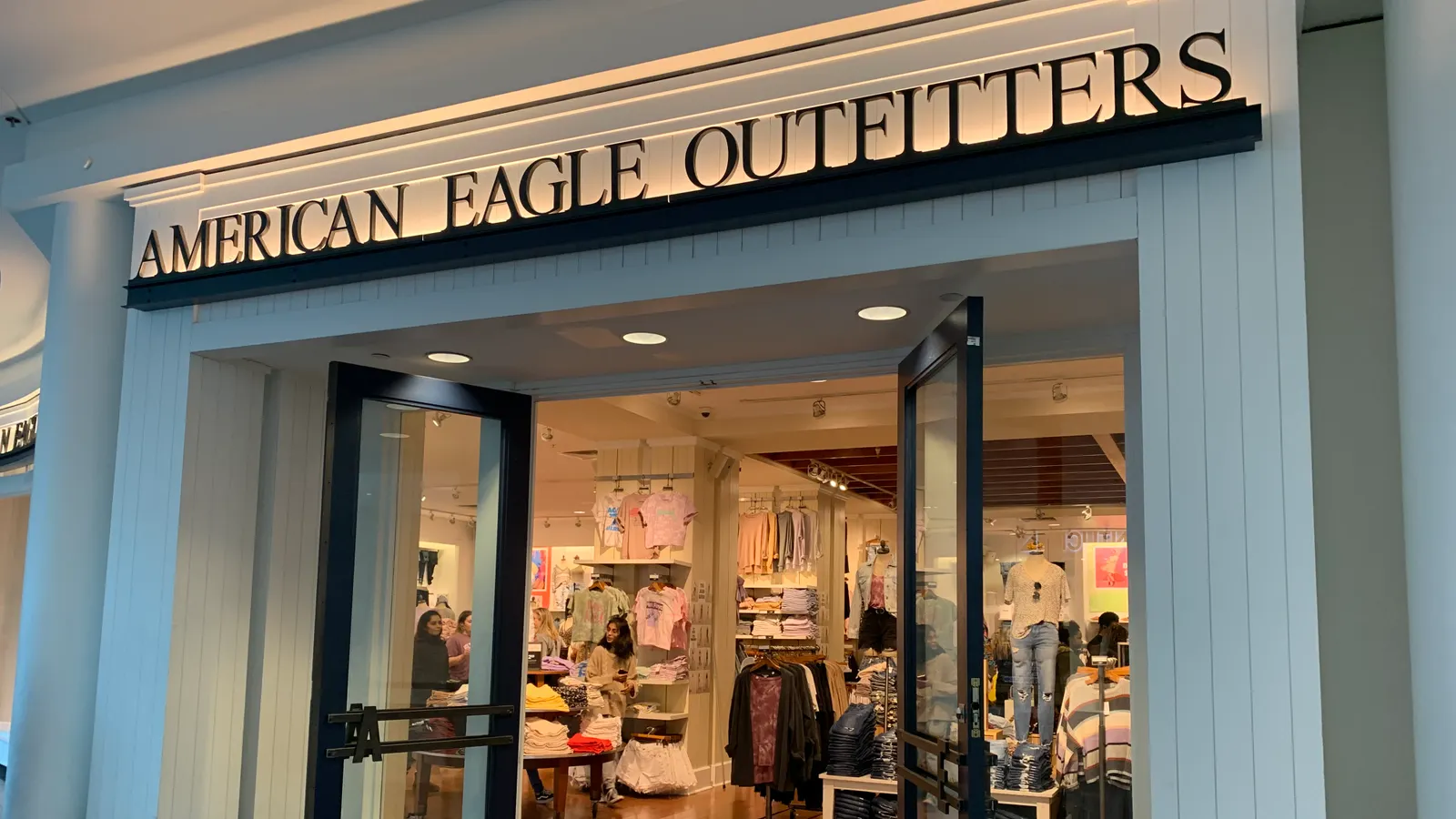
In a high-profile example, American Eagle Outfitters disclosed in a June 3 quarterly report that it had sold a portion of its IEEPA-related refund claims to a third-party buyer. The retailer offloaded $68.9 million in potential claims for $18.6 million in upfront cash. As of the filing date, the third party had already recouped $33.1 million, illustrating the significant "win" the buyer achieved once the legal hurdle was cleared.
American Eagle had previously estimated its total tariff refund claims at approximately $190 million, with a net cash benefit of $140 million. By selling a portion of these claims, the company chose to sacrifice a percentage of the total potential value to ensure immediate cash flow.
The Children’s Place
Similarly, on March 31, The Children’s Place entered into a purchase agreement with Alnus Investors. The retailer sold $38.2 million in refund claims for roughly $25.7 million. In its 10-K filing, the company noted that the net proceeds were utilized to pay down borrowings under its ABL (Asset-Based Lending) credit facility, a strategic move to reduce interest expenses and improve leverage ratios.
The BJ’s Wholesale Club Dispute
Not all transactions concluded smoothly. Investment firm Oaktree Capital Management filed a lawsuit against BJ’s Wholesale Club in April, alleging the retailer reneged on an agreement to sell $29 million in claims for approximately $20 million. The suit alleges that BJ’s attempted to back out of the deal once the CBP announced the launch of its refund portal, suggesting that the retailer realized the "market rate" for its claims had increased, rendering the previous discount unattractive.
Supporting Data: Weighing the Cost of Capital
The decision to monetize these assets is rarely made in a vacuum. It is a calculated assessment of the cost of capital. Retailers are currently navigating an environment where traditional commercial loans are expensive due to elevated interest rates.
When a CFO evaluates the sale of a tariff claim, they are essentially running a net present value (NPV) calculation. They compare:
- The cost of borrowing: What is the interest expense of a commercial loan?
- The opportunity cost: What is the "haircut" (discount) being demanded by the buyer?
If the discount on the tariff claim is lower than the interest rate on a high-yield loan or a bridge facility, the sale becomes a rational financial decision. However, as Lawrence Griff, head of retail and consumer brands at Grant Thornton, points out, there is a reputational and strategic risk to this path.
"I just think you could face a lot of criticism if you sell it at too big a discount, and then there’s clarity in the marketplace," Griff noted. "The CFO has to weigh immediate cash against what they could actually realize if they’re a little more patient."
Implications for the Retail Sector
The emergence of this market carries several long-term implications for the retail industry.
1. The Divide Between "Cash-Rich" and "Cash-Poor"
The utilization of these services has clearly delineated retailers by their financial health. Larger, "cash-rich" retailers with strong credit ratings generally avoid these transactions. Their access to the debt markets is significantly cheaper than the 40% to 70% discounts seen in these claims sales. Conversely, retailers facing tighter working capital constraints or seasonal inventory crunches are the primary participants, viewing these sales as a necessary "pressure release valve."
2. A Maturing Secondary Market
Despite the Supreme Court ruling, the market for these claims has not disappeared; it has merely matured. With more certainty regarding the refund process and substantial dollar amounts still outstanding, these claims have become a specialized asset class. Financial intermediaries are now better equipped to value these claims, and the "wild west" era of massive discounts is likely to stabilize as the bureaucratic process of the CBP becomes more predictable.
3. Increased Scrutiny on Financial Reporting
For publicly traded retailers, these transactions necessitate high levels of transparency. As seen with American Eagle and The Children’s Place, these deals must be disclosed in SEC filings, often triggering investor questions about the company’s underlying liquidity and its long-term strategy for managing trade-related risks. Investors are increasingly looking at how these "one-off" capital injections reflect the broader fiscal health of the retailer.
Conclusion: The Future of Monetization
The tariff refund monetization trend serves as a case study in how corporate finance adapts to legal and geopolitical volatility. While the initial impetus—the fight over IEEPA—may have been resolved, the precedent has been set. Should future trade disputes or legislative overhauls result in large-scale tariff reimbursements, retailers now have a blueprint for extracting value from those claims before they ever reach the government’s coffers.
As the industry moves forward, the focus will likely shift from the legal validity of these claims to the efficiency of the refund process itself. For the CFOs of the world’s largest retailers, the lesson is clear: in an era of high-interest rates, even the most complex and uncertain legal assets can be transformed into the one thing that never loses its value—immediate liquidity.
