




In a major security incident that has sent shockwaves through the SEO and web development communities, DebugBear—a widely utilized Real User Monitoring (RUM) tool—recently confirmed that its DNS records were hijacked by malicious actors. The attackers used this unauthorized access to serve malicious JavaScript to unsuspecting end-users.
The breach, which came to light on October 29, 2026, has prompted an urgent call to action from both the service provider and cybersecurity experts: website owners who have integrated DebugBear’s monitoring scripts must immediately remove them and conduct comprehensive audits of their environments for signs of unauthorized access.
The Core Facts: What Happened?
The vulnerability stemmed from a compromise at the domain registrar level. By seizing control of DebugBear’s DNS (Domain Name System) records, the attackers were able to redirect traffic intended for legitimate DebugBear script files. Instead of loading the intended performance monitoring code, browsers were instructed to download and execute a malicious payload.
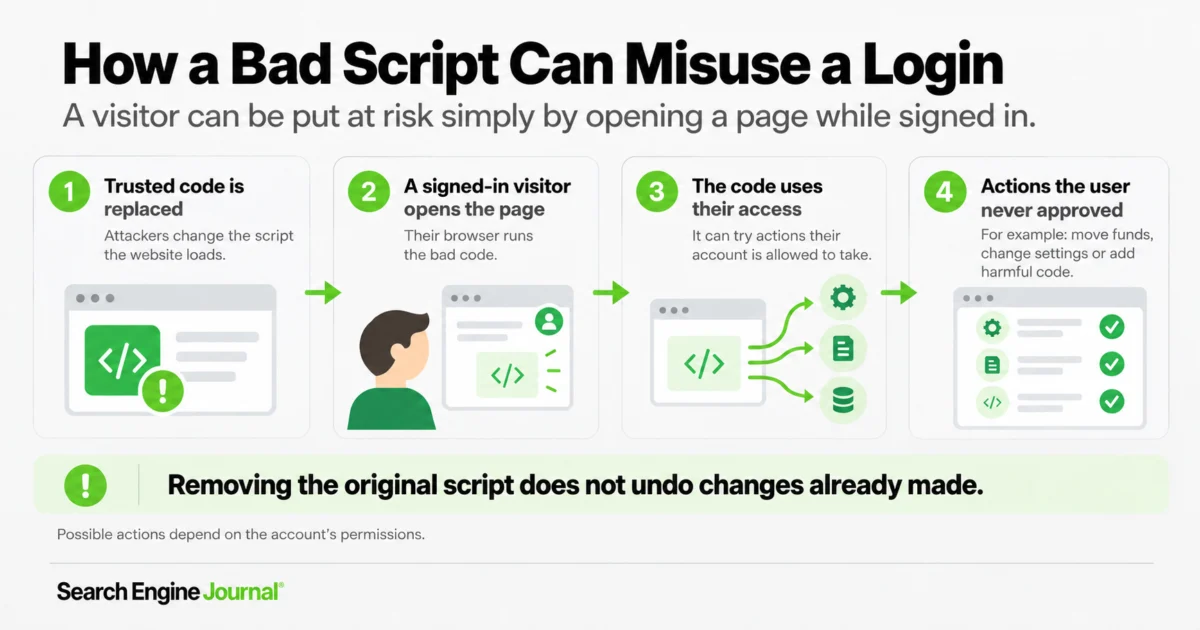
Because DebugBear’s scripts are typically placed in the <head> of a website to ensure accurate performance tracking, they possess significant privileges. By injecting malicious code into this vector, attackers gained the ability to execute actions on behalf of users who were already logged into the affected websites. This technique essentially bypassed traditional password-based authentication, as the script operated within the context of an active, authenticated browser session.
Chronology of the Incident
- October 29, 2026: DebugBear publicly acknowledges a security incident involving its infrastructure. The company issues an immediate directive for all customers to remove its Core Web Vitals monitoring script from their websites.
- October 29, 2026: Cybersecurity firm Hudson Rock identifies a malicious JavaScript payload being served via a DebugBear URL. The investigation links this activity to a high-profile attack on the prediction market platform, Polymarket.
- October 30, 2026: Polymarket releases an incident report confirming that the compromised script was used to interact with their platform’s trading interface, resulting in the unauthorized sale of positions and the siphoning of funds from user wallets.
- Ongoing: DebugBear continues to investigate the scope of the breach. The company has reported that its internal systems appear uncompromised, suggesting the attack was isolated to the DNS provider level. Communication remains difficult, as the company reported disruptions to its email services due to the DNS hijacking.
The Polymarket Case: A Lesson in Third-Party Risks
The most visible victim of this attack was Polymarket. The malicious code did not attempt to steal login credentials—it didn’t need to. Because the victims were already logged in, the script utilized the users’ existing session tokens to perform actions directly within the platform’s dashboard.
This highlights a critical and often overlooked vulnerability in modern web architecture: the "Supply Chain Attack." When a website owner includes a third-party script, they are essentially granting that script permission to act as an extension of their own codebase. If the third-party provider is compromised, the trust relationship is weaponized. In the case of Polymarket, the script acted as a "wallet-draining" tool, manipulating the UI to move funds without triggering the standard security warnings that might alert a user to a phishing attempt.
Implications for Web Security and SEO
For SEO professionals, the primary focus is often on performance metrics and Core Web Vitals. However, this incident serves as a stark reminder that performance monitoring tools are a vector for security risks.
The Vulnerability of Third-Party Scripts
Most RUM tools, analytics trackers, and advertising pixels require high-level permissions to function. When these scripts are compromised, the impact is instantaneous and global across all sites that use the tool. Website owners often "set and forget" these scripts, rarely auditing them for changes in source code or behavior.
The "Signed-In User" Threat
The most dangerous aspect of this attack is that it targets the "authenticated state." Modern web applications rely on session cookies or local storage tokens to keep users logged in. A malicious script running in the browser can read these tokens or directly call API endpoints as if it were the user. This means that even with Multi-Factor Authentication (MFA) enabled, a user is not safe if their browser is actively running a malicious script on a site they trust.
Recommended Actions for Site Owners
If your website utilizes DebugBear or similar third-party monitoring tools, you must treat this incident as a high-priority security event. The following steps are recommended for development and security teams:

1. Immediate Removal
Remove the DebugBear script reference from your source code immediately. While the company is working to regain full control and sanitize their distribution servers, the safest posture is to stop the script from loading entirely.
<!-- Example of the tag to be removed -->
<script async src="https://cdn.debugbear.com/YOUR_SCRIPT_ID.js"></script>
2. Forensic Log Review
Review your server logs and application logs from the window of time that the script was active. Look for unusual API calls, unauthorized transactions, or suspicious patterns in user behavior. Because the attack occurred on the client side, you may also need to review browser-based telemetry if your application tracks such data.
3. Review Content Security Policy (CSP)
If your site does not have a robust Content Security Policy, now is the time to implement one. A well-configured CSP can prevent unauthorized scripts from executing or restrict where scripts can send data (e.g., preventing a script from "phoning home" to a malicious command-and-control server).
4. Audit Third-Party Dependencies
Create an inventory of all third-party scripts running on your site. For each, ask:
- Does this script require access to sensitive user data?
- How is this script delivered? (Self-hosted vs. external CDN)
- Is there a "Subresource Integrity" (SRI) hash implemented to ensure the script hasn’t been tampered with?
Official Responses and Communication
DebugBear has been active on social media, particularly X (formerly Twitter), to keep users updated while their primary email communication channels were disrupted by the DNS issues. Their transparency in acknowledging the issue and advising users to remove the code has been critical in mitigating further damage.
However, the incident has sparked a wider conversation about the necessity of DNS security. Many companies rely on third-party registrars without implementing advanced protections like "ClientHold" or Registry Locks, which would prevent unauthorized parties from modifying DNS records even if they gain control of the registrar account.
Looking Forward: A Paradigm Shift?
The DebugBear incident is not the first, and it certainly won’t be the last, supply chain attack of its kind. As the web becomes more modular and dependent on third-party integrations, the responsibility of the site owner extends far beyond their own servers.
Website owners must transition from a "trust-based" model to a "zero-trust" model for third-party scripts. This involves:
- Sandboxing: Using
iframetechnology to isolate third-party scripts from the main application context where possible. - SRI Hashes: Implementing Subresource Integrity to ensure that browsers only execute files that match a known cryptographic hash.
- Constant Auditing: Regularly scanning for changes in third-party script behavior.
In conclusion, while DebugBear provides invaluable data for optimizing Core Web Vitals and user experience, this breach demonstrates the high cost of convenience. SEO teams, developers, and security officers must collaborate more closely to ensure that the quest for search engine ranking does not come at the expense of user safety. Until a full resolution is confirmed and security measures are hardened, the "remove-first" approach remains the only responsible path for site owners.
