




Main Facts: High-End Demand Overcomes Initial Hostility
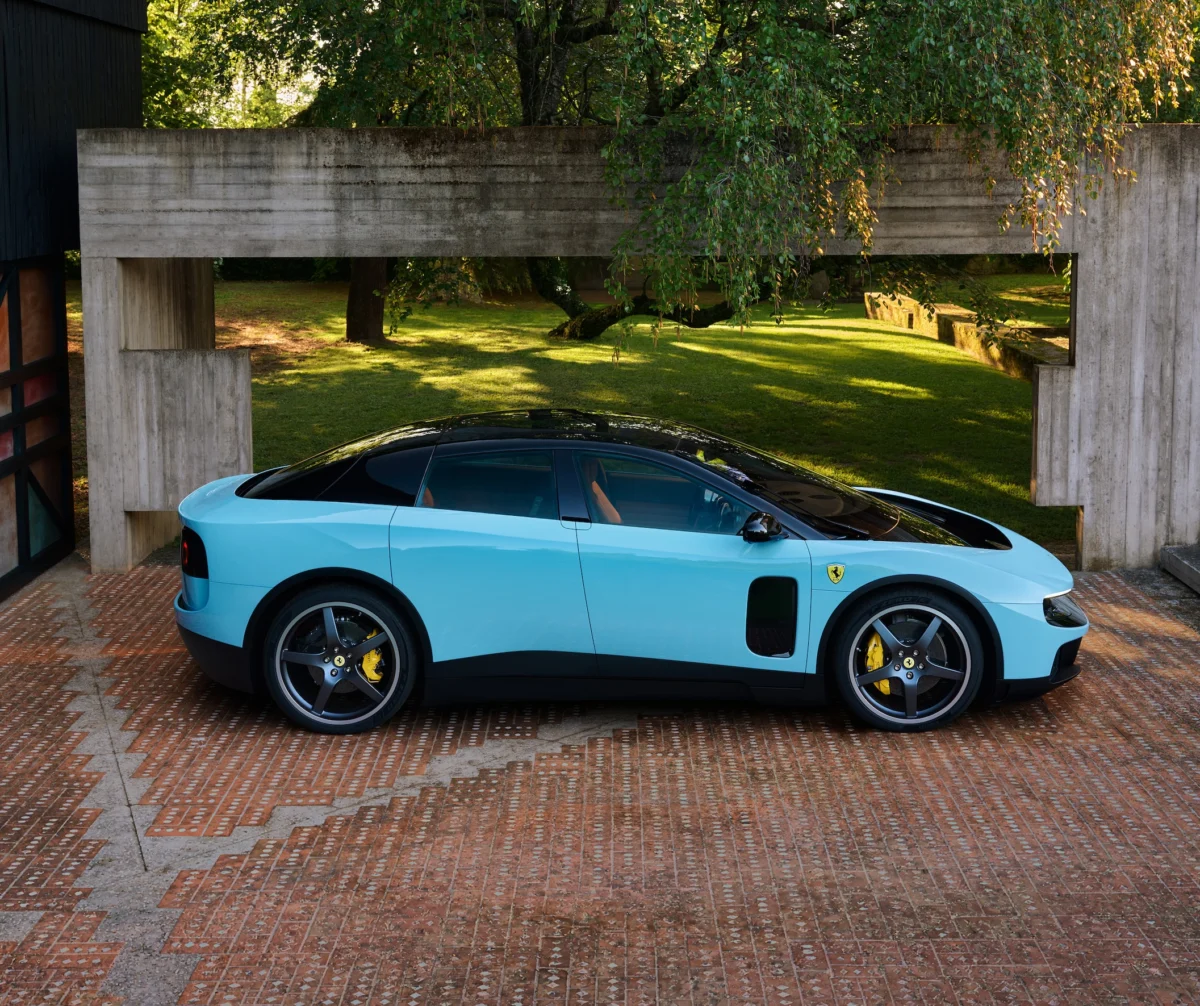
When Maranello first pulled the silk sheet off the Luce—Ferrari’s highly anticipated debut into the fully electric vehicle (EV) market—in May, the collective reaction of the internet was swift, loud, and overwhelmingly negative. Social media platforms, automotive forums, and financial markets alike reacted with immediate skepticism. Critics mocked the vehicle’s wedge-shaped silhouette, comparing it to mass-market hatchbacks like the Nissan Leaf, while purists lamented the departure from Ferrari’s historic internal combustion engine (ICE) heritage. The immediate market response was equally brutal: Ferrari’s stock price slid by 8% the day after the reveal, signaling that investors feared the Italian automaker had misread its ultra-wealthy clientele.
However, the initial wave of online derision has been thoroughly debunked by hard commercial reality. According to a report by the Financial Times, Ferrari has successfully hit its annual sales target for the Luce in just two months. The automaker had set a conservative yet exclusive target to sell just under 500 units of the €555,000 ($630,000) electric grand tourer within its first year.
Designed in close collaboration with Jony Ive—Apple’s legendary former Chief Design Officer—and his independent design firm, LoveFrom, the five-seater Luce represents a radical departure from traditional supercar aesthetics. Despite early predictions that the car would be a commercial "dud," the rapid sell-out of its initial allocation proves that the "armchair executives" of the internet underestimated the purchasing power, brand loyalty, and shifting preferences of the global ultra-high-net-worth (UHNW) demographic.
                              FERRARI LUCE TIMELINE
                                     (2021-2026)
                                         │
  Sep 2021 ──────────────────────────────┴────────────────────────────── Exor Partnership
  • Ferrari's parent company Exor announces multi-year collaboration with Jony Ive & LoveFrom.
                                         │
  May 2026 ──────────────────────────────┴────────────────────────────── Global Reveal & Backlash
  • Luce is officially unveiled.
  • Internet critics compare design to a Nissan Leaf; stock drops 8% next day.
  • Former Chair Luca di Montezemolo expresses public skepticism.
                                         │
  Jun 2026 ──────────────────────────────┴────────────────────────────── Chinese Market Launch
  • Luce launches in China at $586,600 USD.
  • All 88 allocated units sell out immediately.
                                         │
  Jul 2026 ──────────────────────────────┴────────────────────────────── Annual Target Achieved
  • Financial Times reports global annual sales target (~500 units) met in just two months.
Chronology: From Polarizing Debut to Commercial Triumph
The journey of the Ferrari Luce from a controversial design concept to a sold-out commercial success story unfolded over several pivotal phases:
1. The Collaborative Origin (September 2021)
The groundwork for the Luce was laid when Exor, the Agnelli family holding company that controls Ferrari, announced a multi-year creative partnership with Jony Ive and Marc Newson’s design collective, LoveFrom. The announcement sparked intense speculation about how the minimalist, user-experience-focused design philosophy of Apple’s former design chief would translate to the raw, visceral, and performance-driven world of Maranello.
2. The Controversial Unveiling (May 2026)
Ferrari officially revealed the Luce to the public. Rather than presenting a traditional low-slung, two-seater mid-engine supercar, Ferrari introduced a sleek, wedge-shaped, five-seater grand tourer. The internet reaction was polarized. Reddit threads and automotive forums were flooded with side-by-side comparisons to the Nissan Leaf, and critics argued that high-tech Chinese EV manufacturers would easily outperform the Luce at a fraction of its astronomical $630,000 price tag. The next day, Ferrari’s stock fell by 8%, reflecting Wall Street’s temporary anxiety over the radical design direction.
3. The Chinese Market Breakthrough (June 2026)
Despite Western online skepticism, the Luce made its official debut in the Chinese market. Positioned as a luxury lifestyle vehicle tailored to China’s tech-forward elite, the vehicle was priced at $586,600 USD for the region. Ferrari allocated 88 units to the Chinese market for the initial run. Every single unit sold out immediately upon the opening of the order books, demonstrating robust demand in the world’s most competitive EV market.
4. Meeting the Global Target (July 2026)
Just two months after its highly criticized public debut, the Financial Times confirmed that Ferrari had achieved its entire global sales target for the year, securing buyers for its planned production run of just under 500 vehicles. The rapid sales pace silenced critics and demonstrated that the physical car and its exclusive brand positioning held far more appeal for actual buyers than digital renders did for online commentators.
Supporting Data: The Economics of Extreme Luxury
The financial and volume metrics of the Luce’s launch highlight the unique economics of the ultra-luxury automotive sector, which operates independently of broader mass-market EV trends.
| Metric | Details |
|---|---|
| Base Retail Price (Europe) | €555,000 ($630,000 USD) |
| Retail Price (China) | $586,600 USD |
| First-Year Global Sales Target | Just under 500 units |
| Time Taken to Achieve Target | 2 months |
| Chinese Market Allocation | 88 units (approx. 18-20% of global target) |
| Chinese Market Sell-Out Time | Immediate |
| Ferrari Total Global Deliveries (Prior Year) | 13,663 vehicles |
Comparative Analysis: Mass-Market vs. Ultra-Luxury EV Dynamics
While mass-market EV manufacturers are currently locked in a brutal price war—with Chinese brands like BYD, Geely, and Xiaomi offering high-performance sedans for under $40,000—Ferrari operates in a different economic reality.
For the typical Ferrari buyer, the purchase is not a utility-driven decision based on price-to-performance ratios. Ferrari’s global customer base is highly price-insensitive; the company delivered over 13,000 vehicles in the previous fiscal year, with a significant percentage of buyers owning multiple models. A €555,000 price tag represents an entry point into an exclusive club of early-adopter EV ownership backed by the prestige of the Prancing Horse.
Official Responses and Criticisms: The Clash of Perspectives
The launch of the Luce exposed a deep chasm between traditional automotive purists, former company insiders, and the new generation of luxury consumers.
The Insider Backlash
Perhaps the most damaging early criticism came from within Ferrari’s extended family. Luca Cordero di Montezemolo, the legendary former Chairman of Ferrari who steered the company through its golden era of Formula 1 dominance and oversaw the creation of iconic road cars like the Enzo and the LaFerrari, was openly critical. Montezemolo, a staunch defender of the mechanical purity and auditory drama of the Italian V12 engine, expressed deep skepticism regarding the electrification of the brand and the radical styling departures introduced by the Luce.
The Online Skepticism
On platforms like Reddit and Imgur, the criticism focused heavily on the exterior styling. Armchair critics argued that the wedge shape lacked the flowing, organic lines traditionally associated with Maranello’s finest designs. Many argued that without the signature roar of an internal combustion engine, a Ferrari EV was simply an overpriced software platform on wheels that could be easily matched in performance by Chinese EV giants like Zeekr or Yangwang.
The Professional Verdict
However, automotive journalists who secured early prototype drives offered a vastly different perspective. Reviews from Top Gear and MotorTrend praised the vehicle’s driving dynamics.
- Top Gear noted: "The Luce doesn’t try to mimic an ICE car; instead, it redefines what a luxury EV can feel like, delivering instantaneous torque with chassis control that is unmistakably Maranello."
- MotorTrend remarked: "Despite the absence of a V12 soundtrack, the steering precision, active suspension, and overall driving engagement prove that Ferrari’s engineering DNA remains fully intact in the electric era."
Implications: What the Luce’s Success Means for the Industry
The rapid commercial success of the Luce carries profound implications for Ferrari, the ultra-luxury automotive sector, and the broader EV transition.
1. Validation of the Electrification Strategy
For years, automotive analysts questioned whether a brand built on the high-octane symphony of internal combustion engines could survive the transition to zero-emission powertrains. The Luce proves that Ferrari’s most valuable asset is not its engines, but its brand equity. The presence of the Prancing Horse badge, combined with exceptional driving dynamics, is sufficient to command a premium, even without an exhaust note.
2. The Rise of the "Quiet Luxury" Design Language
The collaboration with Jony Ive and LoveFrom marks a shift away from the aggressive, vent-heavy, track-focused design language that has dominated the supercar industry for the last two decades. The Luce introduces a cleaner, more monolithic, and integrated design aesthetic. Its success may prompt other ultra-luxury marques—such as Aston Martin, McLaren, and Lamborghini—to embrace more understated, minimalist designs for their upcoming electric offerings.
3. The Importance of the Chinese Luxury Market
The immediate sell-out of all 88 units allocated to China highlights a key demographic shift. Unlike Western markets, where older, traditional collectors dominate the Ferrari customer base, the Chinese luxury market is comprised of younger, highly tech-literate buyers. These consumers favor practical, high-tech, four-door or five-door layouts that allow them to travel with passengers in comfort, while still enjoying the prestige of an exotic brand. By delivering a five-seater EV, Ferrari perfectly aligned its product with the desires of the East Asian elite.
4. A Blueprint for Low-Volume EV Profitability
While legacy automakers like Ford and General Motors struggle to find profitability in high-volume, low-margin EVs, Ferrari’s low-volume, high-margin approach serves as a blueprint for the ultra-luxury segment. By capping production at under 500 units annually and charging over $600,000 per vehicle, Ferrari can comfortably amortize the high research and development costs associated with EV powertrains without relying on mass-market scale.
Ultimately, the Ferrari Luce has demonstrated that in the ultra-luxury market, the opinions of online commentators rarely align with the purchasing decisions of the actual clientele. While the internet debated its design, Ferrari quietly filled its order books, proving once again that exclusivity, brand heritage, and engineering excellence remain an undefeated combination.
