




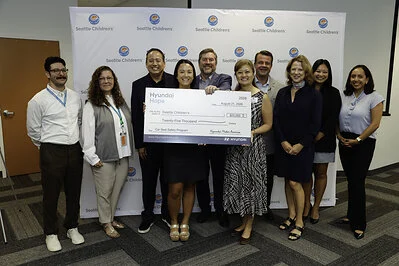
In a significant move to bolster public health and automotive safety, Hyundai Motor America and Seattle Children’s have announced a strategic partnership aimed at closing the persistent gap in child passenger safety education. Through a $25,000 investment from Hyundai Hope—the automaker’s dedicated corporate social responsibility arm—the two organizations are launching a multi-year program designed to provide free, professional car seat inspections and safety education to families across Washington state, with a specific focus on underserved communities in South King County.
The collaboration seeks to tackle a sobering statistic: nearly half of all child car seats and booster seats in the United States are installed incorrectly or used improperly, leaving children vulnerable in the event of a collision. By embedding certified technicians within local communities, this initiative aims to reach approximately 300 families over the next two years, providing them with the expertise, equipment, and peace of mind necessary to keep their youngest passengers safe.
The Core Mission: Bridging the Safety Gap
The partnership is built on the premise that safety education should not be a luxury, but an accessible resource for every family, regardless of socioeconomic status. The $25,000 grant will fund year-round car seat check events in high-traffic and high-need areas, including Federal Way, Seattle, and Bellevue.
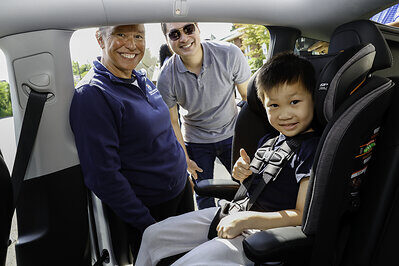
At these events, certified Child Passenger Safety Technicians (CPSTs) perform a multi-step verification process. This includes inspecting the structural integrity of existing seats, identifying expired or recalled models, and providing hands-on instruction to parents and caregivers on how to secure their children correctly. In instances where a seat is found to be unsafe—whether due to age, past damage, or a manufacturer recall—the program offers replacements, ensuring no family is left without the necessary protective equipment.
Chronology: A Roadmap to Implementation
The timeline for this initiative is designed to be sustainable and impactful. Recognizing that child passenger safety is a continuous responsibility, the program is not a one-time event but a sustained, two-year commitment.
- Phase 1: Strategic Planning and Outreach: Following the formal announcement, Seattle Children’s began coordinating with local community centers and social service agencies in South King County. The focus during this initial phase is to identify the families who face the greatest barriers to accessing traditional safety resources.
- Phase 2: Operational Launch (Current): The program is now rolling out its series of recurring inspection clinics. These events are strategically scheduled throughout the year to capture families during critical developmental transitions—such as when a child outgrows an infant carrier and requires a convertible seat.
- Phase 3: Ongoing Monitoring and Expansion: Over the next 24 months, the program will collect data on usage patterns and installation errors. This data will be used to refine the educational curriculum and potentially expand the geographical footprint of the clinics if demand remains high.
- Phase 4: Program Evaluation: At the conclusion of the two-year cycle, stakeholders plan to assess the success of the initiative, measuring the number of seats installed correctly and the number of families served, to provide a blueprint for future corporate-hospital partnerships.
Supporting Data: Why Expert Intervention Matters
The necessity of this program is supported by rigorous research into vehicular safety. The data regarding the efficacy of proper car seat usage is compelling, yet the reality of public compliance remains a challenge for health officials.
The Statistics of Safety
According to data provided by Seattle Children’s, the potential impact of proper installation is quantifiable:
- Infant Protection: Proper use of car seats reduces the risk of fatal injury by approximately 71 percent for infants.
- Toddler Protection: For children ages 1 to 4, proper usage reduces the risk of fatal injury by 54 percent.
Despite these clear benefits, the persistent issue of "misuse" remains a public health crisis. Misuse encompasses a wide range of errors, including loose harness straps, incorrect belt-path routing, the use of seats inappropriate for the child’s height or weight, and the premature transition to forward-facing seats. Many parents are unaware that they are making these errors, believing that because the seat is buckled in, it is providing maximum protection. The intervention of a CPST provides the "eyes-on" validation required to correct these hidden hazards.
Official Perspectives: Aligning Corporate and Medical Objectives
The success of the initiative relies on the synergy between Hyundai’s corporate social responsibility goals and the clinical expertise of Seattle Children’s.
Hyundai’s Commitment
Cole Stutz, chief safety officer at Hyundai Motor North America, emphasized that the investment is about humanizing safety technology. "Helping keep children safe on the road starts with ensuring families have access to the education and resources they need," Stutz stated. "Hyundai is proud to facilitate a program that goes beyond the vehicle itself to support the safety of our most vulnerable passengers."
Clinical Advocacy
For Seattle Children’s, the partnership is a vital extension of their community health outreach. Isabell Sakamoto, manager of community health at the hospital, noted that the geographical focus on South King County was deliberate. "Thanks to the support, Seattle Children’s will expand community car seat check events into South King County over the next two years, bringing vital safety resources and hands-on guidance directly to the families who need them most," Sakamoto said.
The Role of Local Dealers
The initiative is also supported by the local dealer network, which serves as a bridge between the corporate entity and the community. Jim Walen, owner and dealer principal at Seattle Hyundai, highlighted the dealer’s role in fostering community trust. "As a Hyundai dealer, we’re proud to help connect our community with resources that promote child passenger safety and provide peace of mind for parents and caregivers," Walen remarked. By leveraging their physical locations and community ties, local dealers act as conduits for program awareness.
Implications: The Broader Impact on Public Health
The Hyundai-Seattle Children’s partnership serves as a model for how the automotive industry can contribute to public welfare. The implications of this program extend beyond the individual families served; they touch upon broader systemic issues regarding health equity and accident prevention.
Addressing Health Equity
South King County is a diverse and rapidly growing region, yet it historically faces disparities in access to specialized safety services. By bringing the car seat clinics directly to these communities, the program removes barriers related to transportation, time, and language. This is a critical step in democratizing child safety, ensuring that the ability to protect a child is not contingent on where a family lives or their ability to navigate complex medical or safety systems.
A New Standard for CSR
Corporate Social Responsibility (CSR) is often criticized for being performative, but the Hyundai-Seattle Children’s initiative demonstrates the efficacy of "resource-based" CSR. By providing direct funding for specialized labor (CPSTs) and hardware (replacement seats), the company is addressing a tangible societal need. This model suggests that automakers, who have a vested interest in vehicular safety, are uniquely positioned to partner with pediatric hospitals to create safer environments for the next generation.
Future Outlook
As the program progresses, the data gathered will likely provide valuable insights for traffic safety advocates. Understanding the specific obstacles parents face when installing car seats—whether it be the complexity of modern vehicle interiors or the confusing nature of seat manuals—could eventually inform future design changes in car seats and vehicle anchor systems.
Ultimately, the goal of this initiative is to shift the culture surrounding child passenger safety. When a parent attends a clinic and learns to correctly buckle their child, they are not just learning a technical skill; they are gaining a heightened sense of situational awareness. By the end of the two-year term, Hyundai and Seattle Children’s hope to have created a ripple effect, where the knowledge gained by 300 families is shared with friends, neighbors, and community groups, creating a safer landscape for children across the entire state of Washington.
In an era where road safety technology is advancing rapidly, this partnership reminds us that the most sophisticated safety features are only as effective as the human beings who operate them. Through education, investment, and community collaboration, Hyundai and Seattle Children’s are ensuring that, when it comes to the safety of our children, there is no room for error.
