




By Editorial Staff
August 28, 2026
As the American labor market faces a historic intersection of technological disruption, infrastructure expansion, and evolving economic pressures, the National Employment Law Project (NELP) has announced a significant expansion of its strategic leadership. In a move designed to cement its influence as the preeminent architect of worker-centric policy, the organization has appointed four nationally renowned experts to lead its advocacy efforts.
Entering its seventh decade of operation, NELP’s latest appointments signal a shift toward a more aggressive, policy-driven approach to creating what the organization terms a "Good Jobs Economy"—a structural framework where every job, regardless of industry, provides a foundation of dignity, economic security, and fair compensation.
The Architects of Change: New Strategic Leadership
The infusion of new talent—and the return of key veterans—is not merely an expansion of staff; it is a tactical alignment of expertise. By bringing in individuals who have held high-ranking positions within the U.S. Department of Labor (DOL) and state-level regulatory bodies, NELP is positioning itself to bridge the gap between grassroots activism and high-level federal policy implementation.
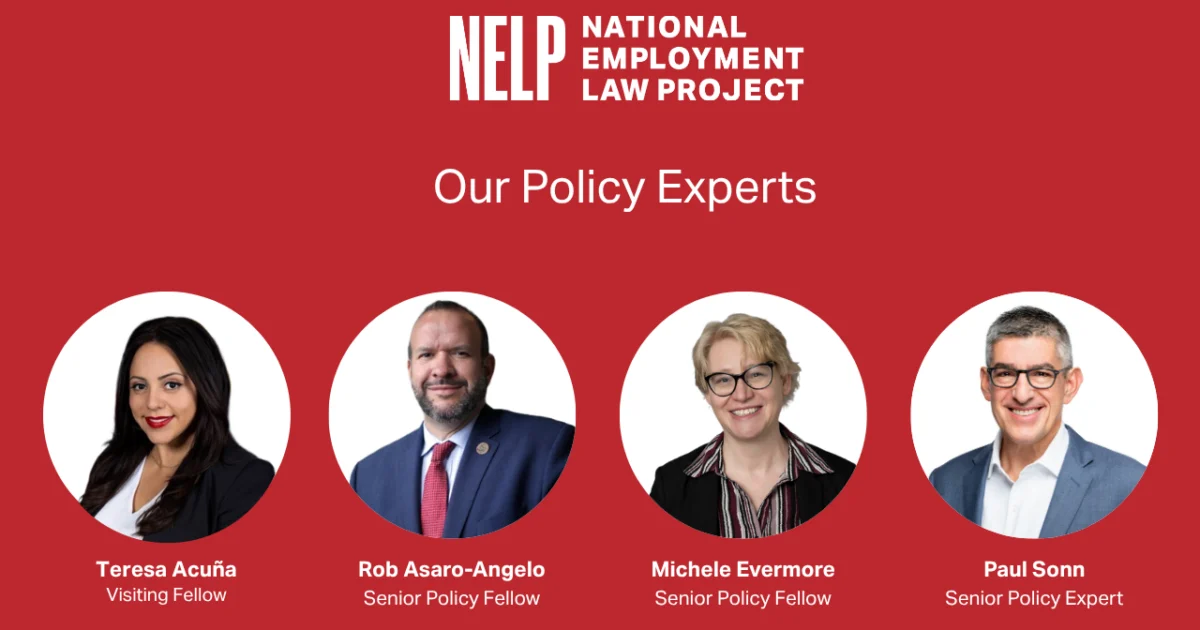
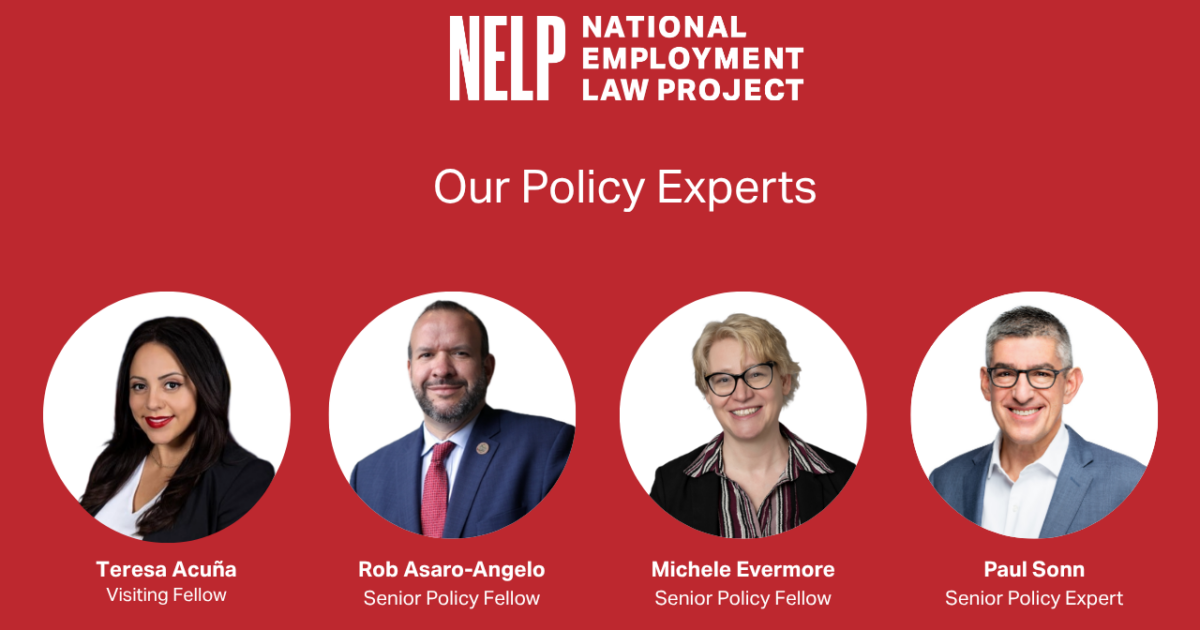
The four appointees include Teresa Acuña, Rob Asaro-Angelo, Michele Evermore, and Paul Sonn. Each brings a specific mandate to address the systemic challenges facing modern workers.
Teresa Acuña: Visiting Fellow for Good Jobs Democracy
Acuña’s appointment is perhaps the most symbolic of NELP’s focus on the intersection of federal investment and labor outcomes. Having served as the director of the Good Jobs Initiative at the U.S. Department of Labor, Acuña was instrumental in the Biden-Harris administration’s efforts to ensure that massive federal expenditures in green energy and infrastructure did not simply create "jobs," but created "good jobs." Her work has focused on creating pathways for workers in both urban and rural settings to access high-quality, sustainable employment.
Rob Asaro-Angelo: Senior Policy Fellow for Worker-First Protections
Asaro-Angelo joins the organization following a transformative tenure as Commissioner of the New Jersey Department of Labor and Workforce Development (2018–2026). His expertise lies in the "nuts and bolts" of state-level labor administration. Having managed one of the nation’s most diverse labor departments, he is uniquely positioned to help NELP navigate the complexities of state-level worker protections, an area that has become increasingly critical as federal legislative progress often stalls in the face of partisan gridlock.
Michele Evermore: Senior Policy Fellow for Economic Security and Worker Transitions
Evermore’s return to NELP marks a homecoming for one of the nation’s most prominent voices on Unemployment Insurance (UI). During the COVID-19 pandemic, her research and advocacy were central to the historic expansion of the UI system. Her subsequent role as Deputy Director for Policy in the U.S. Department of Labor’s Office of Unemployment Insurance Modernization gives her a rare "insider-outsider" perspective on how to reform the social safety net to meet the demands of the 21st-century gig economy.
Paul Sonn: Senior Policy Expert for Wages and Affordability
A long-time anchor of NELP’s state policy program, Sonn’s transition into this new role underscores the organization’s commitment to addressing the widening gap between stagnant wages and the rising cost of living. As an advisor to the landmark "Fight for $15" movement and a designer of the nation’s first successful municipal minimum wage laws, Sonn remains the intellectual backbone of the living wage movement.
Chronology of Influence: Seven Decades of Labor Advocacy
NELP’s history is inextricably linked to the evolution of American labor law. Since its inception in the late 1960s, the organization has evolved from a legal aid-focused entity to a comprehensive policy think tank.
- The Early Years (1960s–1980s): NELP focused primarily on litigating for the rights of low-wage workers and establishing the foundational interpretation of federal employment statutes.
- The Policy Shift (1990s–2010s): Recognizing that litigation alone could not fix systemic wage theft or lack of benefits, NELP pivoted toward legislative advocacy, helping to spearhead state and city-level campaigns for minimum wage increases and paid sick leave.
- The Pandemic Pivot (2020–2022): The COVID-19 crisis thrust NELP to the center of national discourse. The organization’s data on UI accessibility and worker safety became the blueprint for the federal response, cementing its reputation as a "go-to" source for policy design.
- The Future (2026 and Beyond): With this latest leadership expansion, NELP is entering an era defined by "industrial policy." The goal is no longer just to regulate bad actors, but to proactively design the standards of the next American economy.
Supporting Data: The Case for a "Good Jobs" Economy
The necessity for NELP’s expanded team is supported by sobering economic data. Despite record-low unemployment rates for much of the mid-2020s, the quality of employment remains a point of contention.
- The Wage-Cost Gap: According to recent Bureau of Labor Statistics data analyzed by NELP, real wage growth for bottom-quartile earners has consistently lagged behind the Consumer Price Index (CPI) in essential sectors, including housing and childcare.
- Infrastructure Investments: The 2021–2026 period has seen an unprecedented influx of federal capital into manufacturing and clean energy. However, data indicates that without strict labor standards, these "government-subsidized" jobs often replicate the same precarious conditions found in the private sector.
- UI Modernization: The infrastructure of the U.S. Unemployment Insurance system remains largely antiquated. Recent audits have shown that in many states, access to benefits remains fraught with administrative barriers, a problem Evermore and her team are tasked with solving through policy reform.
Official Responses and Strategic Vision
Rebecca Dixon, President and CEO of NELP, framed the new appointments as a direct response to the "bold, lasting change" required in the current political climate. In her announcement, Dixon noted:
"Creating a Good Jobs Economy for all workers… requires leaders with deep policy expertise and a clear vision. This extraordinary group of policy experts and labor movement leaders brings the precise experience needed to advance our high-impact advocacy. We are not just looking for incremental progress; we are looking to reshape the structural relationship between capital and labor."
Industry analysts have viewed this move as a signal that NELP is preparing for a new phase of federal engagement. By poaching high-level administrators like Asaro-Angelo and Acuña, the organization is effectively "operationalizing" its policy proposals—moving from theoretical white papers to actionable regulatory frameworks that can be implemented at the state and federal levels.
Implications for the Future of Work
The implications of this leadership shift are twofold. First, it signals that the "Good Jobs" movement is transitioning from a grassroots protest strategy to a sophisticated, data-driven lobbying force. By focusing on wage affordability, infrastructure-linked job quality, and modernized UI, NELP is addressing the three pillars of economic precarity in America.
Second, the move highlights a growing trend among NGOs to recruit former government officials to navigate the bureaucratic complexities of the modern state. The expertise brought by these four leaders will allow NELP to provide policymakers with "off-the-shelf" legislative solutions that are vetted, legally sound, and politically viable.
As the nation moves toward the latter half of the decade, the friction between automation, globalization, and labor rights will only intensify. Whether these new leaders can successfully translate their vision into widespread policy change will be a defining factor in the lives of millions of American workers. For now, NELP has signaled that it has the team, the expertise, and the strategy to ensure that the "Good Jobs Economy" is not just an aspiration, but a national standard.
"Onward," as CEO Rebecca Dixon stated, serves as both a mantra for the organization’s new chapter and a challenge to the status quo of the American labor market.
