




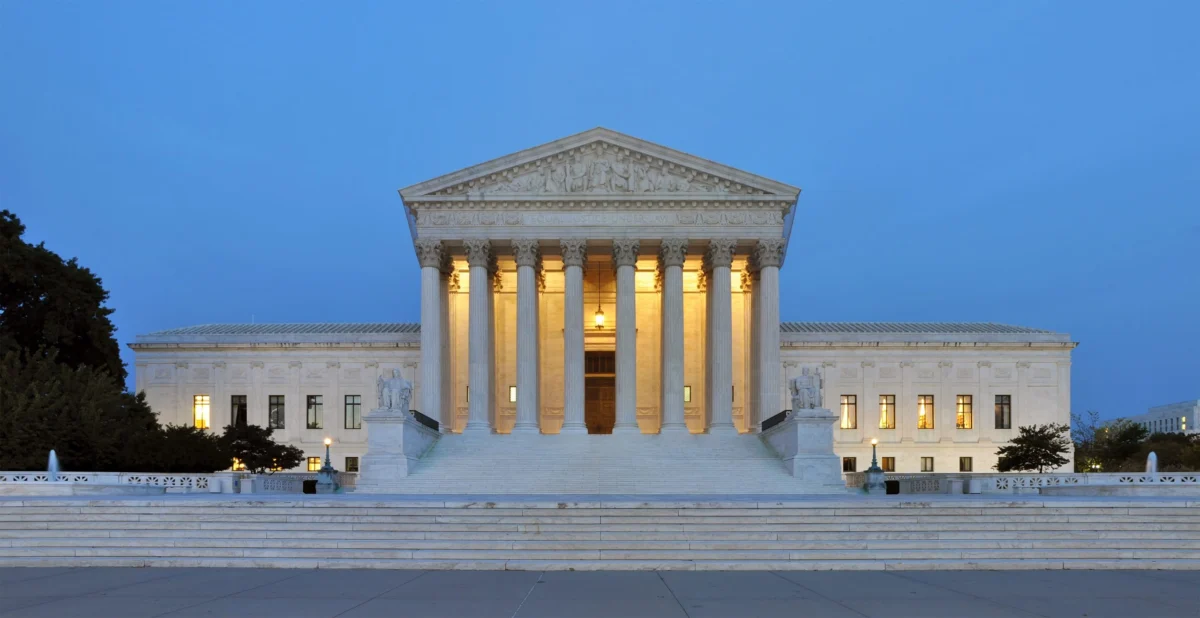
The integrity and logistics of the upcoming midterm elections have once again landed at the steps of the U.S. Supreme Court. In a high-stakes emergency filing submitted this past Thursday, the Trump administration has petitioned the nation’s highest court to lift a federal judge’s order that currently blocks the U.S. Postal Service (USPS) from enforcing a controversial new set of mandates regarding mail-in ballot processing.
At the heart of the dispute is a regulatory framework established under Executive Order 14399, which seeks to impose strict federal oversight on how state and local election officials design and distribute mail-in ballots. As the clock ticks toward the midterm elections, the conflict pits the administration’s stated goals of administrative standardization and election security against the constitutional authority of states to manage their own electoral processes.
The Core of the Dispute: Executive Order 14399
The controversy stems from a directive issued by the White House earlier this year titled "Ensuring Citizenship Verification and Integrity in Federal Elections." Under this mandate, the USPS introduced a series of stringent requirements for mail-in ballots. These requirements include:
- Mandatory Design Review: State and local election boards must submit all mail-in ballot envelope designs to the USPS for prior approval.
- Barcoding Requirements: All envelopes must feature specific, standardized barcodes to facilitate automated sorting and tracking.
- Federal Data Portal: Election officials are required to upload the names and residential addresses of every registered mail-in voter to a centralized federal portal.
According to the administration’s rule, any mail-in ballot that fails to adhere to these design specifications or is not properly registered in the federal database is subject to rejection by the Postal Service. Critics, including a coalition of state officials and voting rights organizations, argue that these requirements represent an unprecedented federal intrusion into state-run elections and serve as a "bottleneck" that could lead to the mass disenfranchisement of voters who utilize mail-in ballots.
Chronology of the Legal Battle
The current impasse is the latest chapter in a rapidly evolving legal saga.
Phase 1: The Initial Challenges
When Executive Order 14399 was first introduced, a group of states filed suit, arguing that the policy was premature and lacked a concrete administrative foundation. Last week, the Supreme Court issued an unsigned opinion staying an earlier injunction, noting that the states had sued before the administration’s policies were sufficiently finalized or "ripe" for judicial review.
Phase 2: The Final Rule and Reopening
Capitalizing on the Court’s reasoning, the USPS published the final version of the rule just two days after the stay was issued. This tactical maneuver effectively bypassed the previous dismissal, as the existence of a finalized rule provided the "concrete" policy basis that the Supreme Court had previously found lacking.
Phase 3: The Massachusetts TRO
Following the publication of the final rule, a federal judge in the U.S. District Court for the District of Massachusetts issued a 14-day temporary restraining order (TRO). This order effectively halted the enforcement of the USPS mandates, returning the process to the status quo and rendering compliance with the federal requirements voluntary for the time being. The Trump administration’s latest appeal to the Supreme Court is a direct challenge to this TRO.
Jurisdictional Hurdles and Legal Arguments
The administration’s petition to the Supreme Court faces significant procedural headwinds. Under 28 U.S.C. § 1292(a)(1), temporary restraining orders are generally considered non-appealable interlocutory orders.
However, the administration’s legal team is arguing that this specific TRO should be treated as a functional, appealable injunction. They contend that because ballots are scheduled to be mailed to voters in the coming weeks, the window for judicial intervention is closing. If the TRO is not vacated immediately, they argue, the harm to the administration’s "integrity initiatives" will be irreversible, effectively rendering the final rule moot for this election cycle.
Merits of the Argument
On the merits, the government leans on the broad authority granted to the Postmaster General under 39 U.S.C. §§ 401(2) and 404(a)(1). They argue that these statutes empower the USPS to set reasonable standards for mail handling, which they characterize as "modest envelope-design and addressee-information requirements" necessary for efficient postal operations.
Conversely, opponents rely on the Elections Clause of the U.S. Constitution (Article I, Section 4, Clause 1), which assigns the authority to regulate the "Times, Places and Manner" of holding congressional elections to state legislatures and Congress. Opponents contend that the USPS—an administrative agency—lacks the constitutional or statutory authority to unilaterally impose procedural burdens that could disqualify ballots in a federal election.
Supporting Data and Administrative Implications
The potential impact of this rule cannot be overstated. Millions of American voters rely on mail-in ballots, particularly in states that have expanded absentee voting access. The introduction of a "federal portal" for ballot data raises significant concerns regarding data privacy and the potential for federal officials to access sensitive voter rolls.
Furthermore, election experts warn that the requirement for USPS approval of envelope designs could create a massive administrative backlog. If hundreds of jurisdictions submit their designs simultaneously, the potential for delays in the printing and distribution of ballots is high. In a tight election, a delay of even a few days in receiving a ballot can lead to a significant drop in voter participation.
The administration, however, maintains that the portal and barcode requirements are essential for preventing "ballot harvesting" and ensuring that only eligible, registered voters are casting ballots. They argue that standardization is a neutral administrative goal that enhances the security of the mailstream.
Official Responses and Political Stakes
The legal dispute has drawn sharp reactions from across the political spectrum. White House spokespersons have reiterated that the President is committed to "unshakeable election integrity," framing the lawsuit as an attempt by state officials to maintain a system that is "rife with vulnerability."
In contrast, state attorneys general opposing the mandate have described the administration’s actions as a "blatant attempt to centralize power and suppress the vote." A coalition of these states filed a response to the Supreme Court petition yesterday, emphasizing that the federal government is attempting to circumvent the democratic process by using postal regulations to dictate the outcome of ballot access.
Broader Implications for the Midterms
This case serves as a microcosm of the broader national debate over the role of federal agencies in election administration. If the Supreme Court sides with the administration, it could set a powerful precedent for federal agencies to intervene in local election procedures under the guise of administrative or logistical necessity.
Conversely, if the Court upholds the lower court’s TRO, it would reaffirm the primacy of state legislatures in setting the rules for their own elections. Regardless of the outcome, the case highlights the extreme volatility of the current electoral environment. With early voting windows approaching, the legal uncertainty surrounding ballot envelopes and data submission protocols is creating a climate of confusion for election administrators.
As the Supreme Court considers whether to take up the matter on an expedited basis, the eyes of the nation remain fixed on the bench. The decision will not only determine the rules of the road for the upcoming midterm elections but will likely have lasting implications for the balance of power between federal agencies and state-run democratic institutions for years to come.
The Court is expected to issue a preliminary response to the application in the coming days. Until then, state election officials remain in a state of suspended animation, preparing for two potential scenarios: one where they must comply with new, rigid federal mandates, and one where they can proceed under existing state laws.
