



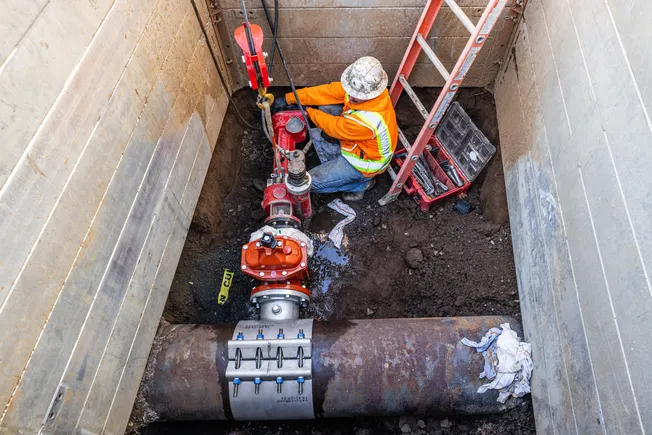
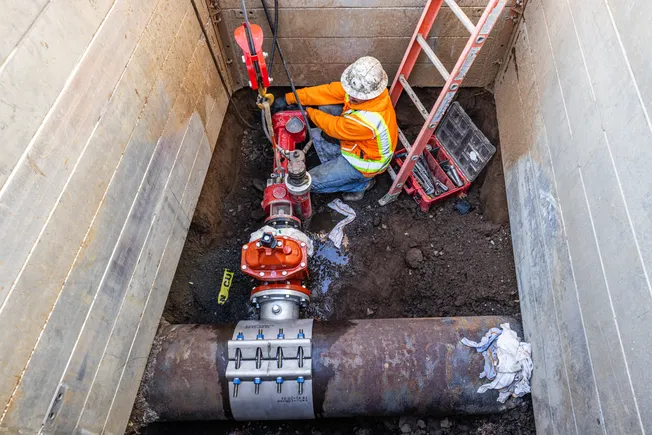
Across the United States, municipal water systems are a marvel of invisible engineering. Every day, countless gallons of water travel through thousands of miles of subterranean pipes, moving from treatment plants to homes and businesses. To manage this flow, engineers employ pressure reduction valves—essential safety devices that dissipate excess pressure to prevent pipe bursts and equipment failure. For decades, this kinetic energy was simply wasted, discarded as friction and heat.
However, a quiet energy revolution is unfolding in Oregon. Forward-thinking municipalities are reimagining these valves not as mere safety bottlenecks, but as untapped power plants. By installing "in-conduit" hydropower turbines, cities are converting the energy of gravity and water flow into carbon-free electricity, effectively turning municipal infrastructure into a dual-purpose asset for both public safety and renewable energy generation.
The Mechanics of In-Conduit Hydropower
The core technology behind this movement is remarkably straightforward. An in-conduit hydropower system integrates a small turbine directly into the existing water distribution pipeline. As water moves through the pipe, the flow forces the turbine to spin, capturing the energy that would otherwise be lost at a pressure reduction valve.
"Every day water flows through thousands of miles of municipal pipes," explains Dave Moldal, a senior program manager for Energy Trust of Oregon, an independent nonprofit dedicated to helping communities lower costs and adopt clean energy. "As it moves from source to end user, the excess water pressure in the system is dissipated. Across Oregon, a growing number of cities have discovered that this water pressure can be converted into clean, cost-saving electricity."
However, not every valve is a candidate for conversion. The viability of a project depends on a "goldilocks" set of site-specific conditions:
- Pipe Diameter: Large enough to accommodate a turbine without obstructing flow.
- Pressure Differential: Significant enough to generate consistent torque.
- Flow Volume: Consistent water movement to ensure steady power output.
- Grid Proximity: Ideally, the site must be near an electrical interconnection point or have the ability to net-meter, allowing the generated power to be utilized directly by the facility or sold back to the grid.
A Chronology of Oregon’s Innovation
Oregon has emerged as the national leader in this niche field, with a series of successful pilot programs that have set the stage for widespread adoption.
2020: The Hillsboro Pioneer Project
The City of Hillsboro set the national standard in 2020 by becoming one of the first municipalities in the U.S. to integrate an in-conduit hydropower system at an existing pressure reduction site. The project, which replaced a standard valve with a power-generating turbine, produces more than 200 megawatt-hours (MWh) of carbon-free electricity annually. This output is sufficient to offset a significant portion of the electricity demand for the nearby Hillsboro Ballpark, proving that municipal water infrastructure could serve as a viable power source for public amenities.
2025: Beaverton’s Strategic Retrofit
Five years later, the City of Beaverton took the concept further with a major retrofit at the Sexton Mountain Pump Station. With technical assistance and financial incentives from the Energy Trust of Oregon, Beaverton installed a turbine designed to generate 426 MWh of electricity annually. This project offsets approximately 27% of the station’s total energy load. Notably, the city’s engineering team designed the station with future scalability in mind, creating space to install an additional turbine as water flow demands grow in the future.
2024: Tualatin’s Integrated Resilience
The City of Tualatin recently completed a project at its City Services Center that generates roughly 250 MWh annually, resulting in approximately $14,000 in yearly savings on electric utility bills. Beyond simple power generation, Tualatin’s project serves as a model for modern infrastructure design; the site is wired to integrate with battery storage and a future microgrid, showcasing how water-based power can serve as the backbone of a resilient municipal energy network.
The Economic Engine: Why Net-Metering Matters
While the engineering is elegant, the financial viability of in-conduit hydropower often hinges on regulatory frameworks. In Oregon, the success of these projects is frequently tied to "net-metering" policies.
Under net-metering, the facility’s utility meter effectively spins backward when the turbine is generating more power than the facility is consuming. This credits the municipality at the retail rate for electricity rather than the lower wholesale or "avoided cost" rates. This difference is critical. Because the retail rate is significantly higher, the ability to offset retail electricity costs turns a modest energy-saving project into a financially attractive investment with a predictable payback period.
"Many municipalities target a 10-year payback on these investments," Moldal notes. "With the right combination of incentives and site conditions, that’s achievable."
Funding the Future: A Layered Approach
In-conduit hydropower is not a "plug-and-play" commodity; it is an infrastructure project that requires a strategic "funding stack." Because these projects serve the public good, municipalities often leverage a mix of resources to bridge the gap between initial capital costs and long-term savings.
Common funding sources include:
- State Energy Office Programs: Often aimed at reducing municipal carbon footprints.
- Federal Investment Tax Credits (ITCs): Providing a significant offset to the upfront cost of renewable energy hardware.
- Utility Incentives: Direct grants from energy providers looking to reduce grid demand.
By identifying these layers of funding early in the feasibility process, cities can move beyond the "go/no-go" uncertainty and establish a path to profitability. If managed properly, these systems are remarkably durable. A well-maintained turbine can operate effectively for 50 to 100 years—a lifespan that vastly exceeds typical solar or wind infrastructure.
Implications: Resilience in the Face of Grid Stress
As electricity prices rise and the national grid faces increasing pressure from climate change, extreme weather, and aging infrastructure, the argument for distributed, local energy generation has never been stronger.
In-pipe hydropower offers a unique form of "always-on" energy. Unlike solar power, which relies on daylight, or wind power, which is intermittent, water flows through municipal pipes 24/7. This provides a baseline of reliable power that is essential for critical facilities, such as water treatment plants, emergency operation centers, and communication hubs.
The City of Bend is currently pushing this envelope with plans for a 1.2-megawatt system at its Outback Drinking Water Plant. The ambition there is to power the entire facility by pairing the hydropower system with a sophisticated array of solar panels and battery storage. This "full meal deal"—a combination of multiple renewable sources and microgrid capabilities—represents the future of municipal resilience. It transforms the city from a passive consumer of grid power into an active, self-sustaining energy producer.
How to Get Started: A Guide for Public Works
For public works directors, sustainability managers, and city planners, the barrier to entry is primarily informational. Moldal suggests that the most critical step is defining the municipal goal. "Are you trying to reduce operating costs? Are you trying to meet a clean energy goal? Are you trying to create a backup power system for a critical facility? The answer to these questions changes which technology makes sense."
The path forward follows a standard professional process:
- Defining Objectives: Establish whether the goal is fiscal (bill savings), environmental (carbon reduction), or operational (resilience).
- Pre-Feasibility Study: Engage engineering experts to analyze pressure, flow, and existing electrical infrastructure.
- Capital Integration: This is the most crucial step. These systems are most cost-effective when installed during a planned valve replacement. Bolting a turbine onto an existing, functioning system is expensive; incorporating one into a scheduled infrastructure upgrade is a logical, high-value investment.
As Oregon continues to demonstrate, the solution to the energy crisis may be literally beneath our feet. By simply looking at the water flowing through our pipes through a new lens, municipalities can secure a cleaner, more resilient, and more affordable future.
