



The burgeoning hemp industry in Texas, once hailed as a beacon of economic opportunity and agricultural innovation, is currently facing an existential threat. A series of aggressive regulatory maneuvers by the Texas Department of State Health Services (DSHS) has effectively criminalized a vast array of popular hemp-derived cannabinoid products, prompting a wave of litigation that seeks to challenge the state’s authority and protect a multi-billion dollar sector from total collapse.
As of late this year, four additional hemp retailers have filed a lawsuit in the U.S. District Court for the Western District of Texas, marking a significant escalation in the conflict. The plaintiffs allege that the DSHS has engaged in unprecedented executive overreach, ignoring federal mandates and jeopardizing thousands of livelihoods. This latest action follows a similar suit filed earlier this month in the Southern District of Texas, signaling that the industry is mounting a coordinated, statewide legal defense against the state’s prohibitionist shift.
The Core Conflict: Federal Law vs. State Enforcement
At the heart of the litigation lies a fundamental disagreement over the interpretation of the 2018 U.S. Farm Bill. The federal legislation famously removed hemp—defined as cannabis containing less than 0.3% delta-9 THC by dry weight—from the Controlled Substances Act, effectively legalizing the cultivation and sale of hemp-derived products across the nation.
For years, Texas businesses operated under the assumption that this federal framework provided a safe harbor for the production and sale of various THC variants, including delta-8, delta-10, THCP, and THCA. However, the state’s regulatory environment took a drastic turn following a Texas Supreme Court decision in May. The court’s ruling cleared the path for the DSHS to reclassify these substances as Schedule I controlled substances, placing them in the same legal category as heroin or LSD.
"DSHS does not have the constitutional authority to rewrite statutes or destroy an industry simply because it disagrees with legislative policy," said David Sergi, lead counsel for the hemp industry in the Western District lawsuit. Plaintiffs argue that by unilaterally reclassifying these substances, the state is violating the Commerce Clause of the U.S. Constitution and defying the supremacy of federal law.
A Chronology of Uncertainty
The instability facing Texas retailers is not a sudden development, but rather the culmination of years of legislative and judicial tug-of-war.
- 2018: The U.S. Congress passes the Farm Bill, creating a national standard for legal hemp.
- 2021: The DSHS attempts to ban hemp-derived THC products. A temporary injunction is granted by a state court, effectively pausing enforcement and allowing the market to flourish for the next five years.
- May 2024: The Texas Supreme Court issues a ruling that effectively lifts the 2021 injunction, granting the DSHS the authority to enforce its reclassification of synthetic and hemp-derived THC variants.
- Late 2024: The DSHS begins enforcing the ban. Possession of the newly reclassified products is now punishable as a state jail felony, carrying potential prison sentences of up to two years and fines of $10,000.
- Present: Multiple lawsuits are filed across federal districts, with plaintiffs seeking temporary restraining orders and injunctions to halt the enforcement of the ban while the legality of the state’s actions is determined in court.
Economic Devastation: The "Catastrophic" Impact
The economic fallout of the DSHS decision has been swift and severe. Industry advocates report that the state’s sudden pivot has created a "catastrophic" environment for small business owners who invested millions into building supply chains and retail footprints.
According to data presented in the recent filings, the hemp industry has witnessed a staggering decline in productivity. More than 36,000 jobs have been lost due to workforce reductions forced by the bans. Furthermore, retail sales across the state have plummeted by more than 50%, resulting in billions of dollars in lost tax revenue and stranded inventory.
For the approximately 14,000 retail stores licensed by the state to sell consumable hemp, the uncertainty is a death knell. Store owners are caught in a precarious position: keep the products on the shelf and risk felony charges, or clear the shelves and face bankruptcy. Andrea Steel, lead counsel for the plaintiffs in the Southern District case, emphasized the absurdity of the current situation: "For more than seven years, Texans have built a multibillion-dollar hemp industry under laws that define these products as legal hemp. Without any change to those laws, the State now says they’re Schedule I drugs."
Allegations of Market Manipulation
Perhaps the most controversial claim made in the current lawsuits is that the DSHS is not merely enforcing health policy, but is actively engaging in market protectionism. The plaintiffs allege that the state is intentionally shutting down the hemp market to protect the Texas Compassionate Use Program (TCUP), the state’s highly restrictive medical marijuana program.
By eliminating competition from hemp-derived THC products, critics argue that the state is artificially propping up the limited number of companies authorized to participate in the medical program. This, they argue, creates a state-sponsored monopoly that disadvantages both small business owners and the patients who have come to rely on accessible, affordable hemp-derived alternatives.
Official Responses and Political Rhetoric
The state’s stance, championed by figures like Sen. Charles Perry (R-Lubbock), remains rooted in a philosophy that views any form of intoxicating THC as a public health hazard. During recent committee hearings, proponents of the ban relied on rhetoric reminiscent of the "Just Say No" campaigns of the 1980s, citing concerns over mental health and potential risks to youth.
Sen. Perry has already signaled his intent to introduce legislation in the upcoming session that would further restrict, if not entirely eliminate, the sale of all consumable hemp products in Texas. For these lawmakers, the distinction between "industrial hemp" and "intoxicating cannabis" is nonexistent, regardless of the chemical definitions established at the federal level.
Conversely, industry representatives argue that the government is failing to provide a clear regulatory framework. "Our Constitution does not allow the government to jail a person under a framework no one can make sense of," Steel remarked. "Our clients are asking the federal court to protect Texans from their own confused government."
Implications: The Future of Cannabis in Texas
If the current lawsuits fail to secure an injunction, the landscape of Texas retail will undergo a permanent transformation. Experts estimate that without judicial intervention, more than half of the current THC-related inventory will be permanently removed from store shelves.
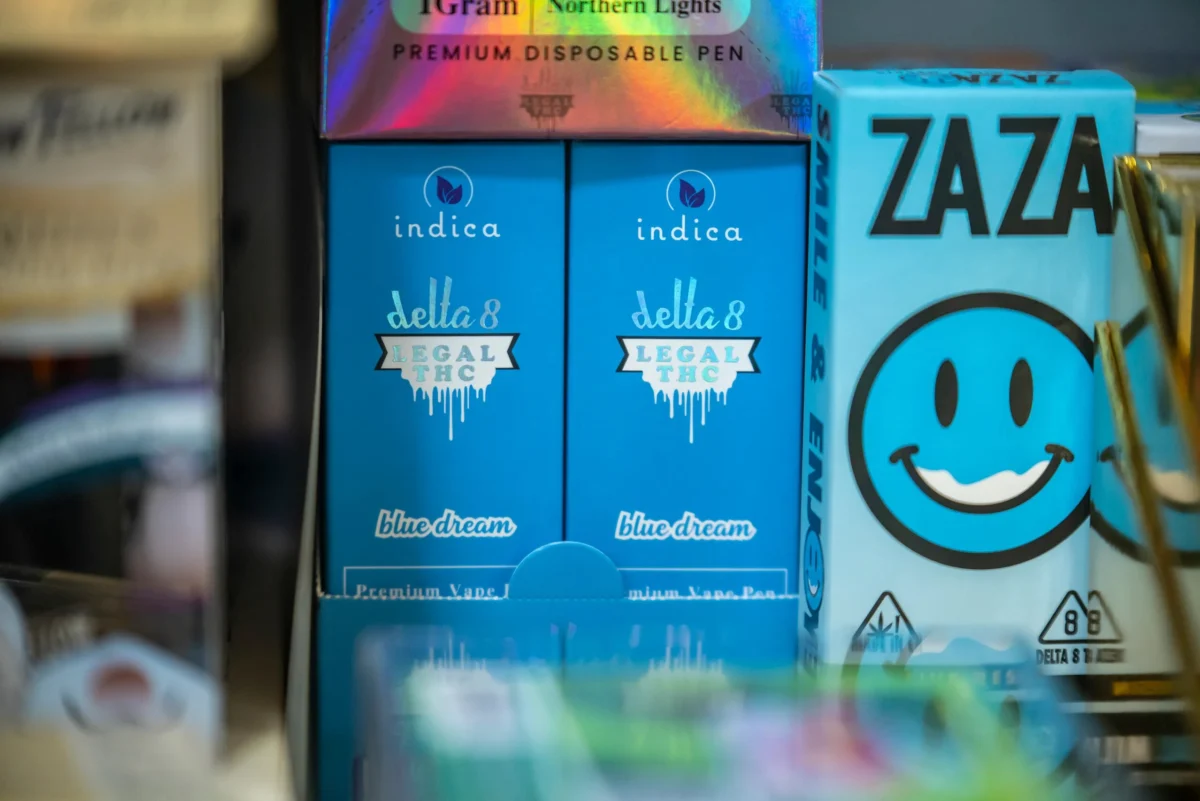
The broader implication is a significant regression in cannabis policy. Sarah Todd of the Texas Cannabis Policy Center noted that the state is effectively "taking steps backwards toward prohibition." This shift creates a legal minefield for citizens and retailers alike. The classification of these products as Schedule I drugs means that a consumer possessing a delta-8 vape pen could theoretically face the same legal consequences as someone possessing illicit substances like heroin.
As the litigation proceeds, the eyes of the nation are on Texas. The outcome of these cases will likely set a precedent for how individual states can navigate the tension between the 2018 federal Farm Bill and local police powers. For thousands of Texans, the decision will determine whether their businesses survive or whether they become the latest casualties in a state-led crusade against a product that has been legally sold for nearly a decade.
The plaintiffs remain resolute, calling on the judiciary to restore order. "We are asking the Court to uphold the Texas Constitution, protect thousands of Texas jobs, and keep policy decisions where they belong—with the elected representatives of the people," said Sergi. Whether the courts will agree that the DSHS overstepped its bounds remains the pivotal question in this ongoing struggle for the future of Texas commerce.
