





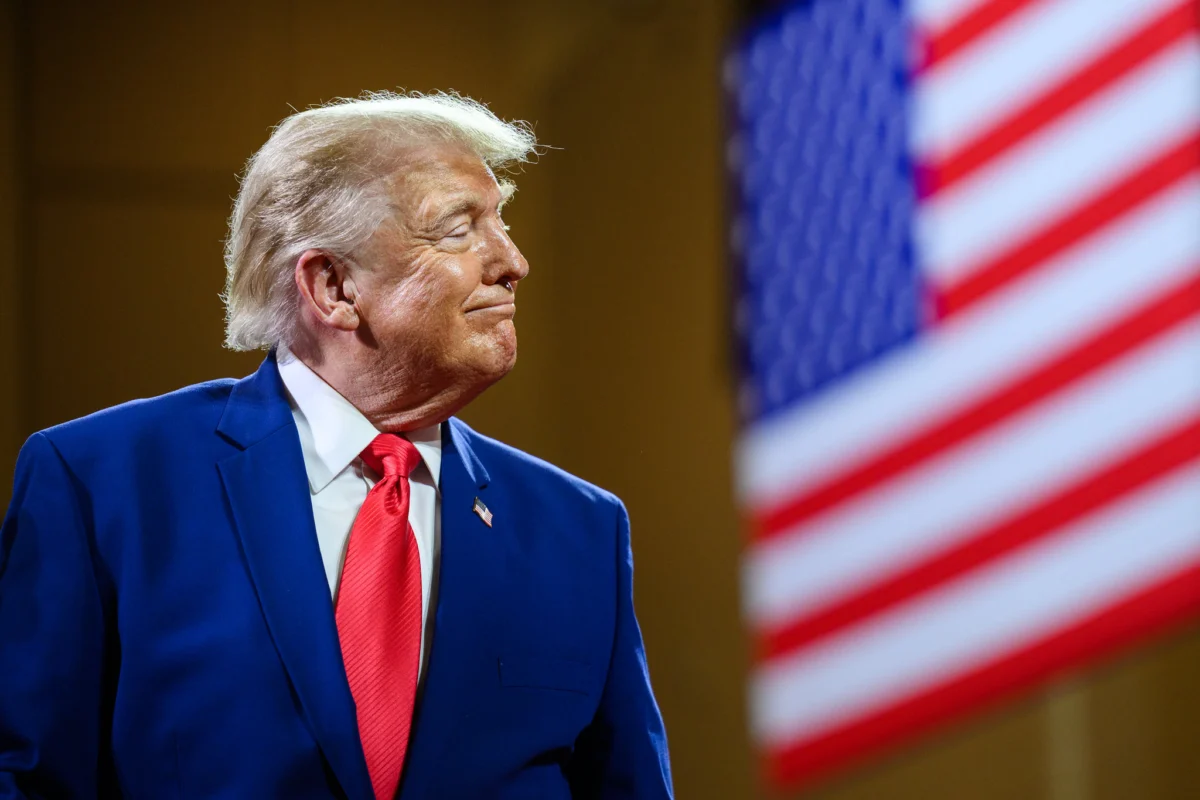
At the recent Republican National Convention in Dallas, President Donald Trump unveiled a sweeping economic proposal that has since ignited a firestorm of debate among fiscal conservatives, macroeconomists, and political strategists. The President pledged a direct payment of $5,000 to every adult citizen in the United States, contingent upon the Republican Party maintaining control of both the House and the Senate in the upcoming midterm elections.
The proposal, framed as a "dividend" for the American people, is purportedly funded by the robust revenue generated by the administration’s aggressive tariff policies. Vice President JD Vance has emerged as a vocal proponent of the plan, arguing that the protectionist trade measures have created a surplus of federal revenue that should be returned to the taxpayers. However, as the initial shock of the announcement settles, experts are scrutinizing the math—and the findings suggest that the path to such a massive payout is fraught with fiscal peril.
Chronology of the Proposal
The promise of the $5,000 dividend did not materialize in a vacuum. It follows a multi-year shift in U.S. trade policy characterized by the implementation of several rounds of comprehensive tariffs on foreign goods.
- Early 2024: The federal government recorded $79 billion in customs duties. At this stage, the administration was already signaling a transition toward more protectionist trade barriers.
- 2025: Following the implementation of multiple rounds of new tariffs, customs duty collections surged to $264 billion. This spike became the rhetorical foundation for the administration’s argument that tariffs could serve as a sustainable "cash cow" for the federal treasury.
- Late 2025 – Early 2026: Revenue volatility set in. As legal challenges reached the Supreme Court, the federal government was forced to refund significant portions of collected tariffs that were deemed illegal, leading to a dip in net revenue—and in some instances, negative collection months.
- The Dallas Convention (Present): President Trump officially tied the promise of the $5,000 dividend to the success of the GOP in the midterms, positioning the policy as both an economic stimulus and a political incentive.
The Arithmetic of an Impossible Payout
To understand the gravity of this proposal, one must look at the sheer scale of the U.S. population. With approximately 250 million adults eligible to vote, a universal $5,000 payment equates to a total expenditure of $1.25 trillion.
When placed against the backdrop of the current federal budget, the numbers become even more alarming. The Congressional Budget Office (CBO) has projected a budget deficit of nearly $1.9 trillion for fiscal year 2027. If the administration were to proceed with this $1.25 trillion disbursement, the deficit would balloon to roughly $3 trillion—a level of borrowing that would represent a significant escalation in the national debt.
While the administration points to the $264 billion collected in 2025 as evidence of the tariff program’s success, economists warn against conflating gross collection numbers with net revenue. The Tax Foundation estimates that once the fluctuations of legal refunds are smoothed out, the new tariffs will generate approximately $125 billion in net revenue for 2027.
Crucially, this "net" figure accounts for two significant economic realities:
- Trade Compression: New tariffs inherently reduce the volume of imports, which in turn diminishes the revenue generated from pre-existing tariff structures.
- Base Erosion: Every dollar collected in tariffs acts as a drag on the broader economy. By increasing the costs of goods for businesses and consumers, these tariffs reduce overall economic activity, thereby shrinking the tax base for income and payroll taxes.
Consequently, the estimated $125 billion in net revenue for 2027 would cover less than 10 percent of the promised $5,000 dividend. To fund this program through tariff revenue alone, the government would need to maintain these trade policies for nearly a decade without any increase in the dividend amount.
Official Responses and Political Rhetoric
The administration’s defense of the policy rests on the premise that tariffs represent a transfer of wealth from foreign entities to the American Treasury. Vice President JD Vance has framed the policy as a "dividend" that reflects the success of America-First trade policies. By suggesting that the government is "sharing" the bounty of trade protectionism, the administration is attempting to redefine tariffs not as taxes on consumption, but as a sovereign wealth fund of sorts.
However, many economists argue that the rhetoric ignores the fundamental economic reality of who actually pays a tariff. In practice, tariffs are taxes imposed on domestic importers—businesses that purchase raw materials or finished goods from abroad. These costs are almost universally passed down to the end-user, manifesting as higher prices for consumers. Therefore, critics argue that the $5,000 dividend would essentially be a rebate of money that was already extracted from the public through higher inflation and increased costs of living.
The Economic Implications: Inflation and Fiscal Credibility
Beyond the immediate math, the long-term implications for the U.S. economy are profound. The current economic environment is already characterized by inflation running above the Federal Reserve’s 2 percent target. Injecting $1.25 trillion of liquidity into the economy in the form of direct cash payments would almost certainly exacerbate inflationary pressures.
The Risk to Fiscal Credibility
Perhaps more damaging than the immediate inflation is the signal this move would send to global financial markets. International investors look to the United States as the gold standard of fiscal stability. A deficit-financed, one-time payment of this magnitude would signal that the U.S. government is not serious about managing its long-term debt trajectory.
If the markets lose confidence in the fiscal discipline of the federal government, the consequences could include:
- Rising Interest Rates: Investors would demand higher yields on U.S. Treasuries to compensate for the increased risk of holding debt from a government that prioritizes short-term political payouts over long-term fiscal health.
- Reduced Purchasing Power: A weakened dollar and higher interest rates would increase borrowing costs for American households and businesses, potentially offsetting any perceived benefit of the $5,000 check.
- The "Hidden Tax" of Inflation: As prices rise in response to increased demand and potential supply-chain disruptions caused by tariffs, the real value of the $5,000 payment would erode rapidly, leaving the average citizen no better off than they were before.
Alternative Perspectives
Some proponents of the plan argue that even if the payments are deficit-financed, the "multiplier effect" of putting cash directly into the hands of 250 million Americans would stimulate consumption and provide a necessary boost to the economy. They suggest that in an era of technological disruption and automation, direct payments are a precursor to a modern social contract.
However, mainstream economic analysis remains largely skeptical. The primary concern is that the policy addresses the symptoms of economic struggle while ignoring the causes. By doubling down on tariffs, the administration is prioritizing a trade policy that burdens U.S. manufacturers and workers with higher costs. If the goal is to improve the standard of living for Americans, economists suggest that the administration would be better served by reducing the trade barriers that drive up costs, rather than attempting to "buy back" the public’s approval with money the government does not have.
Conclusion
The proposal for a $5,000 dividend is a striking example of the tension between political populism and fiscal reality. While the prospect of a direct payment is undoubtedly popular, the mechanism proposed to fund it—tariffs—is insufficient to cover the staggering $1.25 trillion price tag.
As the midterm elections approach, the debate over this dividend will likely intensify. For voters, the question remains whether the short-term benefit of a one-time check is worth the long-term risk of higher inflation, increased interest rates, and the erosion of the federal government’s fiscal foundation. At present, the evidence suggests that the "dividend" is not a product of new wealth, but a gamble with the nation’s economic future.
