





Introduction: A Nation at a Political Precipice
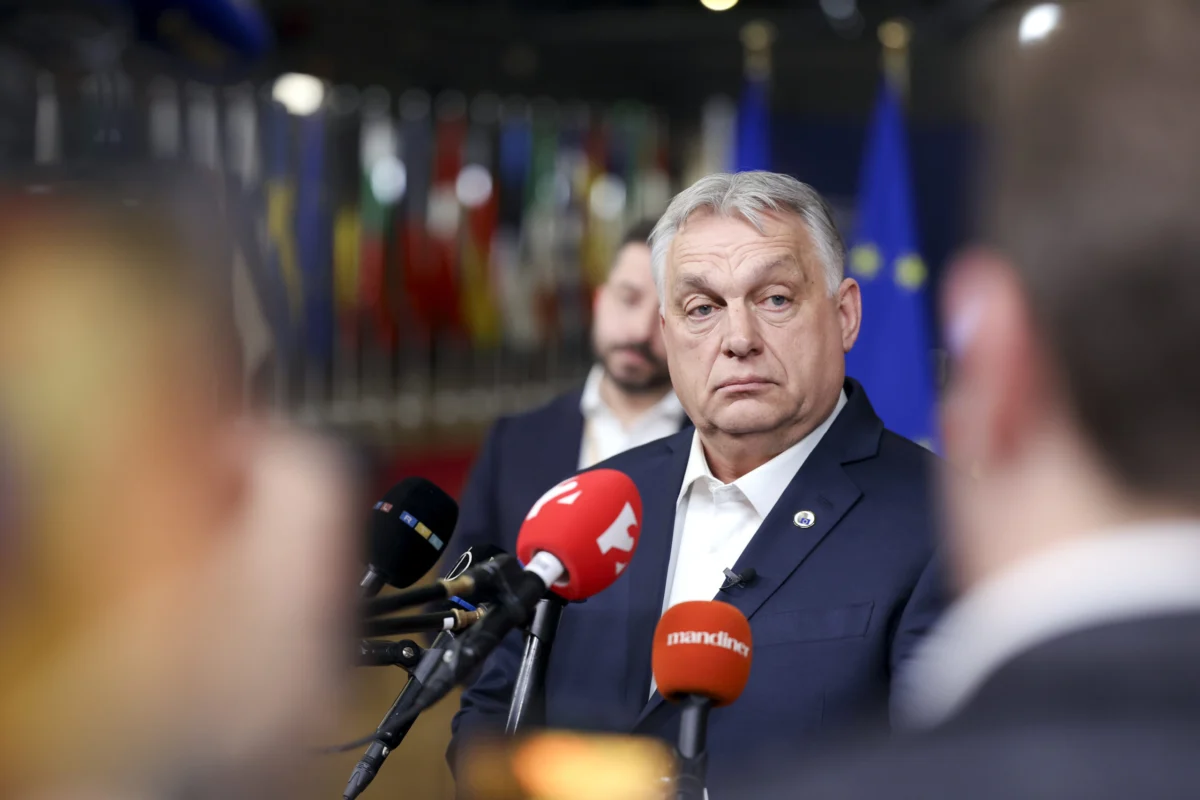
As Hungary approaches the polls on April 12, 2026, the nation finds itself at a defining moment in its modern history. After 16 consecutive years of dominance under Prime Minister Viktor Orbán and his Fidesz party, the political establishment is facing its most existential challenge to date. The upcoming election is not merely a contest of candidates; it is a referendum on Hungary’s trajectory within the European Union, its economic model, and its role in the global energy transition.
With the electoral threshold poised to potentially eliminate all minor political actors, the contest has distilled into a stark binary: the entrenched Fidesz apparatus versus the rising momentum of Péter Magyar’s conservative Tisza movement. Amidst this high-stakes political maneuvering, the critical issue of energy policy—covering everything from nuclear reliance and EU climate mandates to the nation’s controversial aspirations as a global hub for electric vehicle (EV) battery manufacturing—hangs in the balance.
Main Facts: The Stakes of the April 12 Election
The electoral landscape is defined by a deep polarization. Recent polling suggests that the Hungarian political landscape is narrowing, with a significant risk of a parliamentary "wipeout" for smaller parties.
- The Contenders: The incumbent Fidesz party, led by Viktor Orbán, has built a power base on national sovereignty and economic protectionism. Challenging them is the Tisza movement, led by Péter Magyar, which has successfully captured the public imagination by positioning itself as an anti-corruption, center-right alternative.
- The Energy Nexus: Hungary’s energy strategy is a complex tapestry of geopolitical maneuvering. Under Orbán, the country has maintained close energy ties with Russia while simultaneously attempting to pivot toward a massive industrial expansion in the EV battery sector.
- The EU Conflict: Hungary’s frequent obstruction of EU-wide climate initiatives—often linked to broader disputes over the rule of law—has created significant friction in Brussels. The next administration will decide whether to integrate more fully into the European Green Deal or continue its path of "energy pragmatism" at the expense of EU climate alignment.
Chronology: A 16-Year Transformation
To understand the gravity of the April 12 vote, one must look back at the consolidation of power that has defined the Orbán era:
- 2010–2014: The Consolidation Phase. Following a landslide victory in 2010, Fidesz rewrote the Hungarian constitution, effectively neutralizing institutional checks and balances and cementing control over the media and judicial systems.
- 2015–2018: The Geopolitical Pivot. During this period, Hungary began to position itself as a bridge between the West and the East. The decision to deepen nuclear ties with Russia (the Paks II project) signaled a departure from the energy strategies of many other EU member states.
- 2019–2023: The Industrial Gamble. Recognizing the shift toward electric mobility, the government launched an aggressive campaign to attract Asian battery manufacturers (such as CATL). This policy transformed Hungary into a cornerstone of the European battery supply chain, though it sparked significant local environmental opposition.
- 2024–2026: The Rise of Tisza. Péter Magyar emerged as a political force, tapping into deep-seated voter fatigue regarding corruption and economic stagnation. His rise has forced the government into a defensive position, leading to the current high-stakes election cycle.
Supporting Data: The Energy and Climate Landscape
Hungary’s energy policy is dictated by a paradoxical set of realities:
The Nuclear Dependency
Despite the European Union’s push for renewable energy, Hungary remains heavily reliant on the Paks nuclear power plant. The expansion project, Paks II, is designed to ensure base-load power for decades to come, but it remains a point of contention due to its reliance on Russian technology and financing.
The EV Battery Paradox
Hungary is currently one of the world’s largest emerging hubs for EV battery production. While this has brought significant foreign direct investment (FDI) and job creation, it has created a "mono-industry" risk. Economists warn that by tying the Hungarian economy so closely to the volatility of the EV market, the government has left the nation vulnerable to global supply chain shifts and shifting consumer demand in Western Europe.
EU Climate Friction
Data from the European Commission indicates that Hungary has frequently utilized its veto power to dilute or block climate legislation. The government’s justification is rooted in "energy security" and the protection of industrial competitiveness. However, critics argue this is a leverage tactic used to extract concessions on frozen EU funds.
Official Responses and Political Platforms
The Fidesz Vision: "Sovereign Energy Security"
The Fidesz platform remains consistent: energy policy is a matter of national sovereignty. The party argues that their pragmatic approach—securing gas from Russia while fostering the battery industry—is the only way to shield Hungarian households from the high costs of the green transition. They view the EU’s climate mandates as an ideological burden that threatens the nation’s industrial base.
The Tisza Movement: "Modernization and Transparency"
Péter Magyar’s Tisza movement presents a different narrative. While not explicitly anti-nuclear, the movement has criticized the lack of transparency surrounding the Paks II project and the environmental oversight of the new battery plants. Tisza advocates for a more balanced energy mix that leverages EU funding for renewables, arguing that Hungary must align with the European Green Deal to ensure long-term competitiveness rather than relying on geopolitical "shortcuts."
Implications: What Comes Next?
Domestic Economic Stability
The election results will dictate the immediate future of Hungary’s industrial policy. A Fidesz victory likely means a continuation of the status quo, with continued focus on the battery sector and the Paks II project. A win for the opposition would likely lead to a comprehensive audit of current energy contracts and a possible pivot toward greater transparency in industrial planning.
EU-Hungary Relations
The outcome of the election will be the primary determinant of Hungary’s standing in the European Union. A victory for the opposition could lead to a thawing of relations with Brussels, potentially unlocking frozen development funds. Conversely, a Fidesz victory could signal a prolonged period of diplomatic tension, with Hungary potentially becoming an even more isolated outlier in EU climate summits.
The Regional Energy Security Map
Hungary’s role as an energy "swing state" in Central Europe cannot be overstated. Its infrastructure choices affect its neighbors, from Slovakia to Serbia. Should the new government decide to reduce dependency on Russian energy, the regional energy architecture would require a rapid and costly reconfiguration.
Conclusion: The Final Countdown
As the clock ticks toward April 12, the Hungarian public is faced with a choice that extends far beyond the ballot box. They are voting on the future of their environment, their industrial economy, and their place in the European family.
For international journalists and observers, the election serves as a case study in the tension between nationalistic industrial policy and the global push for a green transition. The "Clean Energy Wire" (CLEW) webinar, held on April 8, 2026, provided a vital forum for analyzing these complex dynamics. While the sign-ups for that session are now closed, the conversations it sparked will continue to resonate long after the final vote is cast.
Regardless of the victor, the path ahead for Hungary will be defined by the necessity of reconciling its industrial ambitions with the demands of a rapidly warming planet. The eyes of Europe remain firmly fixed on Budapest, waiting to see if this election will lead to continuity or a fundamental redirection of the Hungarian state.
