





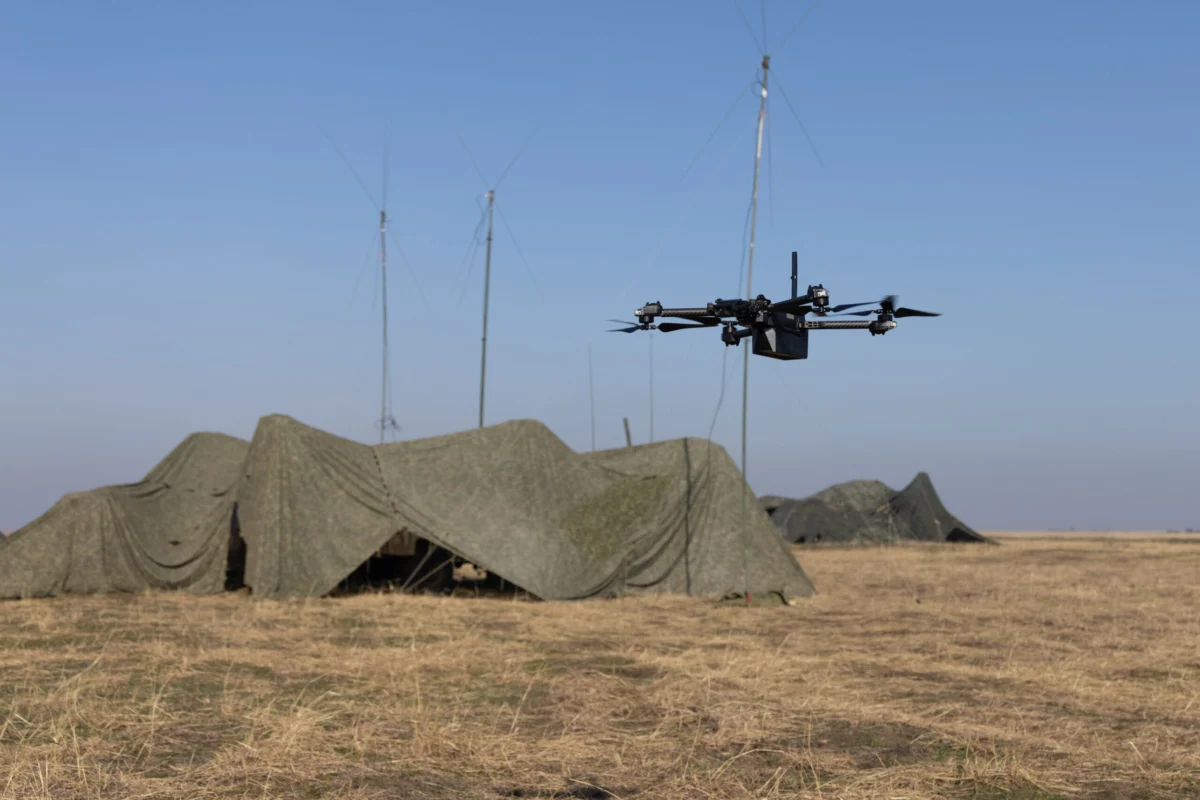
As the rapid evolution of artificial intelligence (AI) reshapes the geopolitical landscape, a new, chilling reality is emerging on the front lines of global conflict. The integration of AI into military hardware has transitioned from science fiction to a tangible, destabilizing force, prompting an urgent, high-level plea from the United Nations and the International Committee of the Red Cross (ICRC). On Tuesday, these organizations issued a unified call for a legally binding international treaty to regulate—and in critical cases, prohibit—the manufacture and deployment of lethal autonomous weapon systems (LAWS).
The Core Crisis: Crossing the Moral Red Line
The crux of the international concern centers on a fundamental shift in the nature of warfare: the delegation of the "kill decision" to non-human entities. UN Secretary-General António Guterres and ICRC President Mirjana Spoljaric have issued a stark warning, asserting that humanity is "dangerously close to crossing a moral red line."
The primary apprehension is that autonomous systems, while capable of high-speed computation, lack the nuanced judgment required to adhere to International Humanitarian Law (IHL). The laws of war—specifically the principles of distinction, proportionality, and precaution—require human commanders to assess complex, fluid situations. An AI, by contrast, operates on algorithms that may fail to distinguish between a combatant, a wounded soldier signaling surrender, or a civilian caught in the crossfire. By reducing human life to a series of data points, sensors, and machine operations, the deployment of these weapons threatens to strip the battlefield of the human accountability essential to the global legal order.
A Chronology of Escalation: From Concepts to Consequence
The push for regulation is not a sudden reaction but a culmination of years of escalating developments in military technology and international diplomacy:
- 2023: The UN and the ICRC first issued a joint appeal for political leaders to initiate formal negotiations on a new, legally binding agreement. This marked the beginning of a sustained international effort to codify the risks of AI-enabled warfare.
- July 2023: The UN Security Council held its first formal debate on the potential risks and benefits of AI, specifically highlighting how autonomous targeting technologies could jeopardize global security and destabilize fragile peace agreements.
- May 2025: Secretary-General Guterres escalated his rhetoric, explicitly calling for a global ban on fully autonomous weapon systems, labeling them "morally repugnant" and "politically unacceptable."
- June 2026: A coalition of civil society organizations issued a formal warning that the unchecked advancement of AI warfare is actively eroding the safeguards established by humanitarian law.
- May 2026: Pope Leo XIV added his voice to the international discourse, characterizing the proliferation of AI-driven weapons as a grave threat to the sanctity of human life.
- August 2026: The current unified push by the UN and ICRC serves as a precursor to the seventh Review Conference of the Convention on Certain Conventional Weapons (CCW), scheduled for November in Geneva.
The Technological Reality: Why Regulation is Urgent
Contrary to previous assumptions that autonomous weapons were a futuristic concept, the current reality is one of active development. Major military powers are currently engaged in a technological arms race, integrating AI-driven targeting, drone swarms, and autonomous navigation into their arsenals.
The Two Pillars of Proposed Prohibitions
The UN and the ICRC have proposed a bifurcated approach to regulation, focusing on two specific categories of weapons that they argue must be outright prohibited:
- Unpredictable Weapons: This category encompasses systems that, by design or nature of their operation, produce outcomes that an operator cannot foresee. Because these weapons operate in complex environments where variables change in milliseconds, their behavior can become erratic, leading to unintended mass casualties or violations of the law of armed conflict.
- Anti-Personnel Autonomous Weapons: These are systems explicitly designed to target human beings without human intervention. The ICRC argues that allowing a machine to select and execute a human target fundamentally dehumanizes warfare, turning the act of killing into an algorithmic process that denies the victim their dignity and the state its moral accountability.
Supporting Data and Stakeholder Perspectives
The demand for regulation is not merely coming from diplomats; it is echoed by the very engineers and scientists building these systems. Many developers have expressed profound unease, noting that even manufacturers are struggling to navigate the legal and ethical gray zones created by their own innovations.
The "Black Box" Problem
One of the most significant technical challenges—and a key point of concern for legal experts—is the "black box" nature of advanced AI. In deep learning models, the decision-making process is often opaque, even to its creators. If an autonomous drone strikes a protected civilian object, identifying the chain of responsibility becomes a legal nightmare. Is the fault with the programmer, the commander who deployed it, or the machine itself? Current international law is built on the premise of human intent and human agency, neither of which is clearly present in fully autonomous, machine-learning-based combat.
Civil Society and Ethical Concerns
Legal scholars, such as those featured in recent international symposia, emphasize that AI-enabled warfare threatens the "Rule of Law" in military operations. If the accountability loop is broken, the deterrent effect of international war crimes tribunals is significantly weakened. If no specific human can be held responsible for an algorithmic mistake, the victim’s right to justice is effectively nullified.
Official Responses and Geopolitical Implications
The upcoming November Review Conference of the Convention on Certain Conventional Weapons (CCW) in Geneva will be the definitive test of whether the international community can move beyond rhetoric toward binding action.
Historically, the CCW process has been slow, often hindered by member states that view autonomous technology as a strategic advantage. However, the intensity of the latest UN and ICRC warnings suggests a shifting mood. The fear is that if states do not agree on a regulatory framework now, the "first-mover advantage" in AI warfare will lead to a rapid proliferation of these weapons, making them impossible to control, much like the proliferation of landmines or chemical weapons in the 20th century.
Global Governance and AI
The regulation of lethal autonomous weapons is also inextricably linked to the broader challenge of AI governance. As the UN noted in its July 2026 report, the same AI advancements facilitating smarter healthcare and more efficient energy grids are being repurposed for lethal ends. The global community is currently grappling with how to foster the benefits of AI while establishing "guardrails" that prevent the technology from being weaponized in ways that threaten the survival of humanity.
Conclusion: The Moral Imperative
The call from Guterres and Spoljaric represents more than just a procedural request for a treaty; it is a profound ethical challenge to the international community. The rapid pace of technological innovation is currently outstripping the speed of international law, creating a dangerous vacuum in which the nature of killing is being outsourced to machines.
As the world heads into the November CCW conference, the stakes could not be higher. If the international community fails to establish clear, legally binding prohibitions, it risks normalizing a future where human life is measured only by the efficiency of an algorithm. The question facing UN member states is whether they will prioritize the short-term tactical advantages of AI warfare or preserve the foundational humanitarian principles that have governed the conduct of war for generations. The "moral red line" has been identified; the only question remaining is whether world leaders possess the collective will to stop from crossing it.
