






In the automotive world, the "sleeper"—a vehicle that hides extreme performance beneath an unassuming, commuter-friendly aesthetic—is the holy grail of engineering passion projects. While manufacturers often spend millions on marketing high-performance variants, some of the most intriguing vehicles to ever leave a factory floor were never intended for the showroom. Among these, the Mercedes-Benz "B55" stands as a monumental outlier: a humble, front-wheel-drive family hatchback transformed by vocational trainees into a fire-breathing, rear-wheel-drive V8 powerhouse.
The Context: A Study in Brand Contrasts
To understand the audacity of the B55, one must look at the Mercedes-Benz landscape of the mid-2000s. The German automaker was in a period of aggressive expansion, attempting to capture every corner of the market. On one end of the spectrum, the AMG division was hitting its stride, producing legendary, naturally aspirated powerplants like the 6.2-liter M156. These engines were being shoehorned into everything from the C-Class to the S-Class, creating a reputation for brute force and thunderous exhaust notes.
Simultaneously, Mercedes-Benz was pushing hard into the entry-level segment. The B-Class, introduced in 2005, was designed as a "Compact Sports Tourer." With its high roofline and front-wheel-drive architecture, it was the antithesis of the typical AMG performance machine. It was a vehicle for efficiency, utility, and families—not for shredding tires or carving canyons. Yet, in the quiet corridors of the Rastatt assembly plant, a group of apprentices and their mentors saw something else: a blank canvas.

Chronology of a Masterclass in Modification
The B55 project was not a corporate mandate; it was a grassroots effort sparked by the intersection of vocational training and pure automotive enthusiasm.
The Inception (2009)
The project was spearheaded by Rastatt plant manager Peter Wesp and vocational training foreman Andreas Würz. Wesp envisioned a project that would test the skills of the plant’s trainees while simultaneously showcasing the capabilities of the workforce. Würz, upon inspecting a standard B-Class chassis, realized that the engine bay, while narrow, possessed enough depth to accommodate a significantly larger heart.
The Donor and the Drivetrain
The team selected a B200 CDI that had been earmarked for training purposes—essentially a shell ready for disassembly. The goal was to retain the car’s factory-like exterior to ensure it remained a "sleeper." The team sourced a 5.5-liter M273 naturally aspirated V8, a refined, reliable unit that produced 388 horsepower and 391 lb-ft of torque.
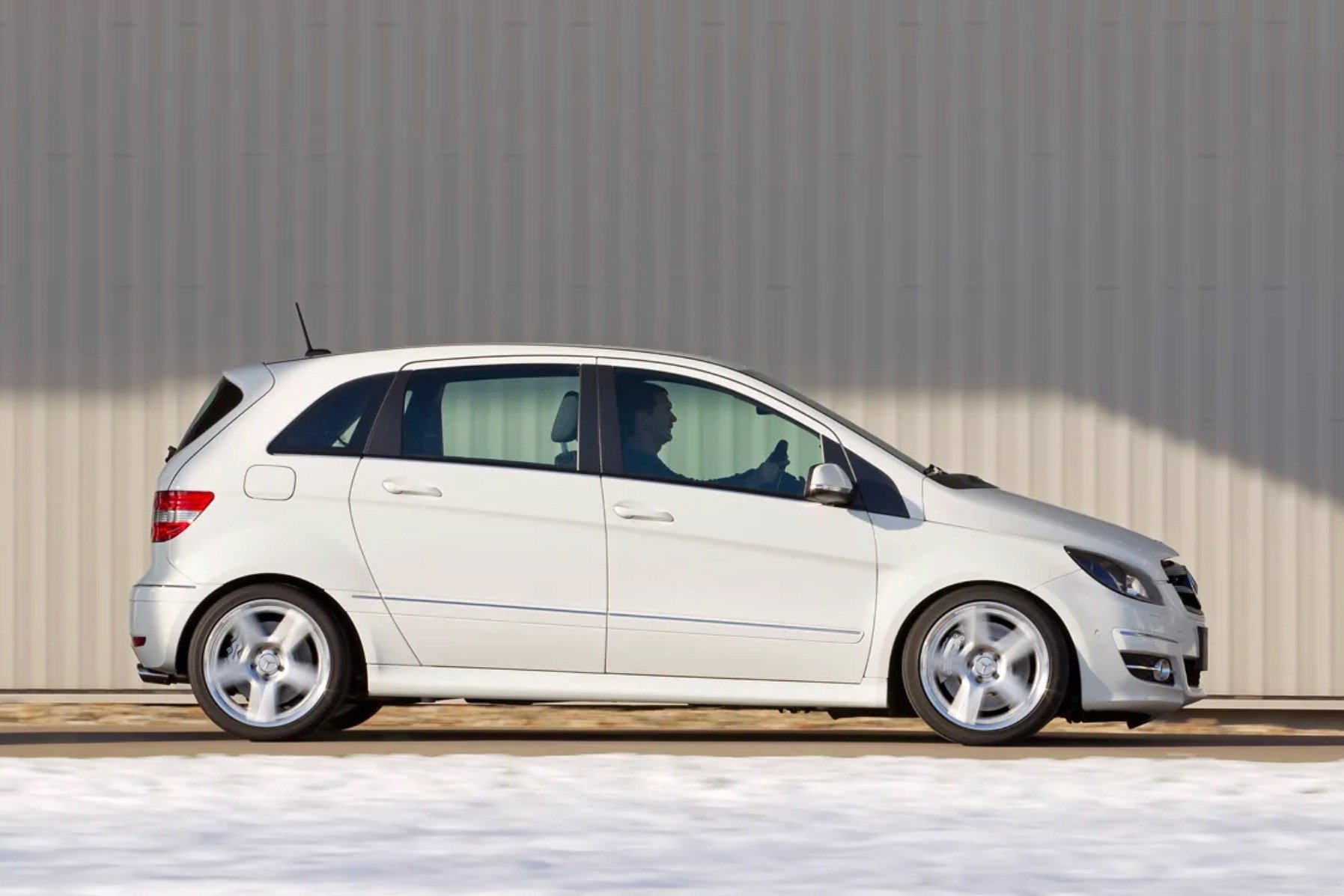
The engineering challenge was immense. The B-Class was never designed to house an engine of that size, nor was it engineered to route power to the rear wheels. The team had to essentially graft a new drivetrain into the existing unibody. They utilized the rear axle from a W210 E-Class, mounting it on a custom-fabricated subframe to manage the torque delivery.
Overcoming Packaging Hurdles
The most difficult aspect of the build was not the engine itself, but the "invisible" work: steering, exhaust routing, and cooling. Because the B-Class wasn’t designed for a longitudinal engine layout, the steering rack had to be carefully positioned. The exhaust was a bespoke creation, featuring dual outlets exiting centrally from the rear bumper—a subtle tell that this was no ordinary grocery-getter. To bring the handling up to speed, the trainees moved away from the factory suspension, opting for adjustable KW coilovers that allowed the car to sit lower and manage the significantly increased curb weight.
Supporting Data: The Specs of the Beast
The B55 was never destined for mass production, but its performance metrics prove it was a legitimate contender against the factory-built AMG models of its time.

- Engine: 5.5-liter naturally aspirated V8 (M273)
- Power Output: 388 horsepower / 391 lb-ft of torque
- Weight: 3,571 pounds (roughly 396 pounds heavier than the stock B200 CDI)
- Performance: 0–62 mph in under 6 seconds
- Drivetrain: Rear-wheel drive
- Braking: Performance-oriented hardware sourced from the C32 AMG
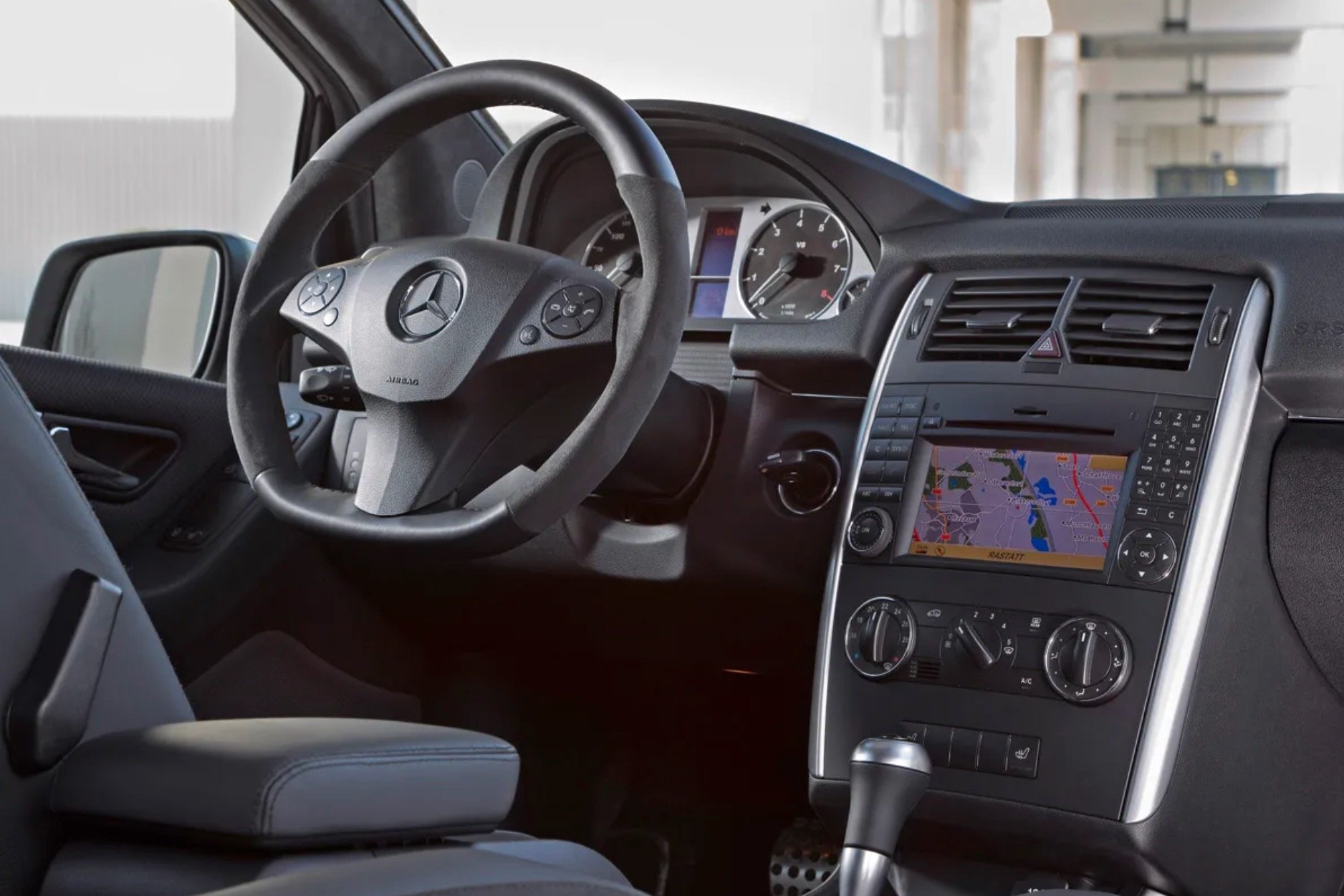
The interior received a significant upgrade to match the performance, featuring Alcantara headlining and premium leather/Alcantara upholstery. Despite the modifications, the B55 remained remarkably restrained in its appearance, a deliberate design choice that made the eventual acceleration and V8 bark all the more shocking to those who encountered it on the track.
Official Responses and Internal Sentiment
Mercedes-Benz has historically been a conservative company, often keeping its "skunkworks" projects under wraps for years. However, the B55 became a point of pride for the Rastatt plant. In recent years, the Mercedes-Benz Museum has brought the car back into the public eye, sharing its story via social media as a testament to the talent of their trainees.
The project was officially sanctioned as a training exercise, meaning the apprentices were not just modifying a car; they were learning the complexities of vehicle integration, weight distribution, and high-performance engineering. According to historical accounts from the project, the primary challenge set by Würz was to complete the swap without making any modifications to the exterior body shell. This constraint was critical—it forced the students to think critically about space, heat management, and component placement rather than relying on wide-body kits to hide their work.

Implications for the Industry
The legacy of the B55 is twofold: it represents the zenith of the "apprentice build" culture and highlights the shifting priorities of modern automotive engineering.
The "Apprentice" Culture
Mercedes-Benz, like many German manufacturers, has a long-standing tradition of allowing its vocational trainees to work on special projects. These builds are vital for talent retention and skill development. When a trainee spends months figuring out how to mate an E-Class rear end to a B-Class floor pan, they are gaining a depth of knowledge that standard assembly line work cannot provide. The B55 serves as the gold standard for this program.
The End of an Era
The B55 is also a relic of a specific technological era. The 5.5-liter V8 used in the build was, at the time, the backbone of the AMG range. Shortly after the B55’s completion, the automotive industry shifted away from these large-displacement, naturally aspirated engines toward forced induction. Emissions regulations and fuel economy mandates necessitated the move to smaller, twin-turbocharged engines. The B55 represents the last hurrah of the "big engine in a small car" philosophy—a concept that is increasingly difficult to achieve in today’s highly regulated, electrified environment.
The Sleeper Philosophy
Finally, the B55 serves as a masterclass in the art of the sleeper. In an era where performance cars are often defined by aggressive aero, massive air intakes, and neon calipers, the B55 remains a reminder that power is most effective when it is understated. It did not need to shout to be heard; the V8 rumble and the ability to smoke its rear tires were more than enough to establish its credentials.
Conclusion: A Legacy on Four Wheels
The Mercedes-Benz B55 is more than just a modified hatchback. It is a symbol of what happens when institutional engineering prowess meets the unbridled creativity of the next generation. It remains one of the most beloved internal projects in the company’s history, not because it was the fastest car they ever built, but because it was the most unexpected.
As the automotive world pivots toward electric platforms and autonomous driving, the story of the B55 feels like a dispatch from a different time. It serves as a reminder that at the heart of the automotive industry, there will always be a place for the engineers, the apprentices, and the dreamers who look at a practical family car and see a V8-powered riot waiting to happen. The B55 is, and will likely remain, the ultimate sleeper.
