





Introduction: The Economic Imperative
Gold and silver have served as the bedrock of commerce for millennia. Beyond their physical beauty, they function as the ultimate store of value, portable, durable, divisible, and fungible. Economically, they are the most marketable of all assets. Legally, the United States Constitution explicitly recognizes this role; Article I, Section 10 mandates that no state shall “make any Thing but gold and silver Coin a Tender in Payment of Debts.”
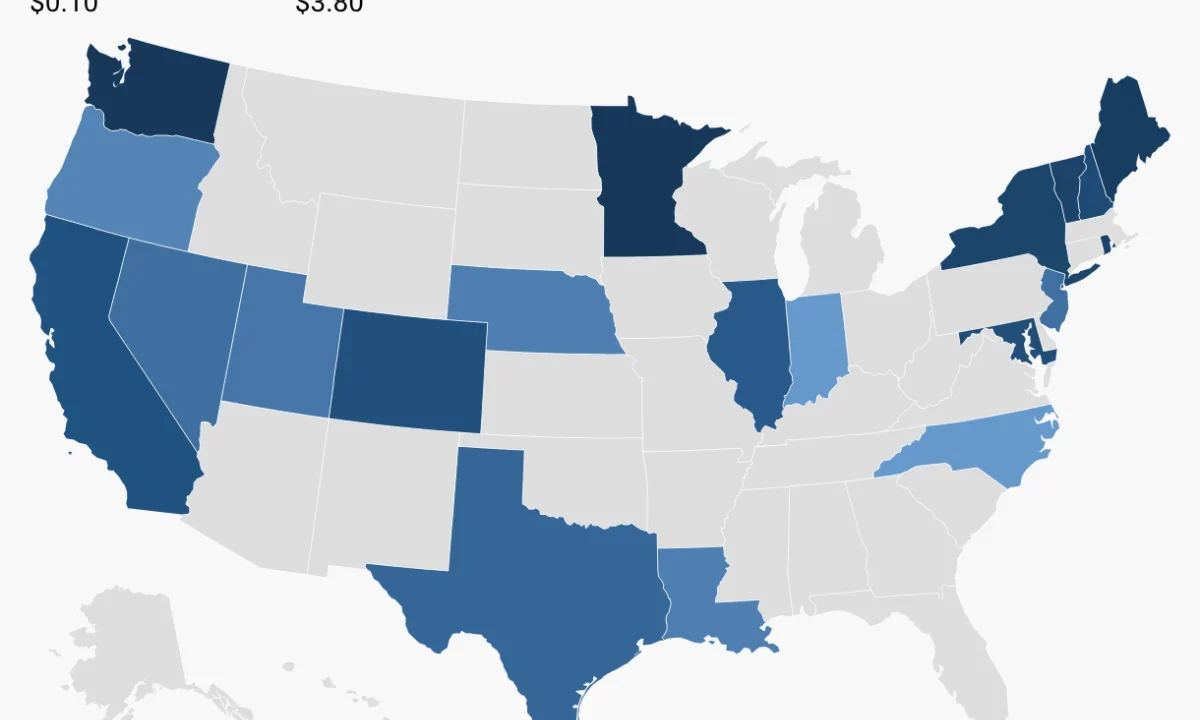
Despite this foundational status, a modern, often contradictory patchwork of state tax policies threatens to undermine the role of precious metals as a viable vehicle for savings. While state and local governments rely on sales taxes as an efficient tool for revenue generation, the integrity of these taxes depends on a neutral tax base. When states impose sales taxes on the purchase of bullion, they are essentially taxing the exchange of one form of money for another. This is not consumption; it is an intermediate financial transaction, akin to breaking a $100 bill into five $20 bills. Yet, in defiance of economic logic, 13 states and the District of Columbia currently fail to fully exempt bullion from sales tax, creating a burdensome environment for savers and investors.
Chronology of Legislative Tumult
The legislative landscape regarding bullion taxation has been characterized by intense volatility over the past two years, marked by "sound money" victories, bureaucratic overreach, and regressive policy shifts.
In 2024, Kentucky became a focal point of this struggle. The legislature passed HB 8, a landmark bill designed to exempt bullion from sales taxes. However, Governor Andy Beshear utilized a line-item veto—a power typically reserved for appropriation bills—to strike the exemption. The Kentucky Attorney General intervened, declaring the veto legally void. Demonstrating the legislature’s commitment to sound money, they passed a subsequent bill, HB 2, in 2025, which not only reaffirmed the exemption but mandated refunds for the taxes the governor had insisted on collecting during the interim.
Conversely, some regions have trended toward tighter controls. In New York, Mayor Zohran Mamdani recently petitioned the state legislature in Albany to abolish the partial exemption that bullion currently enjoys, arguing for increased tax revenue at the expense of fiscal neutrality. Similarly, Washington state moved in the opposite direction of reform, abolishing its sales tax exemption effective January 1, 2026, under the guise of “eliminating obsolete tax preferences”—a mischaracterization of a foundational financial tool.
Progress has been uneven. Florida, in a significant win for investors, extended its existing exemption to cover all bullion transactions in 2026. Connecticut has committed to sunsetting its minimum transaction requirement by July 1, 2027, and New Jersey enacted a new exemption for specific bullion products. In Alaska, while the state lacks a general sales tax, it recently established a preemptive exemption for gold and silver from local sales taxes, effective August 2026.
The volatility is perhaps best illustrated by Maryland’s recent history. The state initially limited its existing exemption to transactions occurring specifically at the Baltimore Convention Center—a move that effectively penalized all other in-state dealers. Following a significant backlash from the business community and a collapse in domestic volume, the legislature reversed the geographic limitation in 2026, though it maintained a minimum transaction threshold.
Supporting Data: The Regressive Nature of Minimums
A primary concern for tax policy experts is the prevalence of “minimum transaction” requirements. Currently, six states—California, Connecticut, Maryland, Massachusetts, New Jersey, and New York—require that a purchase meet a certain dollar value (ranging from $1,000 to $2,000) before it qualifies for a sales tax exemption.
These thresholds are inherently regressive. They function as a wealth-based barrier to entry, effectively pricing out low-income savers who may only be able to acquire precious metals in small, incremental amounts. For a wage earner attempting to protect their purchasing power against inflation, being forced to pay a 6% to 9% sales tax on a small purchase is a significant penalty.
Furthermore, these policies are exacerbated by the "Cantillon Effect." Inflation acts as a hidden tax, disproportionately harming those who receive new currency latest in the economic cycle. When low-income individuals attempt to hedge against this debasement by purchasing small amounts of gold, they are hit twice: once by the erosion of their fiat currency’s value and again by a regressive state sales tax that essentially punishes them for their lack of capital.
Official Responses and Strategic Policy
The push for bullion reform has been met with both enthusiasm and resistance from various political factions. While the American Legislative Exchange Council (ALEC) has championed model policies for "sound money," these efforts have drawn criticism from industry advocates. In several states, legislatures have considered bills to establish government-run "transactional gold" systems.
These proposed systems, while offering sales tax exemptions, often include provisions for public-private partnerships that threaten to overregulate the industry and create a state-sanctioned cartel of bullion vendors. Florida passed such a measure in June 2026, marking a contentious victory for proponents of government-integrated gold. However, about a dozen other states have rejected these bills, viewing them as an unnecessary entanglement of the state in private monetary exchange.
From the perspective of tax theory, the solution is clear: treat bullion as an investment, not a consumption good. Stocks, bonds, and other financial instruments are not subject to retail sales tax because they represent assets held for future use, not immediate consumption. Bullion shares these characteristics. The attempt to distinguish between government-minted bullion and privately minted bullion—a common feature in some state tax codes—also creates market distortions. Historically, private minters like Christopher Bechtler played a vital role in American commerce; today’s tax codes should not create an artificial competitive disadvantage for private mints by favoring state-sanctioned coins.
Implications for Economic Competitiveness
The economic implications of these taxes extend beyond the individual investor. Sales tax differentials create strong incentives for cross-border trade and “tax smuggling.” Just as consumers cross state lines to purchase cigarettes in lower-tax jurisdictions, investors will naturally gravitate toward states with favorable bullion tax laws.
This shift in trade patterns is particularly visible in the convention and trade show industry. Large-scale coin and bullion conventions are increasingly selecting host cities based on the tax neutrality of the jurisdiction. States that maintain burdensome sales taxes on bullion risk losing out on high-value events and the associated tax revenue from tourism, hospitality, and secondary economic activity. Maryland’s short-lived attempt to limit exemptions to the Baltimore Convention Center highlighted the state’s awareness of this dynamic, though the subsequent failure of that policy proved that piecemeal geographic exemptions are an insufficient substitute for a broad, state-wide principled policy.
Furthermore, the failure to exempt bullion may accelerate the effects of Gresham’s Law—the economic principle that "bad money drives out good." If individuals are taxed for holding gold and silver, they are more likely to spend their precious metals and retain their fiat currency, which is constantly losing value. By removing the tax, states allow sound money to remain in the hands of the public, serving as a reliable store of wealth that is not subject to the same inflationary pressures as Federal Reserve notes.
Conclusion: A Path Forward
The path to sound monetary policy at the state level is not complex, but it requires a commitment to principled governance over short-term revenue seeking. Sales taxes should be broad and neutral, applying only to final consumption. Since bullion is fundamentally an exchange of money for money, it should be entirely exempt from sales tax in every jurisdiction.
States currently limiting their exemptions—such as California, Minnesota, and Nevada—would do well to observe the success of those that have moved toward full, unconditional exemptions. Jurisdictions like Hawaii, Maine, New Mexico, Vermont, and Washington should reconsider their position and join the movement toward treating gold and silver with the respect that their constitutional and economic status demands.
The era of "sound money" advocacy is not merely a hobby for gold enthusiasts; it is a vital component of a resilient economy. As fiat currencies continue to face the challenges of debasement and inflation, the role of precious metals as a stable, neutral financial asset becomes more important than ever. By abolishing sales taxes on bullion, states can provide their citizens with the tools necessary to protect their savings, improve their local business competitiveness, and adhere to the fundamental principles of sound, honest money.
The future of American fiscal policy must move away from the arbitrary taxation of wealth preservation. Whether through the sunsetting of regressive minimums or the total repeal of bullion taxes, states have the opportunity to foster an environment where sound money can once again thrive as the backbone of the American dream.
