





Introduction: A Fragile Precedent
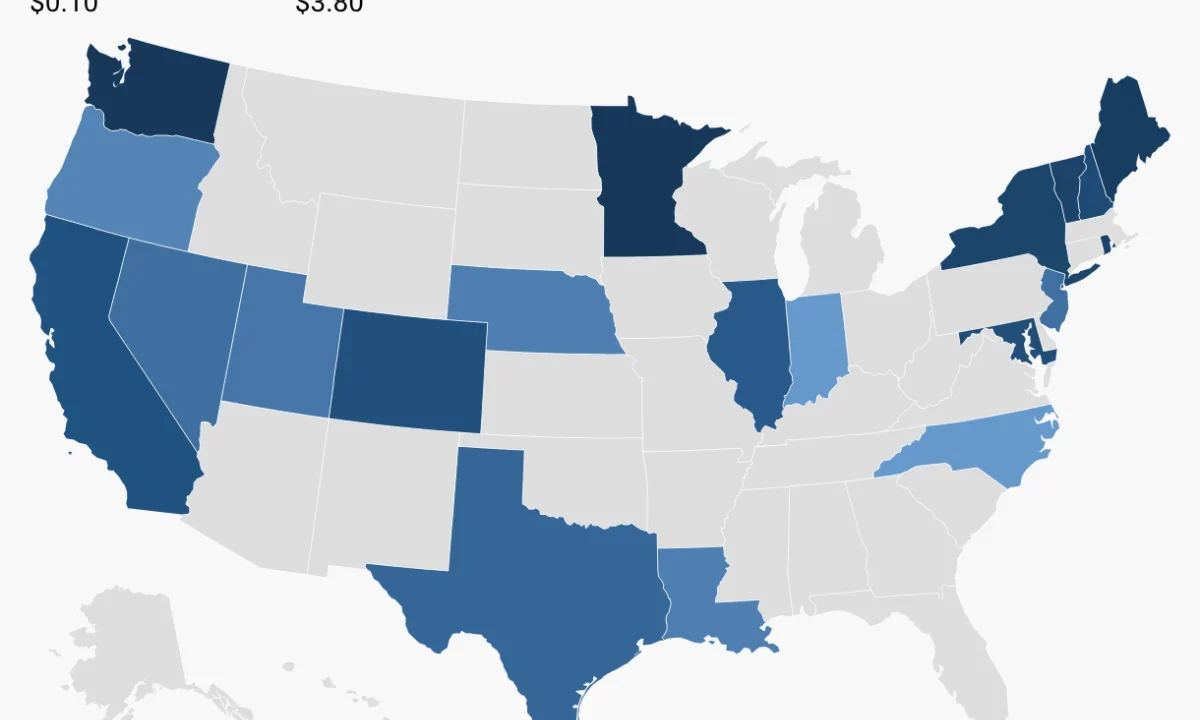
For years, states have scoured the digital landscape for new revenue streams, eyeing the massive advertising budgets of global technology giants. Utah, Maryland, and Illinois emerged as the pioneers in this endeavor, each enacting legislation to impose taxes on digital advertising services. However, this innovative tax policy is currently facing an existential threat. A recent court ruling in Maryland—which struck down the state’s digital advertising tax as unconstitutional—has sent shockwaves through state legislatures nationwide. As legal challenges mount in Utah and loom over Illinois, the future of these targeted levies appears increasingly precarious, caught in a high-stakes collision between state fiscal ambitions and federal law.
Main Facts: The Clash of Jurisdiction and Commerce
The central tension in the debate over digital advertising taxes lies in their discriminatory nature. Proponents of these taxes often frame them as a necessary update to state revenue models in a digital-first economy. Critics, however, argue that these levies are not merely modern updates, but are instead targeted strikes against a specific industry, violating long-standing federal protections.
At the heart of the legal conflict is the Internet Tax Freedom Act (ITFA). Enacted by Congress to prevent the Balkanization of the internet and the stifling of electronic commerce, the ITFA prohibits states from imposing discriminatory taxes on e-commerce. Specifically, the law mandates that states cannot tax digital services if they do not also tax equivalent services provided through traditional, non-digital means.
If a state imposes a tax on digital advertising while leaving television, radio, newspaper, and billboard advertising exempt, it runs afoul of the ITFA’s "non-discrimination" provision. The recent Maryland ruling affirmed this, finding that the state’s levy was essentially a punitive measure targeting a subset of the media industry, thereby violating both the ITFA and the U.S. Constitution’s Commerce and Due Process Clauses.
Chronology: From Legislative Hubris to Judicial Correction
2020–2021: The Rise of Digital Tax Ambitions
The movement to tax digital advertising gained momentum during the height of the digital transformation accelerated by the pandemic. Maryland led the charge, with its legislature overriding a gubernatorial veto in 2021 to pass the first-of-its-kind tax on digital advertising revenue. The policy aimed to generate hundreds of millions in annual revenue, ostensibly to fund education initiatives.
2022–2024: The Legal Front Opens
Shortly after Maryland’s law took effect, industry groups, including the Chamber of Commerce and various tech trade associations, filed suit. They argued that the tax was not only discriminatory but also impossible to implement fairly, as it required companies to determine the geographic location of users for every individual ad impression served—a technical and constitutional nightmare.
2025: The Maryland Ruling
In a landmark decision, a Maryland court struck down the tax. The court’s reasoning was twofold: first, the tax violated the ITFA because it failed to apply to analogous offline advertising; second, it infringed upon the Commerce Clause by creating a risk of "multiple taxation" and undue burdens on interstate commerce. The state has indicated it will appeal, but the ruling has provided a blueprint for challengers in other jurisdictions.
2026: The Domino Effect
As of late 2026, Utah’s targeted advertising tax is facing active litigation. Observers expect similar filings in Illinois as plaintiffs, emboldened by the Maryland precedent, seek to prevent the enforcement of what they characterize as unconstitutional state overreach.
Supporting Data: Why "Similar" Matters
The legal survival of these taxes hinges on the definition of "similar" goods or services. Tax policy experts point to several key comparisons that complicate the state’s position:
- Streaming vs. Cable: States often struggle to tax streaming fitness classes or video content because they do not tax traditional local gyms or cable television subscriptions in the same manner.
- Targeted Digital vs. Billboard Advertising: The fundamental difference between a billboard and a targeted digital ad is the precision of the data used to deliver the content. However, from a tax perspective, both serve the exact same function: promoting a brand or product to a consumer. By exempting the billboard but taxing the digital ad, states create a discriminatory barrier that the ITFA was explicitly designed to prevent.
Furthermore, economic analysis suggests that the administrative cost of compliance for digital firms is significantly higher than for traditional media. For a company to pay a digital tax, it must track where every "click" or "view" occurs, a process that is fraught with privacy concerns and data accuracy issues.
Official Responses and Stakeholder Positions
The State Perspective
Proponents of digital taxes, such as legislators in Maryland and Illinois, argue that large tech companies have historically avoided paying their "fair share" of state taxes. They contend that the shift of advertising dollars from local newspapers to global digital platforms has eroded the tax base, leaving schools and infrastructure underfunded. They view the taxes as a necessary evolution of the tax code to ensure that global entities contribute to the communities where their users reside.
The Industry Perspective
Trade groups and tech companies maintain that these taxes are not about "fairness" but about revenue grabs that ignore the integrated nature of the modern internet. They argue that if every state were allowed to create its own unique, discriminatory tax on digital services, the internet would become a fractured landscape of conflicting regulations, ultimately harming the consumer and the small businesses that rely on these platforms to reach customers.
Legal Analysts
Legal scholars, including experts at the Tax Foundation, emphasize that the constitutional protections—specifically the Commerce Clause—are designed to prevent states from acting as mini-sovereigns that can impede the national economy. They argue that the Maryland ruling serves as a vital check on state power, reinforcing the principle that states cannot circumvent federal law simply by re-labeling an old tax as "digital."
Implications: A New Era of State Tax Policy?
The Death of "Targeted" Levies
The most immediate implication of the Maryland ruling is that "targeted" advertising taxes are likely dead on arrival in other states. Legislators who were considering similar bills are now pivoting, fearing that they will be locked in expensive, losing court battles. This is a significant blow to states that were banking on these revenues to balance their budgets.
The Rise of Broad-Based Solutions
As the legal path for targeted taxes closes, states may shift their focus to broader, less legally vulnerable approaches. This could include expanding existing sales taxes to cover a wider array of services, including digital ones, provided they do so in a non-discriminatory, uniform fashion. However, these broader taxes are politically difficult to pass, as they impact a wider range of businesses and consumers.
The Constitutional "High-Water Mark"
We are currently witnessing a "high-water mark" for state digital tax expansion. The Maryland decision acts as a firewall, preventing the proliferation of state-level taxes that would have otherwise fractured the digital economy. This case will likely reach higher courts, potentially setting a Supreme Court precedent that defines the limits of state authority over the digital realm for the next generation.
Conclusion: The Road Ahead
The saga of digital advertising taxes is a cautionary tale for state legislatures. It highlights the dangers of enacting fiscal policy that ignores federal statutes like the Internet Tax Freedom Act. While the goal of increasing state revenue is a legitimate policy objective, it must be pursued within the constraints of the U.S. Constitution.
As Utah, Illinois, and potentially other states grapple with the fallout of the Maryland decision, the message is clear: the digital economy is not a "tax-free zone" for states to exploit at will. It is a national, interconnected ecosystem that requires a consistent, non-discriminatory approach to taxation. For now, the "short list" of states with these taxes is indeed getting shorter, and the legal precedent being set will define the boundaries of fiscal federalism for years to come.
