


A comprehensive briefing on the shifting landscape of technology, biotech, and the regulatory battles defining our era.
The Quest for Eternal Youth: A Biotech Enigma
In the high-stakes world of longevity research, the line between groundbreaking science and marketing hyperbole is often razor-thin. Recently, Generation Lab, a startup making waves in the anti-aging space, has sparked both intrigue and skepticism with its latest proposition: a proprietary pharmaceutical treatment that claims to “block the systemic spread of aging in the bloodstream.”
The Science of "Young Blood"
The theoretical framework for Generation Lab’s approach is rooted in the controversial, yet fascinating, work of Irina Conboy, the company’s scientific founder. Conboy gained notoriety for experiments in which she successfully joined the circulatory systems of old and young mice—a process known as parabiosis—which resulted in improved healing capabilities in the older subjects.
Conboy now claims to have translated these findings into a therapeutic cocktail of two existing drugs that can mimic the benefits of youthful blood without the need for invasive bodily fluid exchange. However, the startup has opted to maintain total secrecy regarding the chemical composition of this drug combination. This lack of transparency has created a significant hurdle for the scientific community, leaving experts to wonder whether this is a legitimate medical breakthrough or merely a "longevity influencer" marketing stunt.
Energy Evolution: Navigating the Virtual Power Plant
As the global energy grid faces unprecedented strain from climate-driven demand and the integration of renewable sources, the concept of the Virtual Power Plant (VPP) has moved from niche engineering theory to a practical household reality.
What is a VPP?
A VPP is essentially a decentralized energy network. It aggregates the dormant power of consumer devices—smart thermostats, electric vehicle (EV) batteries, home solar arrays, and high-efficiency HVAC systems—into a single, coordinated resource. When grid demand spikes, utilities can remotely adjust these devices to lower electricity consumption, effectively "creating" power by reducing the load.
For the consumer, the incentives are tangible: utility companies are offering signing bonuses and ongoing monthly discounts on energy bills in exchange for control over these devices. However, the trade-off involves a loss of autonomy over one’s home environment. Deciding whether to join a VPP requires a careful calculation of cost-savings versus the inconvenience of having a third party modulate your home’s climate or charging schedule during peak demand hours.
The Regulatory and Tech Landscape: A Chronology of Conflict
The current technological climate is defined by rapid, often disruptive, advancements clashing with legacy legal and safety frameworks.
Recent Key Developments:
- August 2026 (Mid-Month): Tech giants, including OpenAI and Google, issue a collective warning regarding the imminent surge of AI-driven cyberattacks, urging industry-wide defensive measures.
- August 26, 2026: A lawsuit emerges alleging that Elon Musk’s xAI utilized child sexual abuse material (CSAM) in the training data for its Grok model, highlighting the dangerous inadequacy of current AI-governance laws.
- August 27, 2026: A federal judge rules that the Pentagon’s attempt to blacklist Anthropic was unconstitutional, citing violations of First Amendment rights and evidence of retaliatory motive.
- August 28, 2026: Anthropic pivots to the physical world, launching an AI toolset capable of autonomously operating lab hardware like lasers and robotic arms, signaling a new era of "agentic" scientific research.
Supporting Data and Implications
The Crisis in Academic Integrity
A recent preprint paper from Samsung and the University of Warsaw has sent shockwaves through the scientific community. The research warns that a "torrent" of AI-generated papers, authored by non-existent researchers, is actively contaminating the academic record. As the study notes, "The academic record is being quietly haunted," suggesting that the foundational knowledge base of human civilization is currently under a slow-motion cyberattack.

The Human Toll of the Data Boom
While Silicon Valley heralds the expansion of data centers, the human cost is becoming increasingly visible. In India, a massive data center construction boom is displacing local communities. Policymakers, eager to secure investments from Big Tech, are accused of sidelining the needs and rights of local populations, sparking a growing "not-in-my-backyard" sentiment that is becoming a global phenomenon.
Official Responses and Industry Outlook
The Pentagon’s "Culture War" Backfires
The legal defeat of the Pentagon’s blacklisting of Anthropic is being viewed as a significant turning point in the relationship between the US government and private AI firms. Legal analysts suggest that the Pentagon’s attempt to use procurement blacklists as a tool of ideological or political pressure has backfired, potentially weakening the military’s access to cutting-edge AI tools while bolstering the legal standing of tech companies against government overreach.
The Rise of "AI-Proof" Labor
Interestingly, as AI dominates the headlines, a cultural counter-movement is emerging. Young workers are increasingly turning to traditional, hands-on crafts—skills that are notoriously difficult for AI to replicate. From carpentry to specialized masonry, there is a renewed appreciation for "AI-proof" labor, suggesting that the future of work may not be entirely digital.
The Limits of Human Biology
In a stark reminder of the limitations of the human form, China’s recent advances in robotic track-and-field athletes are breaking records that human bodies simply cannot touch. These robotic racers are not merely performing; they are defining the physical ceiling of human biology, prompting uncomfortable questions about the future of professional sports and the role of human performance in a machine-dominated age.
Scientific Corrections: Rethinking Human Evolution
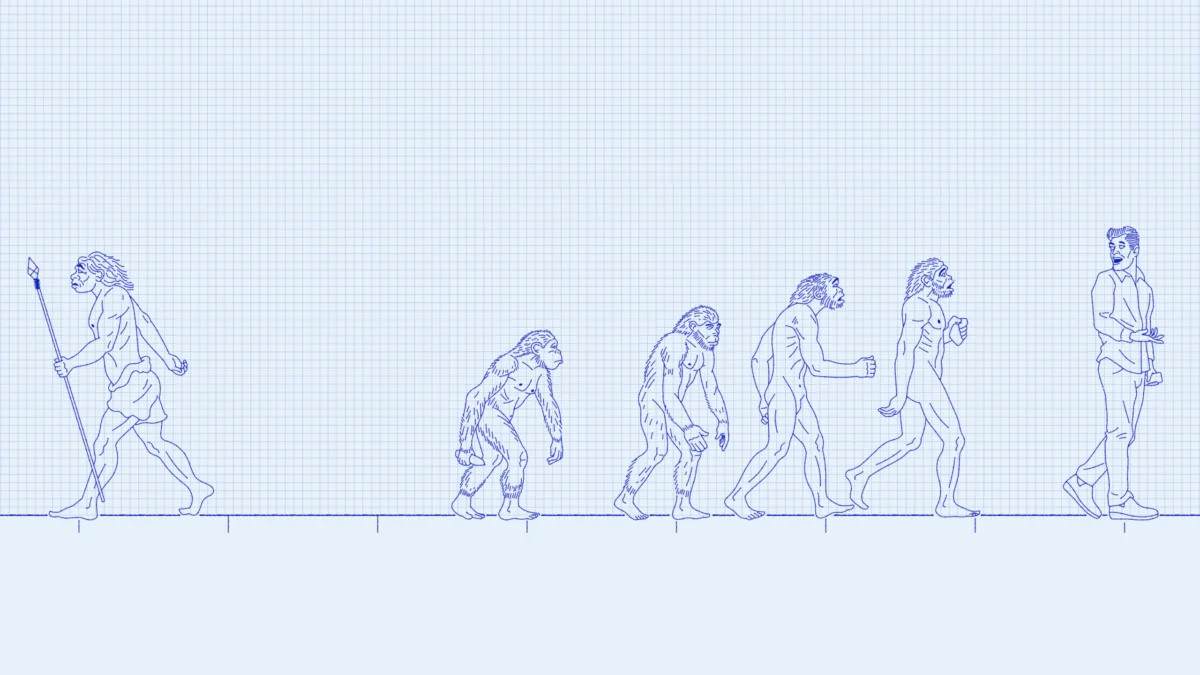
Finally, we must address the "inner Neanderthal" myth. For years, the prevailing theory has been that 1% to 4% of non-African human DNA is inherited from Neanderthals due to interbreeding. However, recent research by French geneticists suggests this may be a misinterpretation of data.
The researchers argue that what we see as "interbreeding" may simply be the result of population structure—how genes naturally concentrate in smaller, isolated groups. This challenges one of the most celebrated discoveries in evolutionary biology, forcing us to re-evaluate our understanding of our own ancestors.
Closing Notes: Finding Comfort in a High-Tech World
Despite the looming threats of AI-driven hacks, academic corruption, and the loss of privacy to virtual power plants, there remain pockets of optimism and beauty.
- Wildlife Conservation: Italian researchers have released 150,000 baby octopuses into the Adriatic Sea, a biological solution to combat invasive crab populations.
- The Listening Museum: For those seeking solace in the mundane, digital archives now exist that map the acoustic signatures of mechanical keyboards—a testament to humanity’s desire to find meaning in the tactile, even as we move toward an increasingly ethereal future.
- Community Resilience: In Los Angeles, a Costco parking lot has transformed into an impromptu skate park for the over-40 crowd, proving that even in the most corporate of environments, human play persists.
As we navigate this complex technological era, the lesson remains clear: while we must remain vigilant regarding the risks posed by our own inventions, the core of the human experience—our creativity, our connection to nature, and our desire for community—remains our most resilient asset. Whether it is the fight for a more ethical energy grid or the skepticism we bring to "miracle" drugs, the path forward requires a balance of innovation and critical inquiry.
