





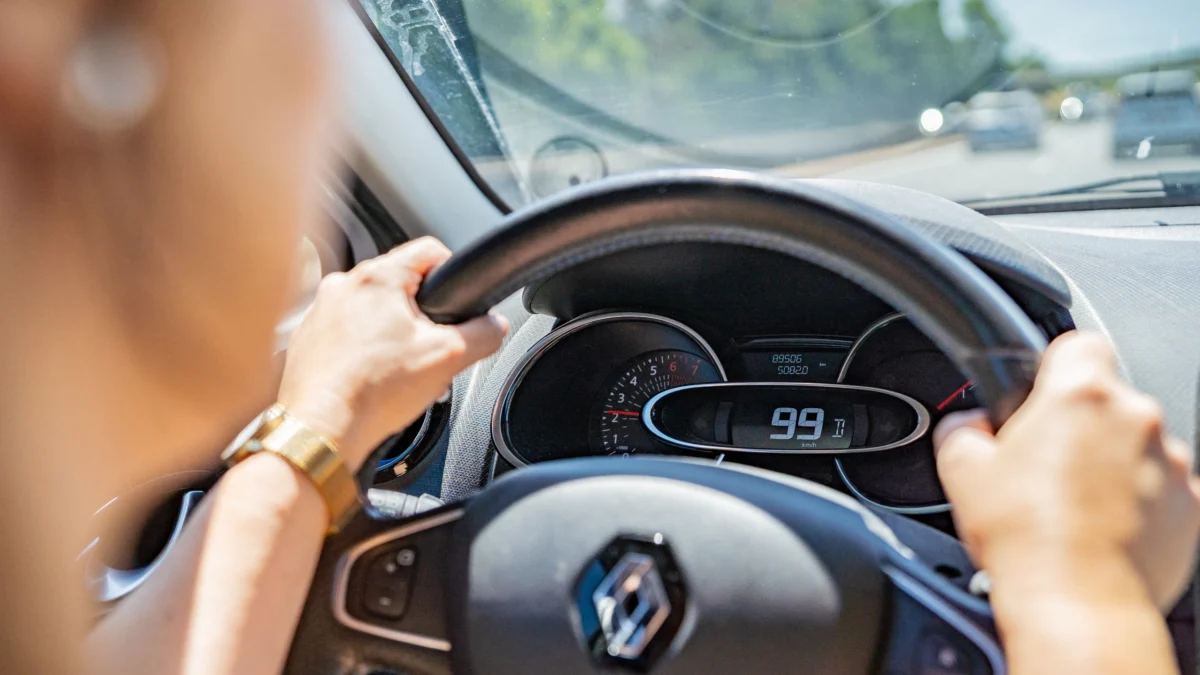
The automotive world is currently facing a paradigm shift that threatens to fundamentally alter the relationship between driver and vehicle. While the headlines have been dominated by electric vehicle adoption curves and autonomous driving test failures, a more invasive, foundational change is brewing within the corridors of the European Commission. Recent reports suggest that the EU is quietly moving toward a future where satellite-linked speed governors could strip drivers of the ability to exceed posted speed limits entirely, effectively turning the vehicle’s throttle into a software-gated permission slip.
This proposal, which has flown under the radar of mainstream discourse, marks a significant escalation from the current "Intelligent Speed Assist" (ISA) mandates. As regulators look toward 5G connectivity and real-time geofencing, the dream—or nightmare—of a "connected car" may soon include the reality of remote, enforced compliance.
The Evolution of Intelligent Speed Assist (ISA)
To understand where we are going, we must look at the regulatory landscape already in place. Since 2024, the European Union has mandated that all new vehicles registered within its member states come equipped with Intelligent Speed Assist (ISA) technology.
At its core, ISA is a digital watchdog. It utilizes a combination of GPS data and forward-facing cameras to "read" speed limit signs and monitor the vehicle’s current velocity. When a driver crosses the threshold of the posted limit, the system triggers an audible or haptic warning. While these systems are currently designed as advisory—meant to nudge the driver into compliance—they represent the "interim stage" of a much larger policy objective.
European automakers initially resisted the push for active intervention, fearing that heavy-handed, automated throttle control would alienate consumers and create significant liability issues. As a result, the current ISA systems remain largely passive, relying on warnings rather than physical speed suppression. However, sources within the Commission suggest that the current iteration was never the end game.
Chronology: From Advisory to Enforcement
The path toward mandatory speed governance has been paved with incremental regulatory steps:
- 2022-2023 (Development): The EU finalizes regulations for the General Safety Regulation (GSR2), mandating ISA for all new vehicles starting July 2024.
- Early 2024 (Deployment): Automakers begin rolling out ISA systems across European fleets. The systems are criticized for "false positives"—misreading signs or failing to update speed limits in real-time.
- Late 2025 (The Pivot): Reports emerge that the European Commission is dissatisfied with the "soft" nature of current warnings. Discussions begin regarding a transition from advisory warnings to hard-governing systems.
- The Current Outlook: Bureaucrats are now openly discussing the integration of 5G telemetry to "fix" the speed of the vehicle. By linking the car’s ECU (Engine Control Unit) to a centralized, satellite-fed speed map, the vehicle would theoretically be unable to exceed the limit regardless of driver input.
Supporting Data: The Accuracy Gap
The primary argument for these systems is safety. Regulators point to the reduction in accidents as the ultimate goal. However, independent research paints a troubling picture of the technology’s current maturity.
A landmark study by Thatcham Research in June highlighted a staggering "regulatory gap." The research revealed that even the most advanced ISA systems are prone to significant error. According to the report:
- The Worst Performers: Some systems failed to identify the correct speed limit in nearly 25% of events.
- The Best Performers: Even the most sophisticated systems, which achieved 98% accuracy over distance, still struggled in event-based metrics, misinterpreting the speed limit in 1 in 10 instances.
These statistics represent more than just a minor technical glitch. If a vehicle is programmed to automatically govern its speed based on these systems, a 10% failure rate could lead to erratic braking or dangerous acceleration gaps on high-speed motorways. When a car "thinks" the speed limit is 30 mph when it is actually 60 mph, the result is not safety—it is a mobile hazard.
Official Responses and Industry Concerns
The automotive industry finds itself in a precarious position. Manufacturers are tasked with meeting these stringent EU mandates while balancing the reality of consumer demand for "driver-centric" vehicles.
While few manufacturers are speaking out publicly against the Commission for fear of regulatory retaliation, private conversations with industry insiders reveal deep skepticism. There is an acknowledgment that while "connected car" data can optimize traffic flow, the leap to hard-speed governance poses an existential threat to the private ownership model.
"The systems are not currently robust enough to handle the nuance of real-world driving," says one industry analyst. "A speed sign obscured by a branch or a temporary work zone speed limit that isn’t updated in the satellite database immediately—these are life-or-death variables that software cannot yet resolve with 100% reliability."
The Implications: A Loss of Agency
The implications of this shift extend far beyond simple traffic law. If the state gains the technical ability to govern the speed of private property via satellite, we are witnessing the sunset of the "unrestricted driver."
The 5G Surveillance Web
The proposed "Super-ISA" systems will rely heavily on 5G data to provide real-time updates. This effectively turns every vehicle into a node in a massive surveillance grid. To ensure the speed limit is accurate, the car must know exactly where it is, what time it is, and what the local speed zone is at that precise second. This necessitates a constant, two-way data stream between the vehicle and central servers.
The Slippery Slope of Compliance
If we accept that the government has the right to electronically cap the speed of a vehicle to improve safety, the logical next step is the restriction of other behaviors. If a car can be slowed down, can it be stopped? Can it be rerouted? Can it be disabled if the driver misses a payment or if a license is suspended? These are not hypothetical concerns; they are the logical conclusion of "connected vehicle" architecture.
The Global Impact
The European market is a bellwether for the rest of the world. Because global automakers strive to standardize production lines to maximize efficiency, technologies mandated in the EU often find their way into American and Asian markets, even if they remain dormant. Once the hardware is installed, it is only a matter of a software update—or a change in local legislation—before these systems are "switched on" globally.
Conclusion: The Price of "Zero Accidents"
The European Commission’s push for satellite-governed speed limits is framed under the banner of the "Vision Zero" policy—the goal of eliminating all road traffic deaths. It is an unimpeachable moral objective, but one that ignores the reality of human behavior and technological fallibility.
By removing the driver’s agency and replacing it with a potentially flawed algorithm, regulators are not necessarily creating a safer world; they are creating a more controlled one. As we move toward a future where our cars are tethered to satellites that dictate our pace, we must ask ourselves: at what point does the cost of absolute compliance exceed the value of the freedom it purports to protect?
For now, the open road remains, but the horizon is narrowing. The debate over who controls the pedal—the human or the satellite—is only just beginning.
