





For decades, the automotive industry has been locked in an engineering tug-of-war between the efficiency of turbocharging and the immediate, visceral throttle response of a naturally aspirated V8. While twin-turbo setups have evolved to become remarkably responsive, the physics of “turbo lag”—the delay between pedal input and the moment exhaust gases build enough pressure to spin the turbines—remains the bane of high-performance driving.
Now, Stellantis’ legendary SRT (Street and Racing Technology) division is aiming to settle this debate once and for all. Their latest innovation, dubbed "eBoost Air," is a sophisticated, rapid-development proof-of-concept that promises to marry the power density of forced induction with the instant, linear torque curve of a supercharger.
The Core Concept: How eBoost Air Works
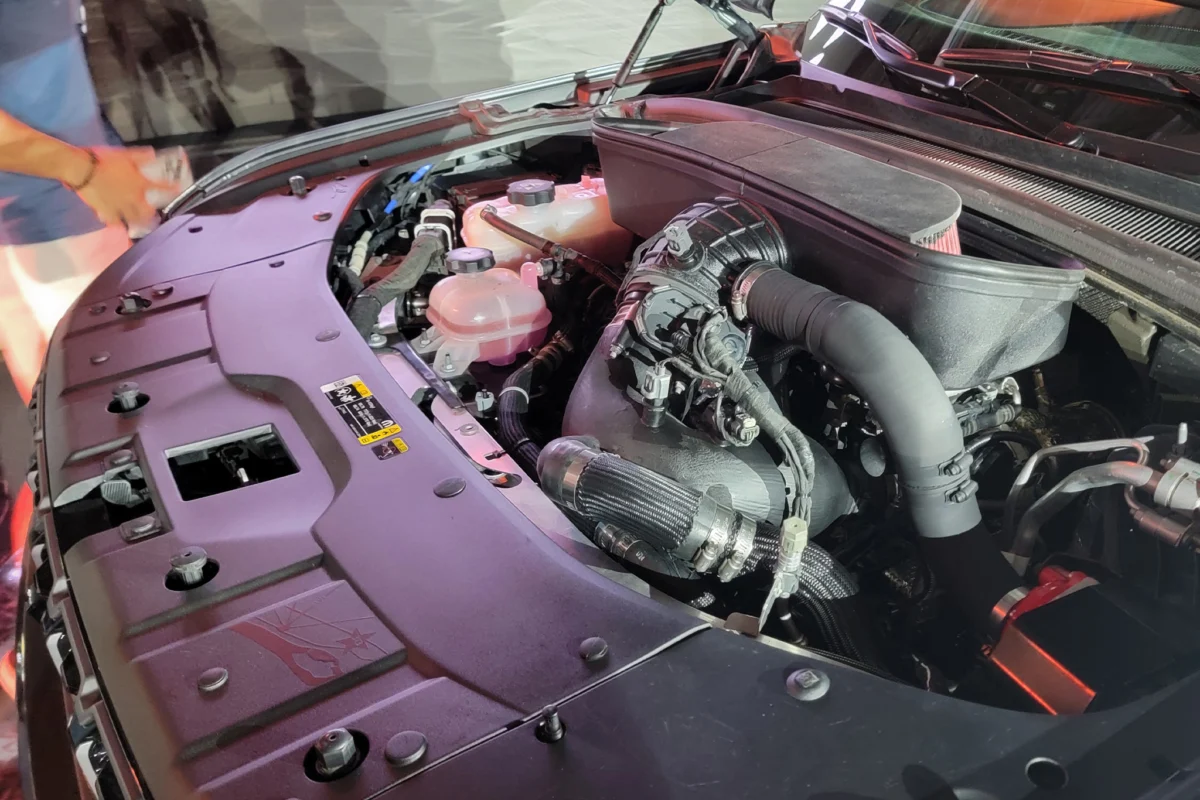
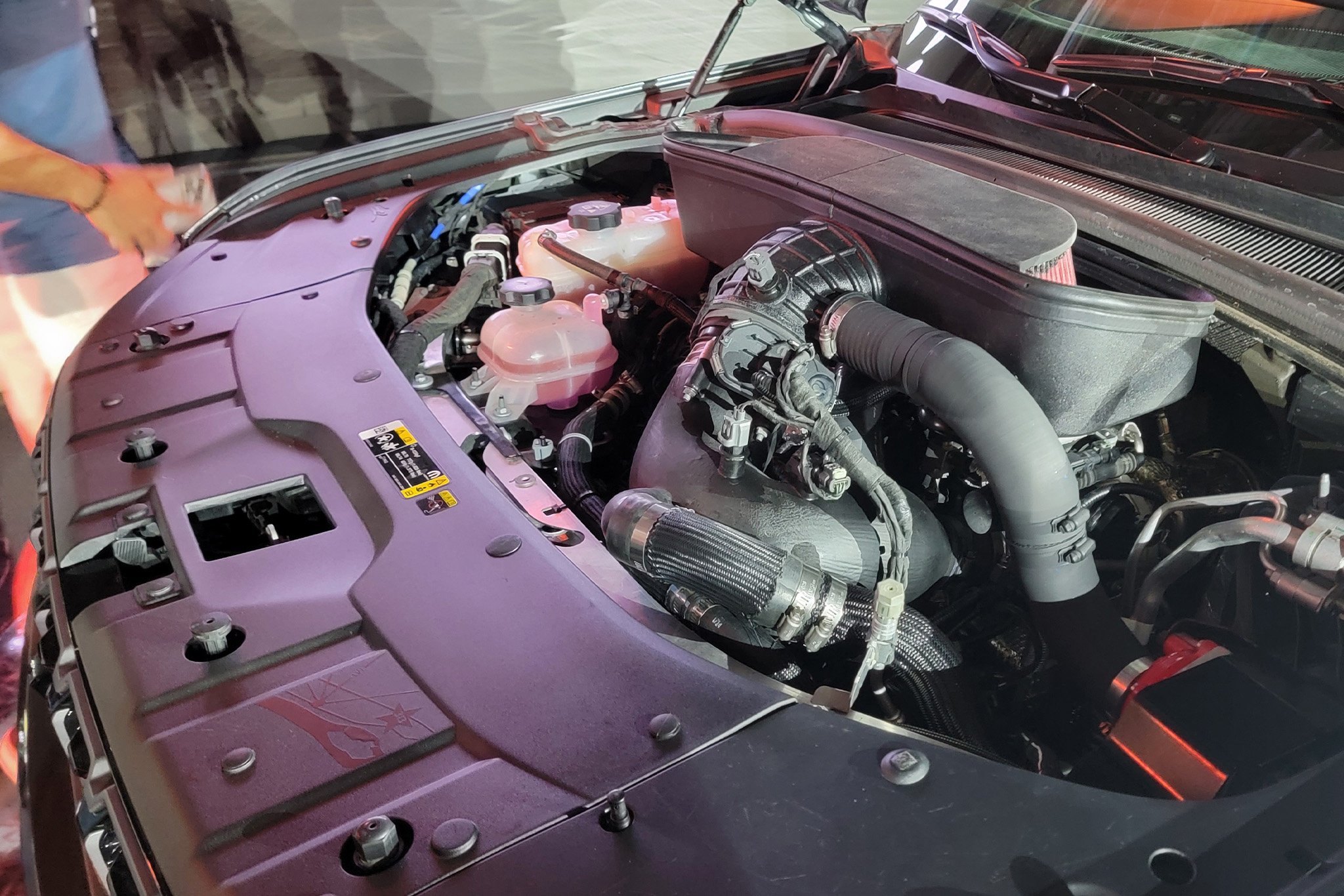
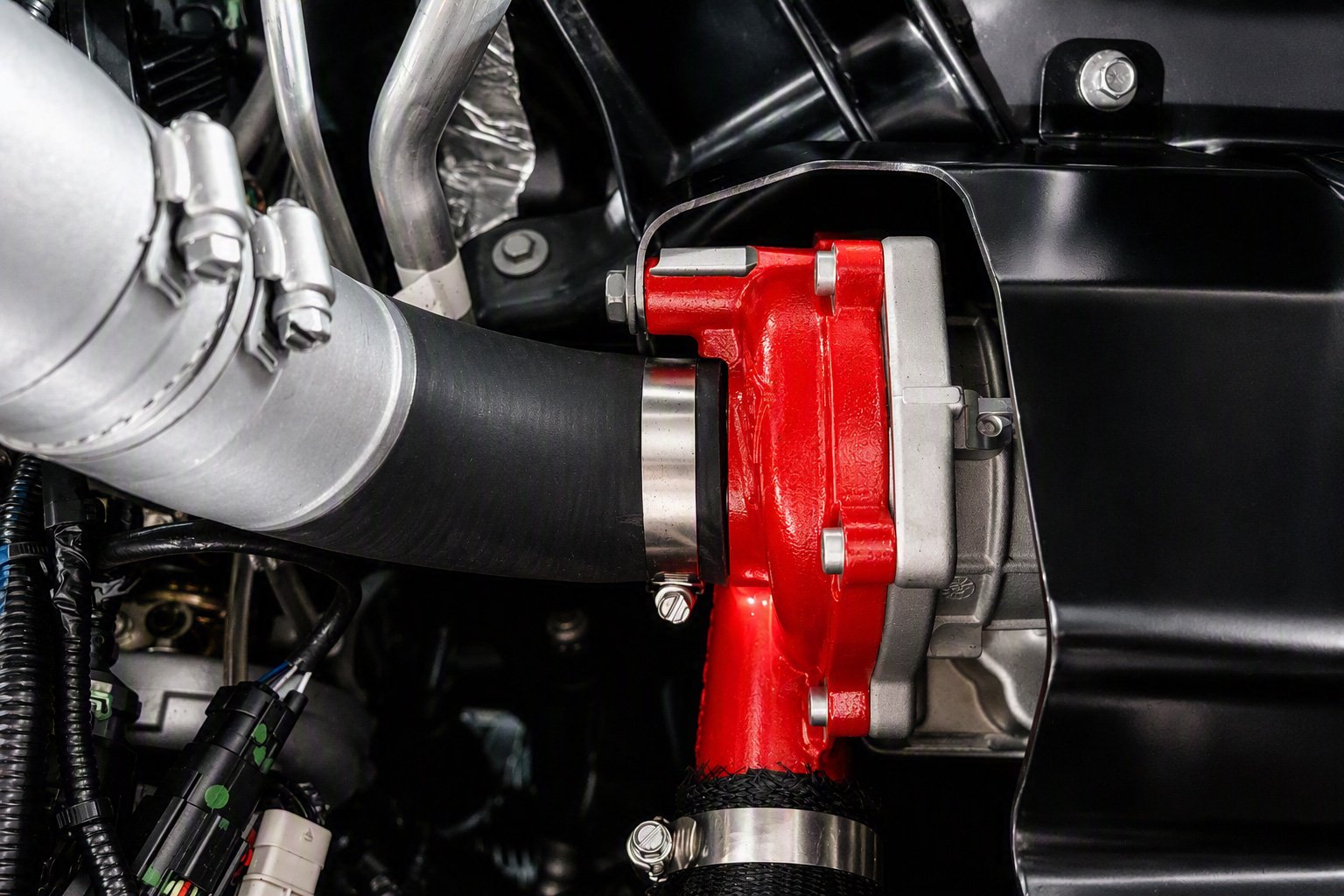
At its simplest, the eBoost Air system is an electrically powered compressor that sits upstream of the twin turbochargers found on the Stellantis Hurricane inline-six engine. Unlike traditional turbochargers, which rely exclusively on the energy of spent exhaust gases to spool up, the eBoost Air uses an electric motor to provide immediate, forced-air pressure the moment the driver tips into the throttle.
This is a critical distinction from other electrified induction systems currently on the market. For instance, the MGU (motor-generator unit) setups seen in high-end European sports cars like the Porsche 911 Turbo S integrate the electric motor directly into the turbocharger assembly, sitting between the compressor and turbine wheels. SRT’s approach is far more modular: by placing the e-compressor upstream, the device essentially acts as a “pre-loader,” force-feeding the intake tract with air before the exhaust-driven turbos have even reached their peak RPM.
Chronology of Development
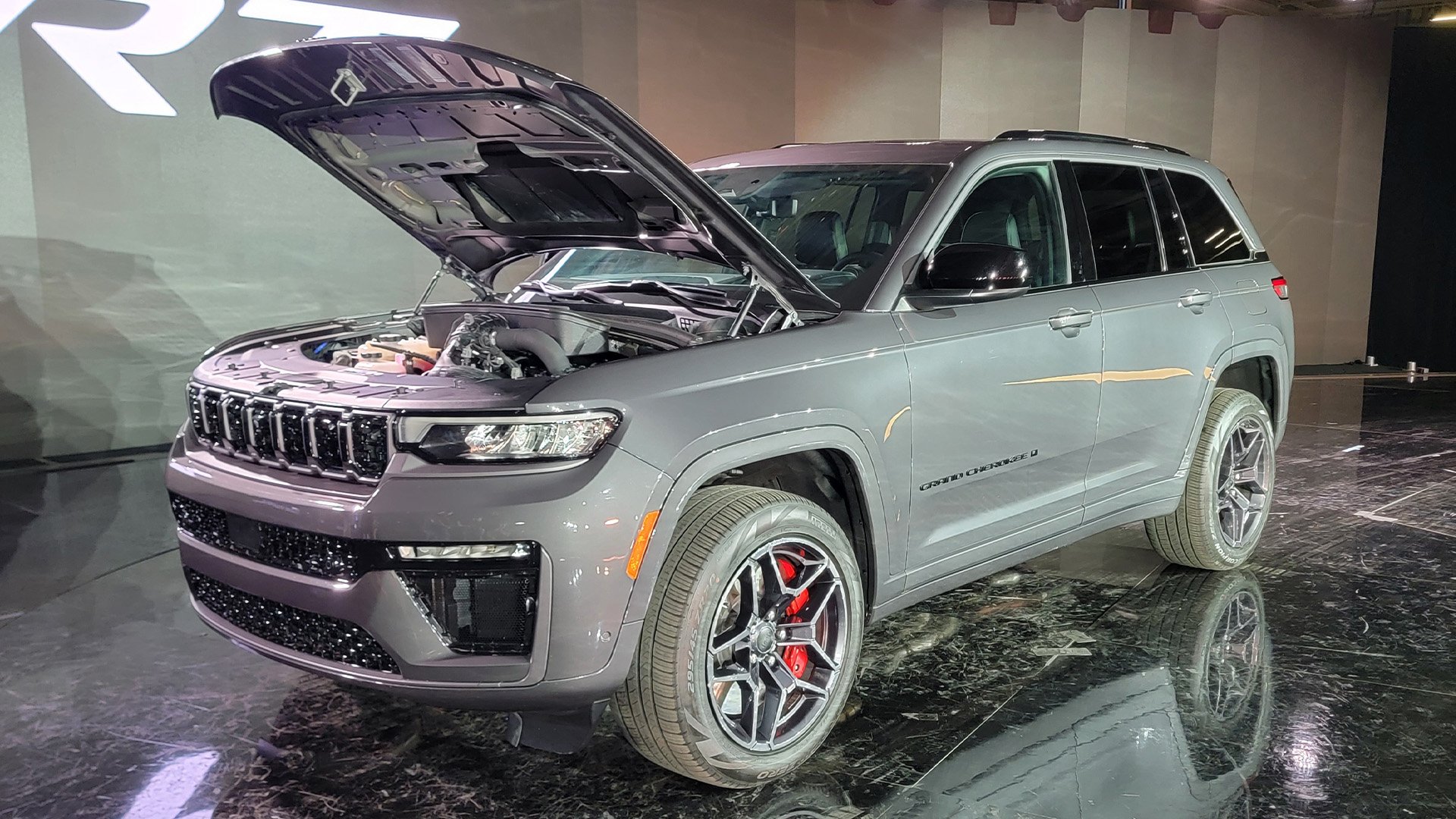
The pace at which the SRT team brought this project from a whiteboard sketch to a functional prototype is nothing short of staggering. According to internal reports from Stellantis, the entire development cycle for the eBoost Air, including its integration into a Grand Cherokee test mule, took a mere seven weeks.
The Seven-Week Sprint
- Weeks 1-2 (Feasibility & Architecture): Engineers identified the necessary flow rates and electrical requirements to supplement the 3.0-liter Hurricane engine. The team determined that a 48-volt architecture would be the baseline requirement to drive the compressor without taxing the vehicle’s standard 12-volt accessory systems.
- Weeks 3-4 (Packaging): The greatest challenge was spatial. The Hurricane inline-six is a physically large engine, and fitting a third intake path for the e-compressor into the tight engine bay of a Grand Cherokee required custom fabrication and rerouting of existing cooling and induction plumbing.
- Weeks 5-6 (Prototyping & Calibration): The team fabricated the housing and integrated the electronics. This phase involved intense calibration to ensure the e-compressor disengaged seamlessly once the exhaust-driven turbos reached their operational threshold.
- Week 7 (Validation): The vehicle was moved to the track for initial testing, proving that the concept could deliver the intended performance metrics without compromising the structural integrity of the intake manifold.
Supporting Data and Technical Specifications
The Hurricane 3.0-liter inline-six, particularly in its High Output (HO) configuration, is already a powerhouse, producing 540 horsepower and 510 lb-ft of torque. However, the eBoost Air is not designed to increase the peak output of the engine. Instead, it is designed to optimize the delivery of that power.
The 48-Volt Challenge
The system operates on a 48-volt electrical grid. This is a significant design hurdle for the North American market, where most Stellantis products currently rely on 12-volt systems, with the exception of specific "eTorque" mild-hybrid setups found in select Hemi-powered Ram 1500s. To implement eBoost Air in a production vehicle, Stellantis would likely need to standardize a secondary battery system or an advanced DC-DC converter capable of managing the massive energy spikes required by the electric compressor.
Operational Efficiency
Once the exhaust gas flow reaches a sufficient velocity to spin the twin turbos independently, the eBoost Air system enters a bypass mode. By disengaging the compressor, the system avoids creating unnecessary intake restriction at high RPM, allowing the engine to breathe freely. It is important to note that the current prototype does not engage in energy recuperation; it is a one-way street dedicated solely to performance, not fuel economy.
Official Stance and Future Implications
Stellantis has been careful to frame the eBoost Air as a "rapid-development proof of concept." While the technology is functional, the company has not yet committed to a specific production timeline or a specific vehicle application. However, the choice of a Grand Cherokee for the prototype is telling.
As the automotive world moves away from the iconic Hemi V8, there is a vacuum in the high-performance SUV segment. Enthusiasts have long demanded a successor to the Grand Cherokee Trackhawk. While the standard Hurricane engine offers the power, it has historically lacked the immediate, low-end snap that the supercharged Hellcat engine provided. The eBoost Air effectively closes this gap.
The Jeep Connection
Industry analysts suggest that the next generation of high-performance Jeep products will likely be the first to feature this tech. With the Hemi being phased out across the lineup, the Hurricane engine is the clear successor for the SRT badge. If Stellantis can successfully navigate the packaging and electrical requirements, the eBoost Air could be the "secret sauce" that makes the transition to smaller-displacement, forced-induction engines palatable for the brand’s traditional customer base.
Broader Industry Context
The move toward electrified induction is a trend that is sweeping the industry. As emissions regulations tighten, manufacturers are forced to abandon large-displacement engines in favor of smaller, more efficient units. The challenge has always been performance.
By using electricity to "fill in the gaps" of the power band, companies like Stellantis are effectively creating a hybrid of two worlds. The engine retains the lightness and efficiency of a twin-turbo six-cylinder, while the driver experiences the instant "punch" previously reserved for naturally aspirated or supercharged motors.
If successful, the eBoost Air could also find its way into the Ram truck lineup. The Ram 1500 has already seen the introduction of the Hurricane engine to replace the Hemi, and while the current turbo response is impressive, truck buyers—who prioritize towing and heavy-load acceleration—are perhaps the most sensitive demographic to the "wait" time of a turbocharger.
Conclusion: A New Era for SRT
The eBoost Air is more than just a clever piece of hardware; it is a declaration of intent. It proves that the SRT engineering team is not content to simply let the V8 die out and replace it with standard, lagging turbo engines. Instead, they are looking for innovative, high-tech solutions to maintain the character and performance that the brand is built upon.
While there is still "work to do" before we see this on a showroom floor, the seven-week development timeline proves that the capability is there. As the automotive industry navigates the transition to electrification, the eBoost Air serves as a perfect example of how clever engineering can use electrical power not just to save fuel, but to create a more thrilling driving experience.
For the performance enthusiast who fears a future of "laggy" eco-engines, the eBoost Air is a glimpse of a future that remains fast, loud, and most importantly, responsive. We will be watching closely to see which model receives the first production implementation of this game-changing hardware.
