





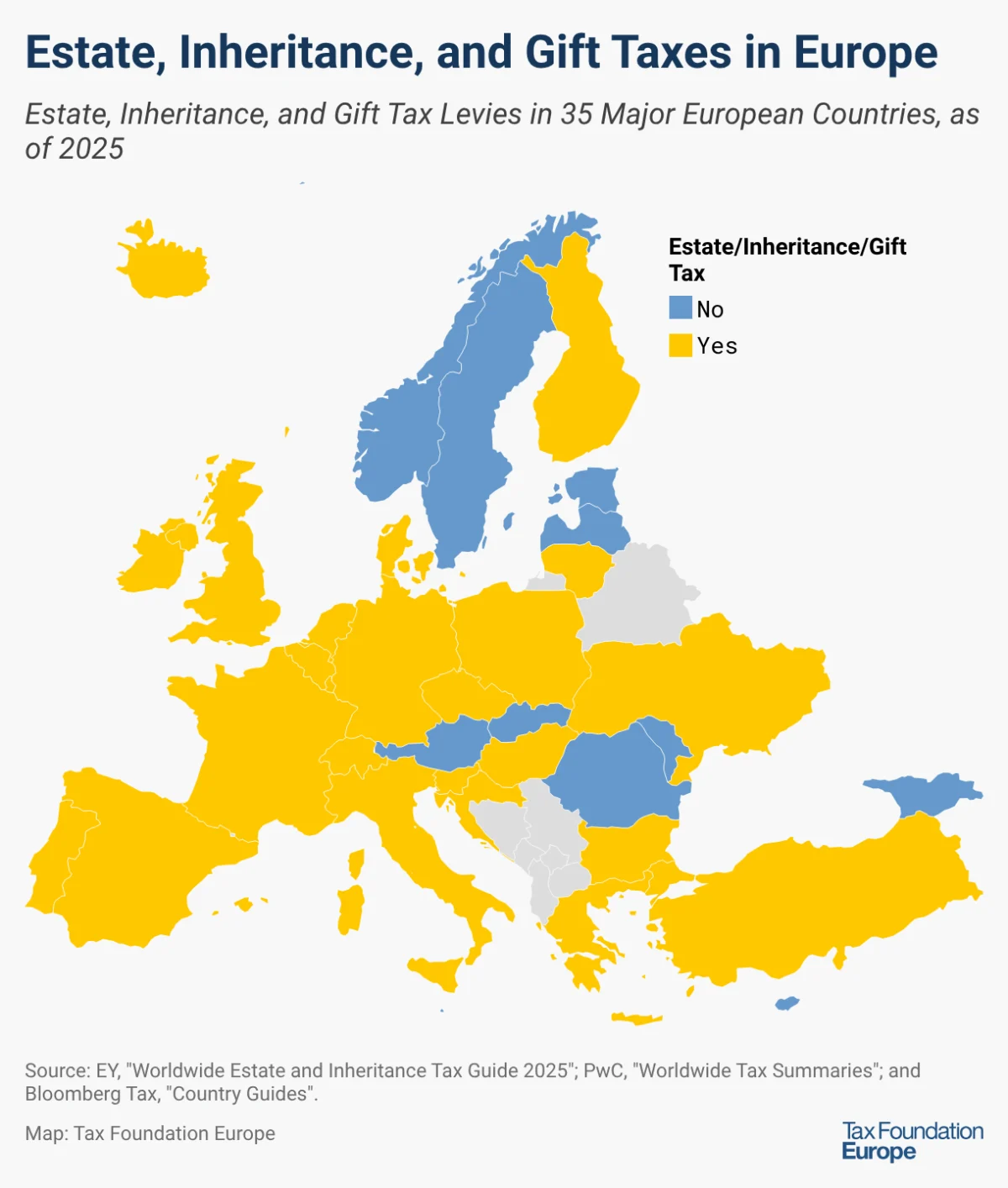
From the coffers of the Roman legions to the modern balance sheets of the European Union, the taxation of wealth upon death has remained one of the most contentious topics in fiscal policy. While governments frequently position inheritance, estate, and gift taxes as essential tools for social equity, critics argue that these levies impose stifling burdens on capital formation and entrepreneurial legacy. As nations grapple with aging populations and the need for robust tax revenue, understanding the mechanics and implications of these taxes is more critical than ever.
A Historical Chronology: From Roman Pensions to Modern Fiscal Policy
The concept of taxing the transmission of wealth is not a modern invention born of contemporary social democracy. Its origins can be traced back to the Roman Empire. In 6 AD, Emperor Augustus introduced the vicesima hereditatium, a five percent inheritance tax. The revenue generated from this levy was specifically earmarked for the aerarium militare, a military treasury designed to pay pensions to retired soldiers who had served in the Roman legions. By taxing the wealth of the deceased, the state ensured that the professional military class remained loyal and financially secure, effectively creating an early form of a social safety net funded by generational wealth transfer.
Following the collapse of the Roman order, the practice fell into relative obscurity, only to be revived during the rise of the nation-state. In the 18th and 19th centuries, as European monarchs sought to fund increasingly expensive wars and bureaucratic expansion, the taxation of estates became a reliable source of state income.
In the modern era, the landscape has shifted significantly. Today, these taxes are a ubiquitous feature of the European tax environment. Data indicates that 24 out of 35 European countries currently levy some form of estate, inheritance, or gift tax. This widespread adoption suggests that despite significant economic arguments against them, these taxes remain deeply embedded in the fiscal architecture of Western nations.
Defining the Tax: Understanding the Mechanics
To understand the debate, one must first distinguish between the three primary mechanisms of taxing wealth transfers:
- Estate Taxes: These are levied on the total net value of the deceased individual’s property. Crucially, this tax is paid by the estate itself before the assets are distributed to the beneficiaries. In this model, the tax burden is tied to the size of the total estate, regardless of who receives the inheritance.
- Inheritance Taxes: These differ fundamentally from estate taxes. An inheritance tax is levied upon the specific value of assets received by a beneficiary. The burden falls on the recipient rather than the estate. Consequently, these taxes are often structured with varying rates based on the beneficiary’s relationship to the deceased; for instance, many jurisdictions offer exemptions or lower rates for direct descendants compared to distant relatives or unrelated parties.
- Gift Taxes: These are the necessary counterpart to the former two. If death-related taxes were the only levies in place, individuals would simply transfer their wealth while still alive to avoid the tax. Gift taxes close this loophole by taxing property transferred by a living individual, ensuring that the state captures revenue regardless of the timing of the transfer.
The Problem of Double Taxation
A significant complication arises when assets are situated across different jurisdictions. An estate might be subject to tax in the country where the deceased resided, while simultaneously being taxed by a country where the assets (such as real estate or business holdings) are located. This phenomenon, known as double taxation, occurs when the same economic value is taxed twice by different sovereign entities. To mitigate this, European Union Member States have implemented specific bilateral and multilateral mechanisms. These treaties are designed to provide tax credits or exemptions, ensuring that heirs are not penalized by the mere fact that their loved one’s assets spanned international borders.
Supporting Data: The OECD Perspective and Economic Reality
The Organisation for Economic Co-operation and Development (OECD) has frequently highlighted inheritance and estate taxes as potential instruments for reducing wealth inequality. The theoretical argument is straightforward: by taxing large windfalls at the point of transfer, the government can theoretically prevent the formation of stagnant "dynastic wealth" and promote a more egalitarian society.
However, when examining the data, the picture becomes more complex. While the social arguments for these taxes are loud, the revenue capacity is relatively limited. In many developed nations, the administrative costs of valuing complex, illiquid assets—such as family businesses, private art collections, and intellectual property—often eat into the net revenue collected.
Furthermore, the "limited capacity to collect" is a recurring theme in fiscal research. In many instances, the wealthiest individuals utilize sophisticated legal structures, trusts, and life insurance vehicles to insulate their estates from these taxes. This creates a scenario where the tax burden disproportionately falls on the middle-to-upper-middle class, who may lack the resources to engage in extensive estate planning, rather than the ultra-wealthy.
Implications for the Modern Economy
The debate surrounding these taxes extends beyond simple revenue figures; it touches upon the fundamental incentives that drive economic growth.
Impact on Entrepreneurial Activity
Critics argue that inheritance taxes can be particularly destructive for family-owned businesses. When a business owner passes away, a heavy tax bill can force heirs to liquidate the business or sell off critical assets just to pay the tax. This effectively punishes the family for having built a successful enterprise, potentially resulting in job losses and the disruption of long-standing community institutions.
Saving and Capital Accumulation
Economic theory suggests that individuals save and invest with the intent of passing wealth to their families. If the government imposes a high tax on that inheritance, the incentive to save and invest—rather than consume wealth during one’s lifetime—is significantly weakened. This shift in behavior can lead to lower levels of capital formation, which in turn stifles long-term economic growth.
The Case for Repeal
Given these factors, a growing number of economists and policy analysts advocate for the repeal of inheritance and estate taxes. The argument is that the economic "deadweight loss"—the reduction in productive activity caused by the tax—outweighs the social benefits of the revenue collected. Instead of relying on taxes that punish success and discourage saving, proponents of repeal suggest that policymakers should focus on broader consumption taxes or income taxes that do not carry the same negative externalities.
Official Responses and Future Outlook
Governments across Europe and beyond are currently caught between two competing pressures. On one side, the post-pandemic fiscal climate has left many nations with high debt-to-GDP ratios, leading some politicians to look toward wealth taxes as a "fair" way to increase revenue. On the other side, the need for economic competitiveness in a globalized world is forcing many countries to re-evaluate whether these taxes are actually driving capital and talent away to more tax-friendly jurisdictions.
For instance, several Nordic countries, once known for high wealth-related taxes, have moved toward repeal or significant reform in recent years, citing the mobility of capital as a primary concern. They recognized that in a globalized economy, wealth is highly mobile; if the tax environment becomes too hostile, the wealth (and the accompanying economic activity) simply relocates.
Conclusion: Balancing Equity and Prosperity
The taxation of inheritance, estate, and gifts remains a balancing act between the desire for social equity and the necessity of economic vitality. While the historical precedent for these taxes is clear, their future is increasingly uncertain.
As policymakers move forward, they must grapple with a fundamental question: Is the goal of these taxes to collect revenue, or to punish the accumulation of wealth? If it is the former, more efficient and less destructive revenue streams are likely available. If it is the latter, policymakers must be prepared to face the consequences of reduced private investment and potential capital flight. Ultimately, any meaningful reform in this space will require a move away from the populist appeal of "taxing the rich" and toward a more rigorous, evidence-based approach that considers the long-term health of the entire economy. As the global economic landscape continues to evolve, the Roman-era legacy of the inheritance tax may finally be reaching its sunset.
