





In the rapidly evolving landscape of search engine optimization (SEO), the goalposts have shifted. The era of obsessing over keyword density and backlink volume is fading, replaced by a sophisticated, data-driven framework centered on "Entity SEO." As search engines—and the Large Language Models (LLMs) that power the next generation of discovery—become increasingly intelligent, they are moving away from literal string-matching toward a nuanced, conceptual understanding of the world.
For publishers, brands, and digital marketers, the message is clear: if search engines cannot definitively "understand" who you are, what you stand for, and who your experts are, you are effectively invisible.

The Shift from Strings to Things
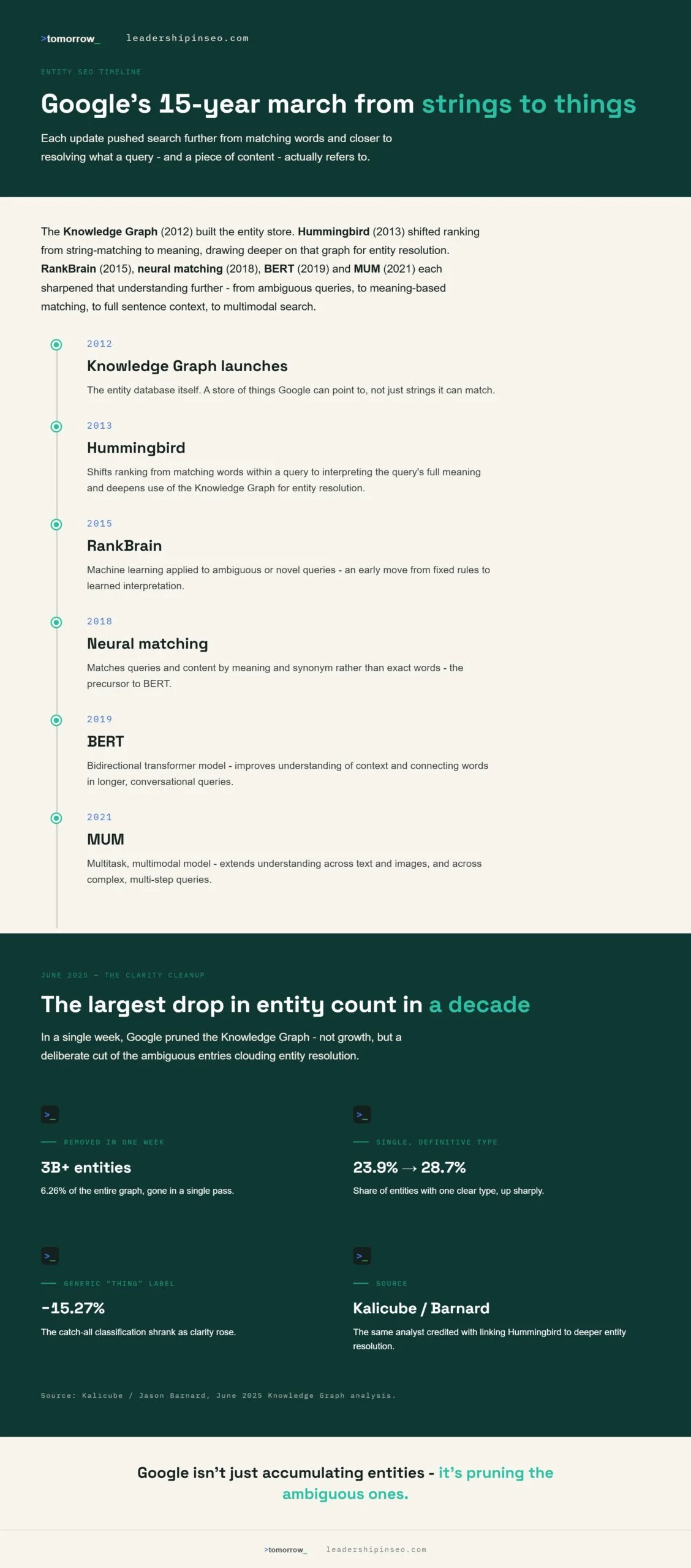
For over a decade, Google’s Knowledge Graph has acted as the cornerstone of search. It is a vast, interconnected database of entities—people, places, organizations, products, and concepts—and the relationships between them. This approach is famously summarized by the industry mantra: "Things, not strings."
When a user performs a search, they are often not looking for a specific URL; they are looking for information about an entity. If you are an expert on sustainable finance, Google doesn’t just want to see the words "sustainable finance" on your page; it wants to see a verifiable, corroborated digital footprint that proves you are an authority in that field.

"Search engines and AI systems have to build a picture of who you are from fragmented evidence across the web," says industry analyst Harry Clarkson-Bennett. "Your job is to make that picture as clear, consistent, and well-supported as possible."
Chronology: The Evolution of Search Intelligence
The journey toward entity-based indexing has been a long-term strategic evolution for Google:

- 2012: Google launches the Knowledge Graph, marking the transition from a link-based index to an entity-based semantic web.
- 2013: The Hummingbird update introduces semantic search, allowing Google to understand the intent behind queries rather than just matching keywords.
- 2019: The BERT update enables the processing of natural language in a way that captures the context of words in search queries, further emphasizing entity relationships.
- 2021: The introduction of MUM (Multitask Unified Model) signals a move toward multimodal content understanding, capable of processing text, images, and video simultaneously.
- 2025-2026: A massive "clarity cleanup" in the Knowledge Graph sees millions of entities removed, as Google raises the bar for what qualifies as a "trusted" entity in the age of AI.
The Four Pillars of Entity Auditing
To survive and thrive in this environment, SEO professionals must adopt a structured auditing framework. This approach can be distilled into four critical areas:
1. Own: Standardizing Internal Assets
Before you can convince the world of your authority, your house must be in order. Every asset you control—your website, social profiles, and corporate bios—must be perfectly aligned. This is "entity hygiene." Ensure that your Name, Address, and Phone Number (NAP) data is consistent, your leadership team has clear, verifiable profiles, and your internal linking structure accurately reflects your topical authority.

2. Describe: The Power of Explicit Relationships
Page-level optimization is about making your content’s relationships explicit. This is where schema markup becomes vital. Organization schema defines your brand, while person-level and article-level schema corroborate the information on specific pages. By using sameAs schema, you can programmatically connect your brand’s social media, Wikipedia entry, and industry associations to your website, effectively "joining the dots" for crawlers.
3. Prove: Establishing Credibility
In an era of AI-generated content, credibility is the ultimate currency. Every contributor to your site—especially those writing on "Your Money or Your Life" (YMYL) topics—needs a verifiable identity. This includes a robust author page, a documented publication history, and links to professional certifications. Highlighting research protocols and testing methodologies is no longer optional; it is the modern application of E-E-A-T (Experience, Expertise, Authoritativeness, and Trustworthiness).

4. Earn: Corroboration Through External Mentions
You cannot define your own entity status in a vacuum. You need corroboration. This means securing high-quality mentions in industry publications, citations in authoritative sources, and expert commentary. When other reputable entities talk about your brand, they provide the "third-party evidence" that AI models use to validate your existence and authority.
Implications for Publishers and Brands
The implications for news organizations and publishers are particularly stark. When users search for breaking news, they often search via short-tail entities—a politician’s name, a location, or an event. If your site is not immediately recognized by the system as an authority on that entity, you risk being bypassed by the "Top Stories" carousel.

Furthermore, the rise of "entity drift"—where an organization’s digital footprint becomes outdated or contradictory—can be fatal. If your company website says one thing, while your LinkedIn, Crunchbase, and third-party mentions suggest another, you create ambiguity. In the eyes of an LLM, ambiguity is a signal to distrust.
The Role of Monitoring
Entity SEO is not a "set it and forget it" task. It is a continuous discipline. Tools like Alertmouse allow brands to track mentions across the web, ensuring that as your brand evolves, your digital representation stays consistent. Monitoring how different AI models perceive your brand is now a mandatory part of the SEO toolkit. If an LLM is hallucinating or mischaracterizing your brand, you have a data-driven imperative to provide more consistent, verifiable signals to correct that perception.

Building Your Entity Map
The most effective way to visualize your position is to build an "Entity Map." This involves creating a structured diagram of the people, products, services, and topics connected to your brand. By mapping these relationships, you can identify gaps in your authority.
- Internal Data: Use Search Console query data to identify which entities are currently driving your traffic.
- External Data: Use tools like Ahrefs or Similarweb to compare your entity footprint against competitors.
- Regional Strategy: Filter your data by country; you may find that you are perceived as a market leader in one region but an unknown entity in another.
Conclusion: The New Standard
The "slop-filled" era of the internet—characterized by massive volumes of low-quality content—is forcing search engines to become more selective. The bar for indexation is higher than it has ever been. By focusing on entity accuracy, structural consistency, and verifiable authority, you aren’t just "doing SEO"—you are building a resilient digital identity.

As the industry moves toward a future dominated by AI-driven search, those who invest in entity clarity will hold the advantage. The days of "gaming the system" are over. The days of defining your brand’s place in the global knowledge graph have begun. Don’t assume the internet understands your brand; take the steps to make it impossible for it to misunderstand you.
