




Main Facts: The Battle for the Traveler’s Ecosystem
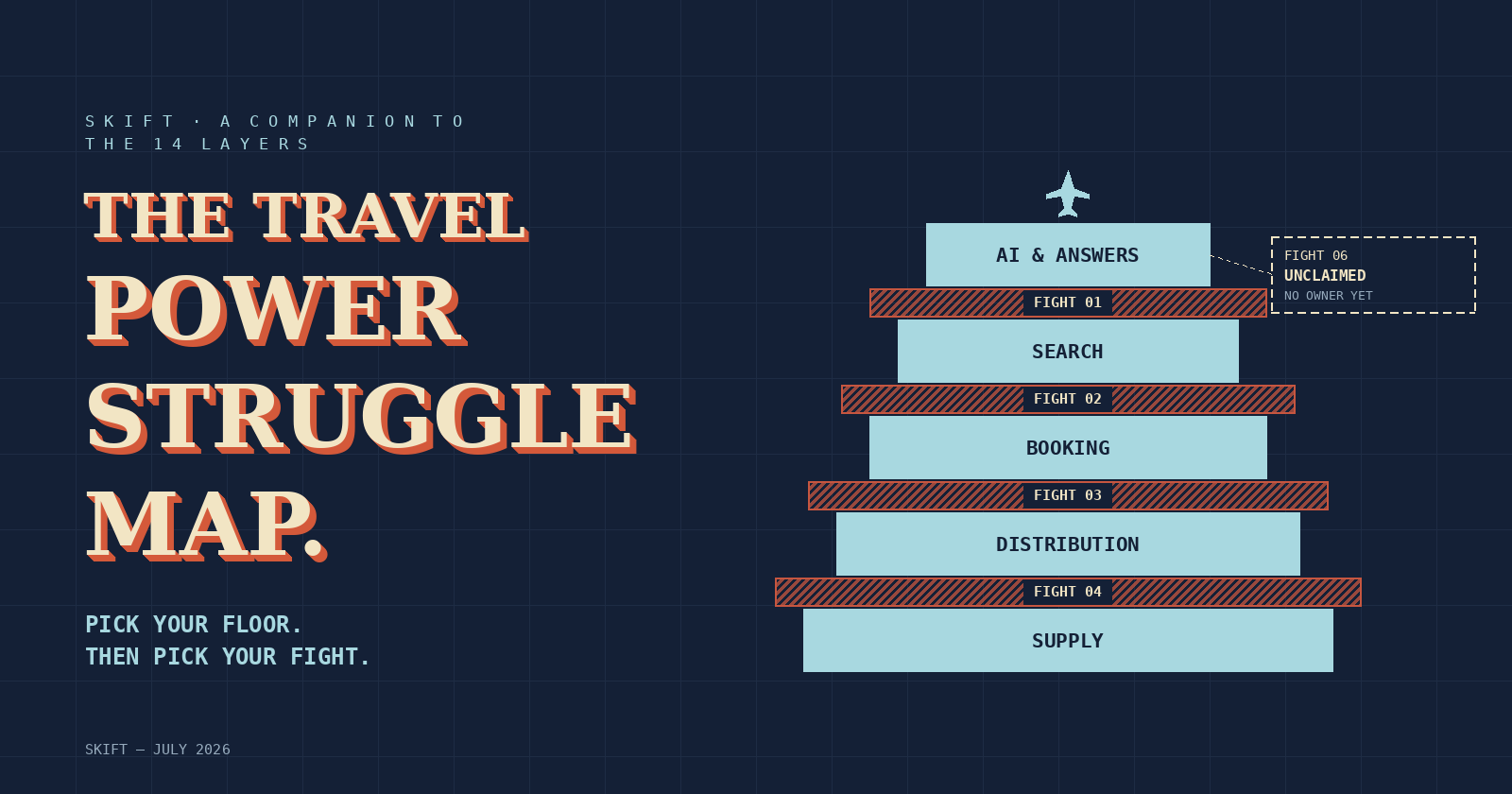
The modern travel industry is often mischaracterized as a monolithic sector defined by tourism and transportation. In reality, it is a volatile, high-stakes battleground. As Skift recently noted in its 14th-anniversary analysis, "Don’t Start a Travel Startup," the industry is better understood as a series of entrenched conflicts over the digital and physical lifecycle of a traveler.
The core of this struggle is the quest for "ownership." Every major player—from global distribution systems (GDS) and online travel agencies (OTAs) to hyper-niche startups and tech giants—is competing for control over five specific touchpoints:
- The Discovery: Who gets found first?
- The Booking: Who controls the inventory and the transaction?
- The Wallet: Who holds the traveler’s financial data and loyalty?
- The Experience: Who manages the on-the-ground reality?
- The Memory: Who owns the data that informs the next trip?
The landscape has shifted from a supply-driven model to an attention-driven model. Founders entering this space today are not just building booking engines; they are building tools to solve the friction of fragmented data, shifting consumer behavior, and the overwhelming dominance of incumbents who hold the keys to the digital front door.
Chronology: A Decade and a Half of Industry Evolution
To understand the current volatility, one must look at the trajectory of the last 14 years.
2010–2014: The Mobile Gold Rush
The early 2010s were defined by the migration from desktop to mobile. Startups like HotelTonight and early iterations of metasearch engines thrived by simplifying the "last-minute" booking process. This era was characterized by a massive influx of venture capital aimed at capturing the mobile-first traveler.
2015–2019: The Era of Aggregation and Consolidation
As mobile became the standard, the "fight for the wallet" intensified. Giant OTAs like Expedia and Booking Holdings moved to consolidate, buying up competitors and meta-search engines to control the full funnel. The goal was to become a "Super App," where the traveler never had to leave the ecosystem.
2020–2022: The Pandemic Reset
The COVID-19 pandemic served as a massive, involuntary stress test. Companies with rigid, high-overhead models struggled, while those with flexible, service-oriented, or tech-first architectures survived. This period saw a shift in consumer demand toward "experiential" travel and a heightened reliance on customer support, exposing the weaknesses in many fully automated, low-touch business models.
2023–Present: The AI-Driven Frontier
We are currently in the age of generative AI and hyper-personalization. The focus has moved away from simple search-and-book functionality toward predictive itinerary planning. The fight is no longer just about who owns the booking, but who owns the intent.
Supporting Data: The Anatomy of a Fragmented Market
The industry’s complexity is supported by shifting economic data and user engagement metrics that highlight why "generic" startups fail.
- Customer Acquisition Costs (CAC): In the travel sector, CAC has risen by approximately 40% over the last five years. Because incumbents (Google, Expedia, Booking) dominate search traffic and advertising channels, new entrants often find themselves paying a "tax" to reach users, making the economics of a standard OTA model nearly impossible to sustain.
- The "Super-App" Metric: According to industry analysts, a traveler uses, on average, 6.4 different digital touchpoints before finalizing a major trip. This demonstrates that there is no "one-stop shop" that truly satisfies the consumer.
- The Loyalty Paradox: Despite the proliferation of loyalty programs, data indicates that brand loyalty is at an all-time low. Travelers are increasingly "price-sensitive but experience-seeking," meaning they will jump between platforms for a better deal or a better curated itinerary, regardless of their status in a legacy program.
- Success Rates: The failure rate for travel startups—defined by companies that either shutter or are sold for parts within three years—remains significantly higher than in SaaS or Fintech sectors, largely due to the high barrier to entry and the complex regulatory environments of global travel.
Official Responses and Expert Commentary
Industry leaders and venture capitalists are increasingly vocal about the dangers of the current market.
"The fundamental mistake," notes a prominent travel tech investor, "is assuming that the traveler wants another booking site. The world has enough booking sites. The world lacks cohesive tools that solve the anxiety of travel—the rebooking, the insurance claims, the language barriers, and the localized inventory that doesn’t reach the big platforms."
In its anniversary piece, Skift emphasized that the "Don’t Start a Travel Startup" mantra is not a deterrent, but a warning against building "generic" solutions. The industry is responding to this by shifting toward "Verticalization." Instead of building a generic hotel finder, startups are focusing on specific niches: luxury glamping, remote-work-friendly long-term rentals, or hyper-local guided experiences.
Incumbents, meanwhile, are responding with defensive innovation. By integrating AI chatbots and personalized recommendation engines, companies like Booking.com are attempting to solve the "memory" problem—ensuring they know the user well enough to make the next trip a foregone conclusion.
Implications: The Future of Travel
What does this mean for the future of the industry? Several key shifts are emerging.
1. The Death of the Generic OTA
The era of the "generic booking platform" is effectively over. The market is saturated. Any new entrant that attempts to compete on price and inventory alone against the giants will inevitably fail. The future belongs to platforms that can offer a proprietary "hook"—be it a community, a unique hardware integration, or a service layer that the giants cannot replicate.
2. The Rise of "High-Touch" Tech
Technology is being used not just to automate, but to facilitate human connection. We are seeing a rise in platforms that blend digital ease with human concierge services. This "high-touch, high-tech" model addresses the one thing AI cannot do well yet: handle complex, non-linear human problems during a trip.
3. Data as the Ultimate Currency
The winner of the "who remembers the trip" battle will be the winner of the next decade. Whoever holds the most granular data on a traveler’s preferences—not just where they went, but how they felt, what they avoided, and what they craved—will be able to monetize that relationship long before the traveler even starts their next search.
4. Regulatory and Sustainability Pressures
As the fight for the traveler intensifies, so too does the regulatory pressure. Governments are increasingly looking at the "gatekeeper" status of major travel platforms. Startups that incorporate sustainable practices and ethical data usage are beginning to see a competitive advantage, as both travelers and regulators prioritize transparency over pure efficiency.
Conclusion: The Path Forward
The travel industry remains one of the most challenging environments for innovation, not because it lacks opportunity, but because it is crowded with players who have spent decades perfecting the art of "owning" the traveler.
Founders looking to enter this space must realize that they are not just competing for a transaction; they are competing for a slice of the traveler’s limited cognitive bandwidth. The winners will not be those who build the fastest search engine, but those who build the most resilient relationship. In a world where the traveler is bombarded with options, the ultimate value proposition is no longer "more choice"—it is "less noise."
As the industry enters its next phase, the focus must shift from the commodification of travel to the creation of meaningful, frictionless, and memorable journeys. The fight for the traveler continues, and only those who understand the true depth of the ecosystem will survive to see the 15th, 20th, and 30th anniversary of this complex, beautiful, and chaotic global market.
