


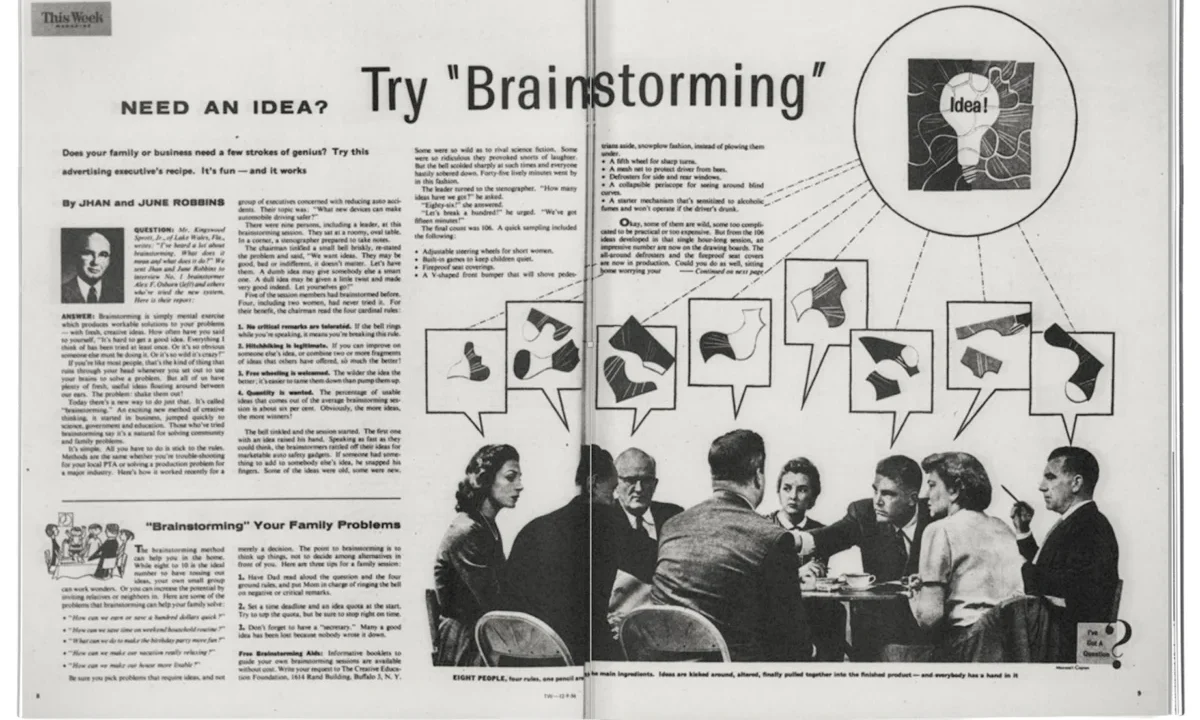



In a twist of digital irony that feels ripped from a dystopian novel, the world’s most advanced artificial intelligence companies are currently scouring the planet for the most analog technology imaginable: printed books. Massive pallets of physical volumes—paper, glue, and ink—are being purchased in bulk by AI labs. This desperate pivot back to physical media exposes a fundamental crisis at the heart of the generative AI boom: the models are choking on their own output.
The "Slop" Paradox: Feeding the Machine Its Own Tail
The industry once promised a future of infinite content generation. Today, that promise has manifested as "AI slop"—a deluge of synthetic text and imagery that now saturates the open web. However, the very companies that built the infrastructure for this mass production have realized that their models cannot learn effectively from the debris they have created.
ISBNdb, a broker specializing in sourcing bulk print acquisitions for AI labs, frames the necessity with brutal clarity: "The world’s best AI training data is sitting on a shelf." This is not merely a nostalgic retreat; it is a defensive maneuver. AI models require high-entropy, human-authored data to maintain their reasoning capabilities. Because books were printed before the current era of automated, LLM-generated content, they provide a "clean" signal that acts as a vital counterweight to the synthetic noise flooding the internet.
Chronology of a Data Crisis
To understand how we reached this point, we must look at the shifting timeline of AI training and detection:
- Pre-2022: The era of "clean" data. The internet served as a massive, largely human-authored corpus for training early transformer models.
- 2023-2025: The "Slop" explosion. SEO-driven content farms and automated publishing tools flooded the web with machine-generated text, inadvertently polluting the datasets intended to train the next generation of AI.
- May 2026: A turning point in provenance. Google’s I/O 2026 conference signaled a shift toward accountability, with SynthID watermarking 100 billion AI-generated images and vast quantities of audio.
- August 2026: Regulatory pressure meets technical reality. Anthropic, under the weight of the EU AI Act’s transparency requirements, began embedding watermarks at the model level for all text generated by Claude. This moved the "plumbing" of detection from experimental research to a global standard.
The Illusion of Measurement: A Broken Industry
The SEO and digital marketing industry has spent years building an infrastructure based on deterministic metrics: search rankings, clicks, and conversion funnels. This worked in the age of traditional search because the pipeline was static enough to be measured.
AI answers, however, are fundamentally non-deterministic. A user asking the same question twice may receive different responses based on ephemeral context and personalization. Despite this, the industry continues to churn out dashboards, "share of voice" reports, and rank tracking with the decimal-point confidence of 2014. These vendors are selling a mirage: they provide tools to track positions in a system that has no fixed positions, often while simultaneously selling the very "slop" that the AI systems are designed to eventually filter out.
The Infrastructure of Provenance: SynthID and Beyond
Critics often argue that while images and audio might be watermarked, text remains the "Wild West." They point to the limitations of current detection methods—such as the fact that paraphrasing or translation can strip away identifiable patterns. This reasoning, however, is dangerously shortsighted.
The release of open-source SynthID code by Google was never intended to be a production-ready manual for the public; it was a research reference. As any veteran of Google’s search quality and webspam teams knows, companies never publish their true detection mechanisms. To do so would be to hand the "evasion manual" to the spammers.
If a robust, un-evadable text-detection method arrives, the first indication of its existence will not be a press release—it will be a sudden, massive drop in the traffic of content-at-scale operations. The "cat-and-mouse" game is already underway. GitHub repositories dedicated to watermark removal are currently proliferating, but they rely on "best-effort" paraphrasing that is increasingly transparent to modern classifiers.
Implications: The Death of "Content at Scale"
The real-world implications of this shift are profound for businesses that have built their revenue models on high-volume, AI-generated content.
1. The Value of Parametric Memory
New research, including data from firms like geoSurge, suggests that models are increasingly relying on their "parametric memory"—knowledge encoded during the training phase—rather than real-time retrieval. In a study across nine industries, brands already present in a model’s top-tier memory were significantly more likely to be mentioned in search queries.
This creates a "winner-take-all" scenario. If your brand is not encoded into the model’s internal memory, you are invisible. AI-generated content at scale is failing to build this memory because it is filtered out of training sets or deemed low-quality by the very labs that now pay millions for printed books to ensure their models remain sharp.
2. The Regulatory Squeeze
Article 50 of the EU AI Act is not merely a European inconvenience; it is a catalyst for global technical standards. By mandating machine-readable provenance, the EU has forced labs to bake transparency into their models. While there are carve-outs for content where a human assumes "editorial responsibility," the economic model of "content-at-scale" is fundamentally incompatible with the cost of genuine human editorial oversight.
3. The Depreciation of Rented Visibility
For years, the SEO industry has treated search visibility as a durable asset. In the era of AI-driven answers, visibility is "rented." It is re-contested on every query, granted by a model that may choose to exclude you based on a training-cycle update that happened months ago. You are essentially renting a stall in a market that restocks its inventory from a warehouse to which you are barred entry.
The Future: Why the "Shipwreck Steel" Analogy Matters
In the aftermath of 1945, nuclear testing contaminated the world’s steel supply with radiation, making it unusable for sensitive instruments like Geiger counters. Manufacturers had to salvage pre-war shipwrecks to obtain "low-background steel."
We are currently witnessing the same phenomenon in data. Pre-2022 internet text is the "shipwreck steel" of the AI age. It is the only data that doesn’t need to be filtered or sanitized. The AI labs are currently engaged in a massive resource grab, buying up the past because they have effectively poisoned the future.
Conclusion: Watching the Tells
The industry is currently caught in a cycle of reporting quarterly metrics that bear little relation to the long-term health of search visibility. Subscription-based tracking tools are selling a false sense of security, reporting on "positions" that are as transient as the prompts that created them.
The most important takeaway for businesses today is to look at the "tells." When the most powerful companies in history stop trusting the internet and start paying for physical books, they are sending a signal about the quality of the modern web. If the house—the companies running these massive neural networks—is buying up the only "clean" data they can find, it is time for the rest of the industry to stop betting on the "slop" and start planning for a reality where content is judged by its provenance, its rarity, and its human origin. The era of automated, infinite scale is hitting a wall, and the debris is beginning to pile up.
