




By [Your Name/Journalistic Desk]
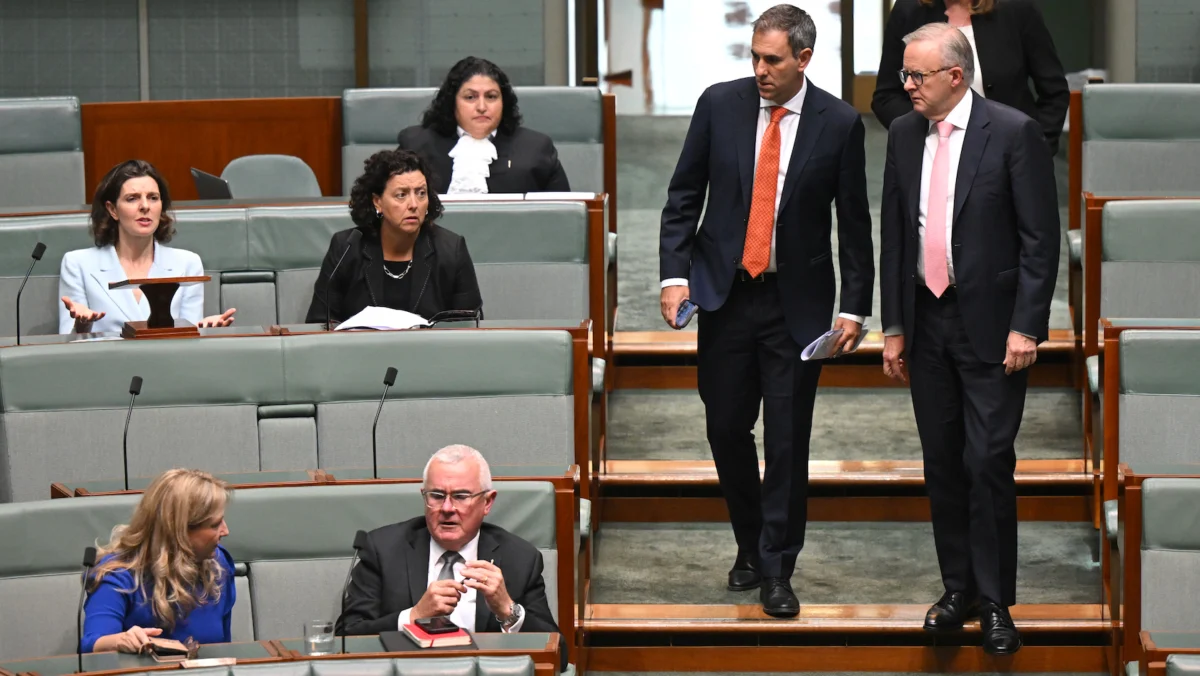
The federal government’s latest legislative push to modernize the startup ecosystem has hit a significant roadblock in the House of Representatives. As Treasurer Jim Chalmers tables a new amendment bill—designed to streamline the Innovative Business Capital Gains Tax (CGT) Concession—it is being met with sharp, structural criticism from Wentworth MP Allegra Spender.
While the government frames these changes as a necessary evolution of Australia’s tax policy, critics, including industry experts and independent lawmakers, are sounding the alarm. They argue that the legislation, in its current form, creates a "Kafkaesque maze" of compliance that stifles the very innovation it seeks to incentivize.
The Core Conflict: Simplifying the Risk-Reward Equation
At the heart of the debate is the government’s approach to taxing the gains made by startup investors. The current legislative framework, bundled alongside broader modifications to the R&D Tax Incentive (RDTI) and venture capital schemes, seeks to codify how startup equity is taxed upon exit. However, the complexity of the "innovation test" and the rigid nature of the proposed age and valuation caps have drawn the ire of the innovation sector.
Allegra Spender has emerged as the primary parliamentary voice for a radical simplification. She argues that instead of building an increasingly intricate web of eligibility criteria—which force founders and investors to spend as much time navigating tax law as they do building businesses—the government should adopt a flat, 40% active-asset CGT discount.
"We are asking our risk-takers to navigate a labyrinth," Spender noted in her recent critique. "If we want a nation that leads in technology and sustainable enterprise, we cannot punish those who put their capital and careers on the line with bureaucratic hurdles that no one can realistically clear."
A Chronology of the Legislative Standoff
The path to this legislative impasse has been marked by a series of consultations and revisions that, according to some stakeholders, have failed to hit the mark.
- Early 2025: Initial discussions begin within the Treasury regarding the need to update the Innovative Business CGT Concession (IBCC) to better reflect the modern startup landscape.
- Mid-2025: The government engages in industry consultation, hearing from venture capital firms, founders, and academic bodies like the UNSW Founders program.
- Late 2025: Industry leaders express significant concerns regarding the "innovation test," which dictates which companies qualify for tax concessions. David Burt, Director of Entrepreneurship at UNSW, publicly labels the test a "Kafkaesque maze," citing the impossible burden of proof placed on early-stage companies.
- October 2026: Treasurer Jim Chalmers introduces the amendment bill to Parliament. Despite minor concessions made during the drafting process, the bill maintains strict thresholds on company age and revenue.
- Present Day: Allegra Spender formally opposes the bill’s structure, proposing her 40% active-asset discount as a superior, simplified alternative.
The "Kafkaesque" Burden: Data and Expert Analysis
The term "Kafkaesque" was not used lightly by David Burt. In the context of Australian tax law, it refers to a system where the rules are so opaque and contradictory that they essentially paralyze the user.
For a startup, proving that they are "innovative" under the current government definition requires extensive documentation that often shifts based on changing bureaucratic interpretations. Research from industry groups suggests that for every dollar a startup saves through existing tax incentives, a disproportionate amount is spent on legal and accounting fees to ensure they don’t accidentally fall foul of the Australian Taxation Office (ATO).
The Impact of Complexity
The current bill mandates:
- Strict Age Limits: Companies older than a certain threshold are disqualified, regardless of their growth stage or capital intensity.
- Valuation Thresholds: Hard caps on what constitutes a "startup" create a "cliff edge" effect where success is effectively taxed as a penalty.
- R&D Integration: The bundling of CGT rules with R&D Tax Incentive changes has created a singular, massive piece of legislation that makes it difficult for companies to understand their specific tax liabilities.
Spender’s proposal, by contrast, focuses on the nature of the asset rather than the legal classification of the company. A 40% discount on active business assets would provide a clear, predictable environment that encourages long-term holding of startup equity.
Official Responses: Labor’s Defense vs. Independent Scrutiny
The government remains firm that the current bill is a balanced approach. Treasury officials argue that without the "innovation test" and associated caps, the tax concessions would be susceptible to rorting, with established businesses attempting to disguise themselves as startups to benefit from the reduced rate.
"Our goal is to ensure that the support goes to those who are genuinely innovating," a spokesperson for the Treasurer noted. "We have listened to the feedback and have already eased several restrictions, but we must maintain guardrails to protect the revenue base."
Conversely, the crossbench—led by Spender and supported by voices like Monique Ryan—maintains that the government’s fear of rorting is based on a misunderstanding of the startup lifecycle. They argue that the "guardrails" are actually causing a "dead zone" where early-stage startups cannot attract sufficient investment because investors are terrified of the tax treatment they will face upon exit.
Implications for the Future of Australian Innovation
If the bill passes in its current form, the implications for the Australian startup ecosystem are twofold.
1. The "Compliance Premium":
Investors will continue to demand a "compliance premium." This means that only the most well-funded startups, which can afford the top-tier tax advice required to navigate the "maze," will be able to attract capital. This will likely concentrate wealth and innovation within a small, elite group of companies, potentially excluding the "garage-to-global" stories that are essential for a healthy economy.
2. International Competitiveness:
Australia already faces stiff competition for talent and capital from jurisdictions like Singapore, Israel, and the United States. In the US, the tax environment for startup equity is vastly more streamlined. By introducing further complexity, Australia risks becoming a "difficult jurisdiction" for international venture capital firms to enter.
The Case for Spender’s Amendment
Spender’s push for a 40% active-asset discount represents a shift toward a principle-based tax system rather than a rules-based one. Under her plan:
- Predictability: Founders and investors would know exactly what their tax liability is, regardless of the company’s age or arbitrary revenue caps.
- Encouragement of Scale: By removing the "cliff edges" of current thresholds, companies would be encouraged to scale up without fear of hitting a tax barrier.
- Administrative Efficiency: The ATO would spend less time litigating definitions of "innovation" and more time processing legitimate claims.
Conclusion: A Turning Point for Policy
The debate over the Startup CGT amendment is more than just a disagreement over tax percentages; it is a fundamental clash of philosophies. On one side, the Labor government prioritizes control and targeted intervention, fearing the potential for abuse within the tax system. On the other, Allegra Spender and the innovation sector are calling for a leap of faith, arguing that a simpler, broader system will generate more economic growth, more jobs, and a more robust pipeline of successful Australian companies.
As the bill heads toward further parliamentary debate, the pressure is on the Treasurer to decide whether he is willing to trim the "Kafkaesque" edges of the legislation. For the Australian startup sector, the outcome of this vote will determine whether the next decade is defined by innovation—or by the paperwork that attempted to manage it.
The eyes of the venture capital community, the university incubator network, and the burgeoning founder class remain fixed on Canberra. Whether the final legislation acts as a bridge or a barrier will soon be revealed.
