




Introduction: A Diplomatic Collision Course
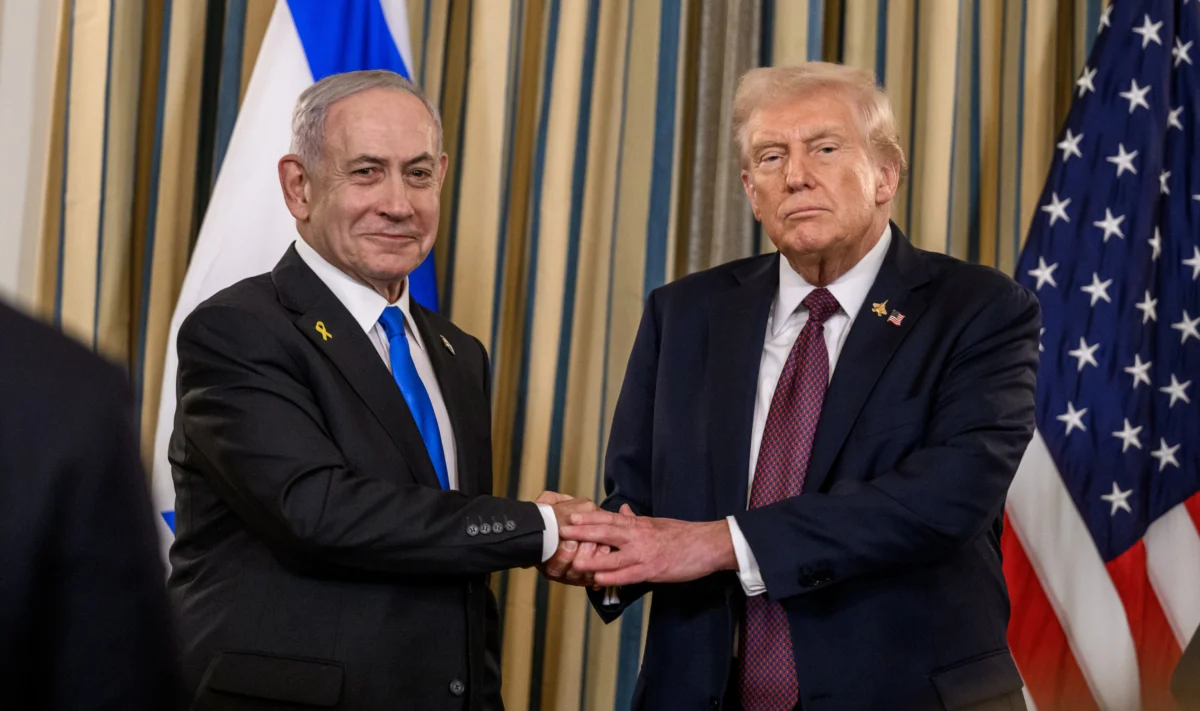
The long-simmering tension between the United States and the International Criminal Court (ICC) has reached a fever pitch. In a stark declaration that highlights the widening chasm between international legal mandates and domestic executive power, President Donald Trump affirmed on Monday that Israeli Prime Minister Benjamin Netanyahu would face no threat of arrest while on American soil.
The President’s assurance comes as New York City Mayor Zohran Mamdani—who ascended to office earlier this year on a populist, anti-war platform—has publicly explored the possibility of utilizing the city’s Law Department to enforce the ICC’s outstanding arrest warrant against the Israeli leader. As Netanyahu prepares for his traditional September visit to the United Nations General Assembly, the intersection of international law, federal authority, and local governance has created a volatile political landscape.
Chronology: From Gaza to the UN General Assembly
The roots of the current standoff trace back to November 2024, when the ICC’s Pre-Trial Chamber issued formal arrest warrants for Prime Minister Benjamin Netanyahu and then-Defense Minister Yoav Gallant. The court, acting on evidence gathered during the protracted conflict in Gaza, charged both men with war crimes and crimes against humanity.
- November 2024: The ICC formally issues warrants, triggering a firestorm of condemnation from Jerusalem and Washington.
- January 2026: Zohran Mamdani is inaugurated as Mayor of New York City, having campaigned on the explicit pledge to facilitate the arrest of the Israeli Prime Minister should he set foot in the city.
- July 2026 (Early): Secretary of State Marco Rubio announces a "whole-of-government" campaign to dismantle the ICC, describing it as an existential threat to American sovereignty.
- July 18, 2026: In a New York Times Magazine interview, Mayor Mamdani reiterates his stance, calling Netanyahu a "war criminal" and confirming his administration is exploring legal pathways to enforce the warrant.
- July 20, 2026: US Ambassador to the UN Mike Waltz dismisses Mamdani’s threats as "pure political theater."
- July 20, 2026: The Prime Minister’s Office in Israel issues a statement labeling the ICC a "kangaroo court" and the warrants "bogus."
- July 21, 2026: President Trump issues a definitive statement on social media, shielding Netanyahu from potential arrest and focusing the narrative on the conflict with Iran.
Supporting Data: The Legal Architecture of Immunity
To understand the friction between Mayor Mamdani’s aspirations and President Trump’s guarantees, one must examine the complex, often contradictory layers of international and American law.
The ICC’s Jurisdictional Reach
The ICC operates under the Rome Statute, a treaty that neither the United States nor Israel has signed or ratified. While the court generally lacks jurisdiction over non-member states, it claims authority over events occurring within the territories of member states. The warrants for Netanyahu rely on the assertion that the alleged crimes took place within Palestinian territory, which the court considers under its jurisdiction regardless of Israel’s non-membership.
The "Headquarters Agreement" and Federal Primacy
Mayor Mamdani’s threat faces an almost insurmountable legal wall. The 1947 Headquarters Agreement, which governs the UN district in New York, protects the access of foreign delegates. Furthermore, under customary international law—affirmed by the International Court of Justice in a landmark 2002 ruling—sitting heads of government enjoy personal immunity from prosecution while abroad.
In the United States, foreign policy is the exclusive domain of the federal government. Legal experts note that local jurisdictions, such as the City of New York, lack the constitutional standing to interfere with the movement of a foreign head of state recognized by the State Department. Attempting to do so would likely constitute a federal crime, setting up a direct conflict between the city’s Law Department and the Department of Justice.
Official Responses: A War of Words
The rhetoric surrounding this incident has become increasingly hostile, signaling a departure from traditional diplomatic norms.
The Presidential and Federal Stance
President Trump’s Monday message was unequivocal: "Benjamin Netanyahu will not be arrested, in any way, shape, or form, while in the United States of America." He framed the issue through the lens of regional stability, arguing that Netanyahu is engaged in a necessary defense against Iran, adding that "the only ones that should be arrested are Iran’s leaders."
Secretary of State Marco Rubio’s recent announcement regarding the "dismantling" of the ICC represents a shift toward a more aggressive, punitive posture. By suggesting that the U.S. will utilize sanctions and visa revocations to target court officials, the administration is effectively treating the ICC as a hostile entity rather than an international arbiter of justice.
The Mayor’s Position
Mayor Mamdani has maintained a delicate, if controversial, position. In his recent interview, he insisted that he is not looking to "write his own laws" but rather to interpret existing municipal mandates to align with his moral conviction that the ICC’s warrants should be respected. "I believe that Prime Minister Netanyahu belongs in The Hague," Mamdani stated. "He is a war criminal who has been charged by the International Criminal Court." His commitment to this path remains a central, albeit legally precarious, pillar of his mayoralty.
Implications: The Future of International Law
The standoff in New York is a microcosm of a broader, global crisis regarding the rule of law.
The Erosion of Multilateralism
The American effort to dismantle the ICC "brick by brick" poses a significant threat to the post-World War II order. If the world’s leading superpower successfully delegitimizes the court, it may embolden other nations to ignore international judicial rulings, effectively rendering the ICC toothless. This "new force" behind old policies suggests that Washington is no longer content to merely abstain from the court’s proceedings; it is now actively campaigning for its dissolution.
The Conflict Between Domestic and Global Governance
For New York City, the incident raises profound questions about the limits of local power. If a local government can use municipal code to challenge federal foreign policy, it risks paralyzing the U.S. diplomatic apparatus. Conversely, if a city government is forced to abandon its stated platform due to federal intervention, it highlights the fragility of local political autonomy in the face of national security priorities.
A New Diplomatic Paradigm
As the September UN General Assembly approaches, the situation remains highly fluid. Should the administration continue its crusade against the ICC, and should local officials continue to push for enforcement, the diplomatic costs could be substantial. The spectacle of a potential attempt to serve an international warrant against a visiting head of state—however doomed by federal law—would create a media firestorm and complicate the U.S.-Israel relationship, even as both nations maintain a united front against regional adversaries like Iran.
Ultimately, this clash confirms that in the current geopolitical climate, "international law" is increasingly subservient to the raw exercise of national power. The Hague may hold the authority to issue warrants, but as the White House has made clear, the power to enforce them remains firmly in the hands of the state, and the United States has no intention of surrendering that sovereignty.
