




By Global Editorial Desk
August 17, 2026
The Los Angeles Memorial Coliseum, an iconic structure that has stood as a sentinel of human achievement for over a century, is currently grappling with an existential threat. While it remains a crown jewel of American sporting architecture—renowned for its commitment to zero-waste operations and sustainable game-day practices—the venue is now the focal point of a burgeoning crisis. As global temperatures rise and the Southern Californian climate shifts toward more extreme, unpredictable patterns, the stadium, built for an era of predictable sunshine, is finding itself ill-equipped for the "new normal" of the 21st century.
Main Facts: A Legacy Under Pressure
The Los Angeles Memorial Coliseum, opened in 1923, is one of the most storied venues in the world. It is the only stadium to have hosted the Summer Olympic Games twice (1932 and 1984) and is set to play a pivotal role in the 2028 Olympic cycle. Despite its age, it has garnered international acclaim for its aggressive sustainability initiatives, specifically its ability to divert massive amounts of waste from landfills during events.
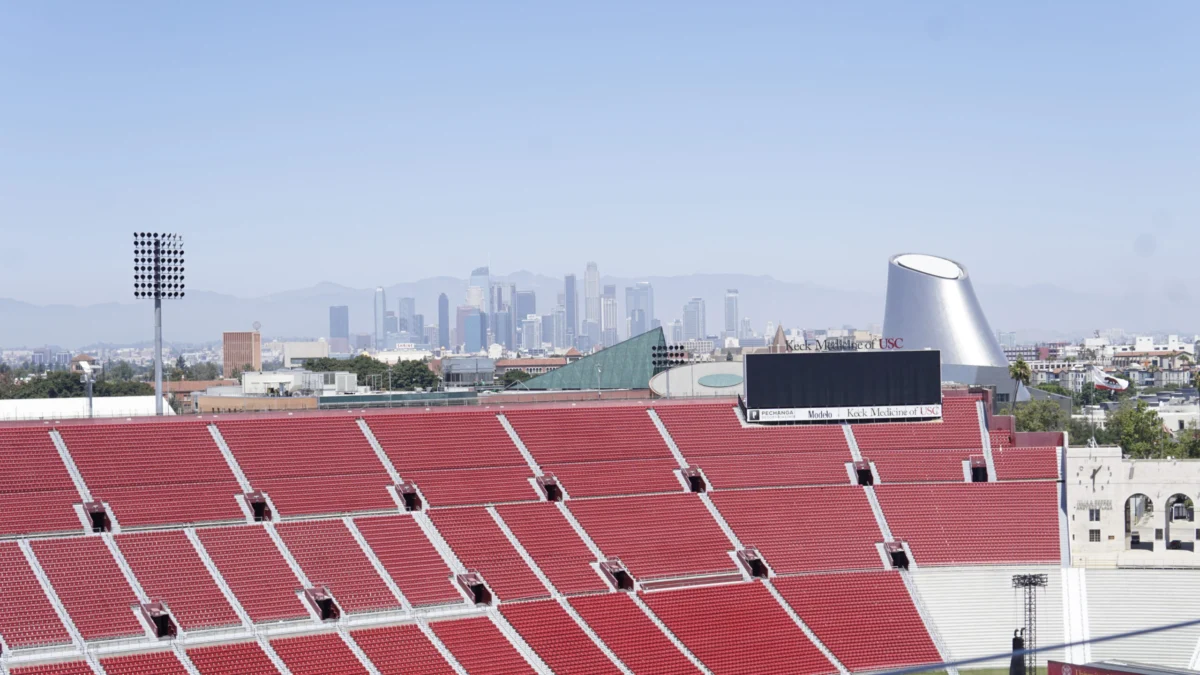
However, the physical infrastructure of the stadium presents a paradox. The open-air, concrete-heavy design—which provides a quintessential Californian experience—is becoming a liability. As heatwaves in Los Angeles become more frequent, longer, and more intense, the stadium’s exposed seating areas and lack of climate-controlled zones are forcing organizers to rethink the safety of both athletes and spectators. The core issue is that the Coliseum was designed for the climate of the early 20th century, an environment that no longer exists.
A Chronology of the Warming Coliseum
To understand the scale of the challenge, one must look at the timeline of the venue’s adaptation and the encroaching environmental pressures.
- 1923: The Coliseum is completed. The design prioritizes natural ventilation and open-air seating, taking advantage of the mild coastal Mediterranean climate.
- 1984: During the second Olympic Games, cooling systems were not a primary concern; heat-related incidents were rare and manageable.
- 2010s: The venue undergoes a major push for "Zero Waste" certification. By 2018, the Coliseum successfully diverts over 90% of its waste, setting a standard for stadiums nationwide.
- 2023–2025: Data from local meteorological stations indicates that "extreme heat days" (defined as temperatures exceeding 95°F or 35°C) in the Exposition Park area have increased by 22% compared to the 1984 baseline.
- August 2026: Scientific reports highlight that the structural thermal mass of the Coliseum—the vast swathes of concrete that absorb heat throughout the day—is preventing the stadium from cooling down at night, creating a "micro-heat island" effect for evening events.
Supporting Data: The Rising Mercury
The climate data surrounding the Coliseum is sobering. According to recent meteorological studies conducted by the University of Southern California (USC) in partnership with independent climate research firms, the "urban heat island" effect is amplified by the stadium’s location.
Heat Retention Metrics
- Concrete Heat Soak: The stadium’s structure has an estimated thermal mass of several thousand tons. During a typical August heatwave, the surface temperature of the seating benches can reach upwards of 130°F (54°C).
- Humidity and Wet Bulb Temperatures: While Los Angeles is traditionally dry, intermittent moisture influxes have led to higher "wet-bulb" temperatures, which critically impair the human body’s ability to cool itself through perspiration.
- Waste Diversion vs. Energy Use: While the stadium is a leader in waste diversion, energy consumption related to temporary cooling (portable misters, industrial fans, and localized HVAC units) has tripled since 2020. This presents a sustainability conflict: how to remain "green" while fighting the increasingly "hot" reality of the venue.
Official Responses: Managing the Crisis
The management teams at the Coliseum, in coordination with city officials, have begun drafting a multi-phase "Resilience Roadmap."
The Venue Operator’s Perspective:
"We are incredibly proud of our sustainability record," says a spokesperson for the facility’s management board. "Our focus has been on waste, water, and energy. We’ve achieved the ‘zero-waste’ milestone, but we recognize that the climate parameters have shifted. We are now looking at structural modifications that maintain the historic integrity of the bowl while integrating passive cooling techniques, such as reflective materials and improved airflow corridors."
The City’s Stance:
City officials have emphasized that the Coliseum is a protected historic landmark, which limits the types of structural changes permitted. "We cannot simply enclose the stadium or add a massive canopy," an official stated. "The challenge is to find architectural solutions that honor the 1923 design while providing a modern safety envelope for the 2028 Olympic attendees."
Implications: The Future of Open-Air Sport
The crisis at the Los Angeles Memorial Coliseum is not an isolated incident; it is a bellwether for the global sports industry. As climate change continues to rewrite the rules of sport, several broad implications emerge.
1. The Death of the Afternoon Game
The most immediate implication is the shift in scheduling. For decades, sporting events were held based on television viewership prime-time slots. Moving forward, the physiological safety of participants may dictate that professional sports only occur in the early morning or late evening, or potentially be moved to different seasons entirely.
2. Architectural Resilience as the New Sustainability
For the past decade, sustainability in sports was defined by recycling programs and energy-efficient lighting. In the coming decade, it will be defined by "climate resilience." Architects are now being tasked with designing "breathable" stadiums that utilize wind tunnels and passive solar shading to protect fans from the sun. The Coliseum, as a historic structure, is the "canary in the coal mine" for how existing infrastructure can be retrofitted for a warmer world.
3. Economic Consequences of Climate Risk
Insurance premiums for large-scale outdoor events are skyrocketing. As heat-related illness becomes a greater liability, the cost of hosting events at venues like the Coliseum is rising. This could lead to a consolidation of events into newer, climate-controlled, multi-purpose arenas, potentially leaving historic open-air venues behind if they cannot adapt.
4. The Human Element
Ultimately, the Coliseum’s challenge is about the fan experience. If attending a game becomes a health risk, the cultural bond between the city and its stadium will fray. The Coliseum is a site of collective memory for Los Angelenos. Protecting that memory now requires a fundamental transformation of the physical space.
Conclusion: A New Era for a Historic Bowl
The Los Angeles Memorial Coliseum stands at a crossroads. Its history is written in the stories of athletes who pushed their bodies to the limit in its shadow. Now, the stadium itself is being pushed to its limit by the very planet that surrounds it.
The task ahead is immense. Balancing the demands of historic preservation with the urgent requirements of climate adaptation requires innovation, investment, and a willingness to accept that the climate of the past is gone. Whether the Coliseum can maintain its status as a premier global venue will depend on its ability to evolve—not just in how it handles waste, but in how it handles the fundamental elements of heat and light.
As 2028 approaches, the eyes of the world will be on Los Angeles. The Coliseum will not only be a stage for the world’s greatest athletes; it will serve as a laboratory for how we protect our most cherished spaces from the encroaching heat of a changing world. The game, it seems, is no longer just on the field—it is in the very walls of the stadium itself.
