





The automotive industry is currently navigating a period of unprecedented transition, but few manufacturers are feeling the friction of this evolution as acutely as Jeep. As Stellantis—the global conglomerate housing Jeep, Dodge, Ram, and others—recalibrates its portfolio, the legendary American off-road brand finds itself in a precarious position regarding its powertrain strategy. Specifically, the once-ubiquitous Hemi V8, a cornerstone of Jeep’s identity, has become an increasingly rare commodity, leaving enthusiasts and traditionalists yearning for the days of displacement.
The State of the V8: A Chronology of Departure
To understand the current void in the Jeep lineup, one must look at the rapid erosion of the Hemi engine across the brand’s premium offerings over the last five years.
- 2021-2022: The current generation of the Grand Cherokee (WL platform) launched with the promise of high-performance V8 variants. However, inventory remained chronically low, making the Hemi-powered Grand Cherokee more of a "unicorn" than a production reality.
- 2023: The Hemi option for the standard-wheelbase Grand Cherokee was quietly discontinued. As supply chain constraints and emissions regulations tightened, Stellantis shifted focus toward the Hurricane turbocharged inline-six engines.
- 2024: The "final nail" for the Grand Cherokee L arrived when the long-wheelbase model dropped the Hemi engine from its order sheets. Simultaneously, the Grand Wagoneer began transitioning away from the 6.4-liter V8, favoring the higher-output versions of the new turbocharged Hurricane powertrain.
- 2025-2026 (Present Day): The Wrangler 392 remains the lone torchbearer for the V8 in the Jeep stable, though its future is perpetually debated. While the Gladiator 392 has been confirmed, the broader Jeep portfolio has largely pivoted to the 4xe plug-in hybrid technology, which has faced its own set of public relations and mechanical hurdles, including stop-sale orders and inventory management issues.
Supporting Data: The Towing and Torque Gap
The move away from the Hemi has not been without consequences. For many Jeep owners, the allure of the brand isn’t just about trail crawling; it is about utility and towing capability. The Hemi V8, particularly in its 5.7-liter guise, offered a proven, reliable 7,200-pound tow rating that provided a "set it and forget it" confidence for boat and trailer owners.
Current alternatives, such as the 4xe plug-in hybrid system, while innovative and torque-dense, have struggled to replicate the sustained, high-load performance of the naturally aspirated Hemi. The Hurricane inline-six, while objectively more efficient and technically advanced, carries a different power delivery profile. For a subset of the demographic that values the simplicity and linear power of a V8, the current Jeep lineup feels like it is missing a crucial pillar of its performance heritage.
The Stellantis Factor: Why the V8 Disappeared
Stellantis is currently caught in a "perfect storm" of corporate maneuvering. The company has invested billions into the development of the Hurricane engine family. To recoup this massive capital expenditure, the brand must ensure these engines become the standard-bearers for the fleet.
Furthermore, the "Hemi-ssance" is currently being monopolized by the Dodge Durango. Because the Durango is the brand’s volume leader and occupies a specific performance niche, Stellantis has prioritized the remaining V8 supply for that platform. Ram 1500 production also cannibalizes the available V8 stock, leaving Jeep—once the flagship for the Hemi—at the bottom of the priority list for engine allocation.
A Proposed Solution: The "Wagoneer Classic"
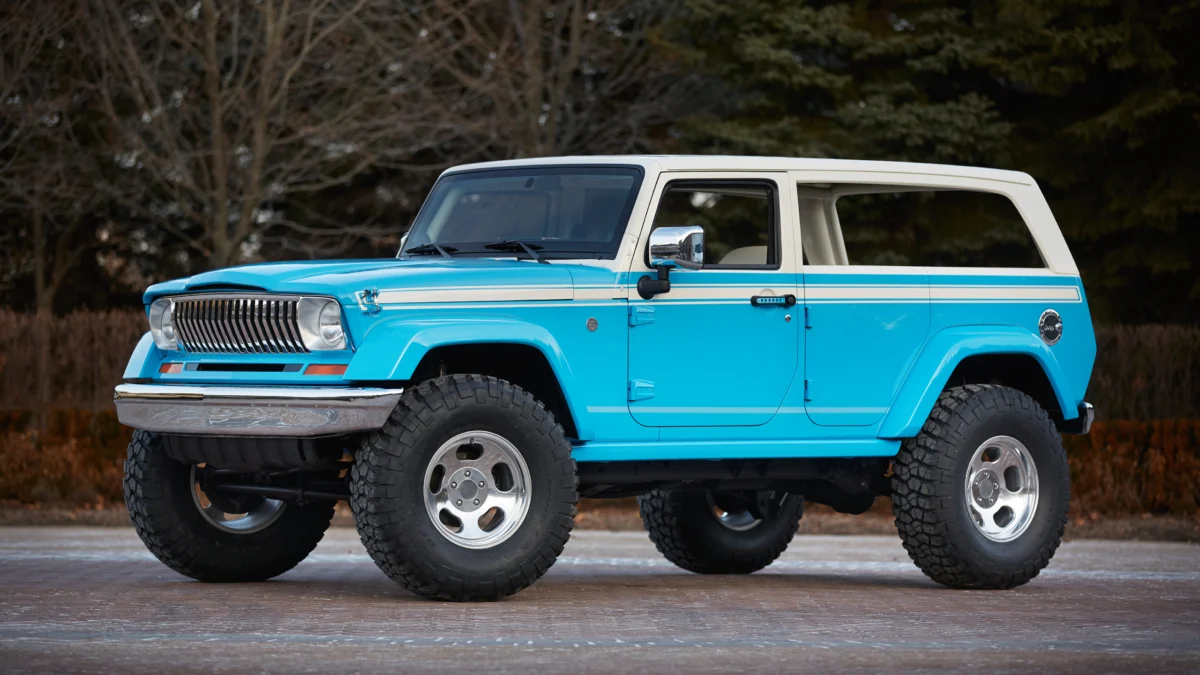
If Jeep is struggling to reconcile its emissions mandates with the demand for V8 power, perhaps it is time to look toward the past to secure the future. I propose the creation of a "Wagoneer Classic"—a vehicle that leverages existing, proven hardware to satisfy the V8 enthusiast market.
The Strategy
The Dodge Durango is, in many ways, the spiritual successor to the long-wheelbase Jeep architectures of the past. It is already a platform in production, meaning the tooling costs for a new model would be significantly mitigated. By taking the Durango platform, applying a "seven-slot" grille redesign, and incorporating nostalgic interior design cues—such as wood-grain accents and period-correct upholstery—Jeep could effectively launch a Wagoneer-branded entry-level SUV.
Why This Works
- Low R&D Costs: Since the Durango platform is already homologated and in production, the "Wagoneer Classic" wouldn’t require a ground-up redesign.
- No "Trail Rated" Burden: Because the Wagoneer sub-brand carries a more luxurious, on-road-oriented identity than the Wrangler, the vehicle wouldn’t need to meet the rigorous off-road standards of the Grand Cherokee. This allows for a more straightforward powertrain integration.
- Market Differentiation: This would provide a home for the 3.6L Pentastar V6, the 5.7L Hemi, and the 6.4L Hemi. By positioning it as a nostalgic, lifestyle-focused SUV, Jeep could capture a market segment that feels alienated by the current "tech-heavy" transition of the Grand Wagoneer.
Official Responses and Corporate Stance
Stellantis executives have been coy about the return of the Hemi to the Grand Cherokee, often offering vague "stay tuned" statements. This indicates that the Hemi isn’t necessarily dead—it is simply being held in reserve.
From a corporate perspective, the company is attempting to "make hay while the sun shines," utilizing the remaining V8 supply to squeeze every drop of profit from existing platforms before full electrification becomes the industry standard. However, the lack of a clear, long-term roadmap for traditional engine enthusiasts remains a point of frustration for dealerships and the customer base alike.
Implications for the Jeep Brand
The implications of this strategy are significant. If Jeep continues to pivot away from the V8, it risks alienating the core demographic that helped build the brand’s reputation for rugged, all-American utility. While the Hurricane engines are technically superior in almost every metric—efficiency, power density, and emissions—they lack the emotional resonance of a Hemi.
Conversely, if Jeep embraces a "Heritage-First" approach through models like a potential Wagoneer Classic, it could bridge the gap between its storied past and its electric future. By keeping the V8 alive in a low-stakes, high-nostalgia package, Jeep can maintain its identity as a brand that caters to the enthusiast, not just the fleet manager.
Conclusion
The "Hemi Hangover" is a real phenomenon within the Stellantis family. As the industry races toward a future of forced induction and hybridization, the V8 is slowly being relegated to the history books. However, as Jeep continues to navigate the complexities of corporate restructuring and powertrain evolution, there remains a golden opportunity to leverage existing assets to keep the spirit of the Hemi alive.
Whether or not a "Wagoneer Classic" ever hits the pavement, one thing is certain: the appetite for the visceral, reliable, and classic performance of a V8 engine remains as strong as ever. For Jeep, the challenge will be deciding whether to chase the future exclusively, or to save a seat at the table for the engine that made them a global icon.
