





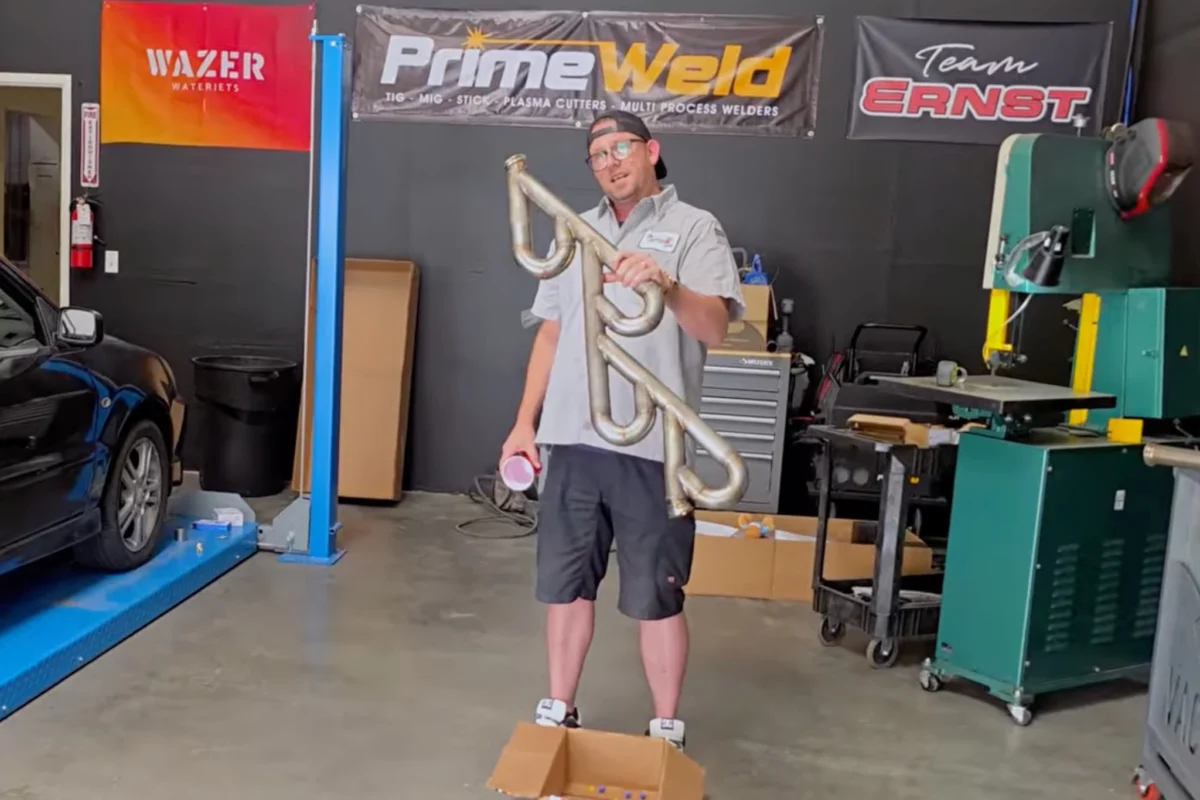
In the world of automotive engineering, the pursuit of the "perfect" exhaust system is an endless cycle of balancing backpressure, gas velocity, and acoustic resonance. Engineers typically spend thousands of hours using computational fluid dynamics (CFD) to optimize exhaust flow for maximum horsepower. However, the team behind the popular YouTube channel The Fabrication Series recently bypassed conventional wisdom entirely, opting instead to experiment with a century-old fluidic curiosity: the Tesla valve.
The resulting experiment—a full-scale dyno test on a Mitsubishi Lancer Ralliart—has provided a fascinating, if counterintuitive, look at how fluid dynamics behave when pushed to the extreme limits of automotive internal combustion.
The Genesis of the Concept: What is a Tesla Valve?
Patented by Nikola Tesla in 1920 (U.S. Patent 1,329,559), the Tesla valve is a masterpiece of passive fluidic control. Unlike a check valve, which relies on moving parts like flaps, springs, or ball bearings to restrict flow, the Tesla valve is a purely geometric construct. It consists of a series of curved, heart-shaped segments that encourage fluid to flow in one direction while creating high resistance—effectively a form of "fluidic diode"—in the other.
In the original patent, Tesla envisioned the device being used for everything from steam engines to water pumps. Because it contains no moving parts, it is theoretically immune to the wear and tear that plagues traditional mechanical check valves. However, its application in an automotive exhaust system is a radical departure from its intended use. Exhaust gases are not just high-velocity fluids; they are high-temperature, pulsating gases prone to compression—a variable that complicates the valve’s efficiency significantly.
Chronology of the Experiment: From Fabrication to Dyno
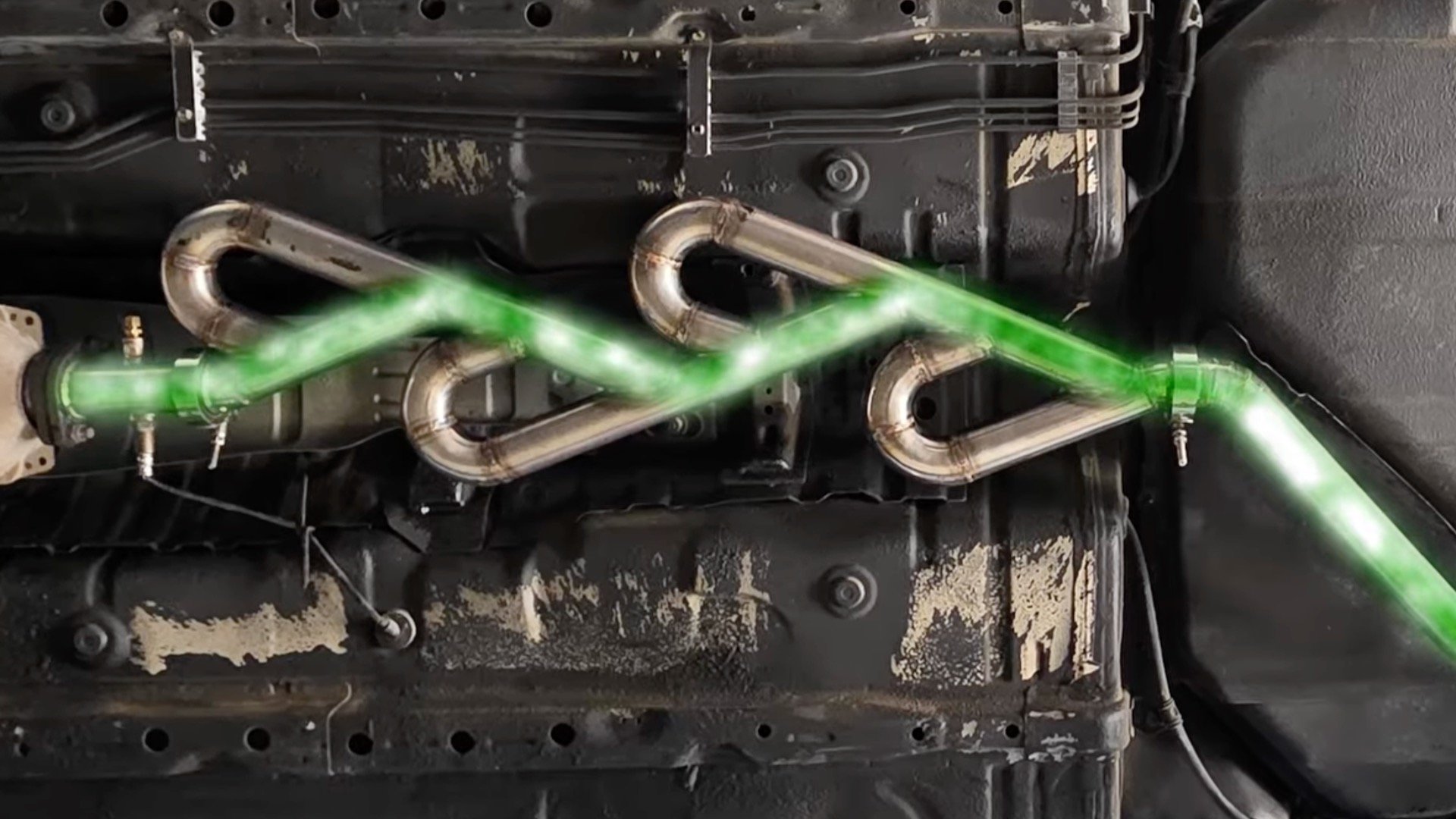
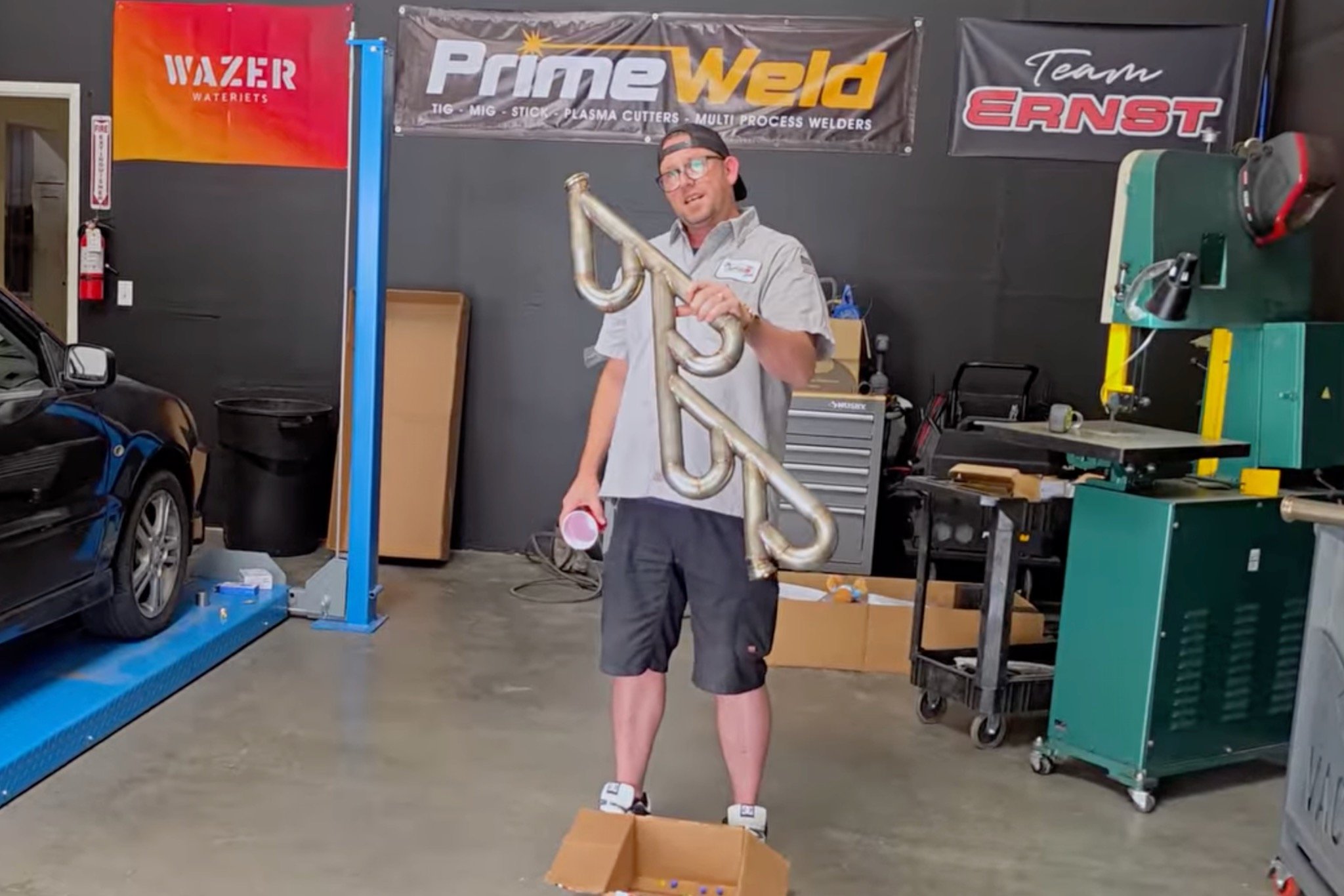
The project began in the fabrication shop, where the team faced the immediate physical constraints of the Mitsubishi Lancer Ralliart’s undercarriage. A true, effective Tesla valve requires a significant number of stages (or "loops") to maximize the pressure differential between the forward and reverse flow. Due to the limited space beneath the chassis, the team was restricted to just four stages.
Phase 1: The Build
The fabricators constructed the custom piping with meticulous attention to the geometry required to mimic the Tesla valve’s channels. Each loop was TIG-welded, ensuring that the internal geometry matched the theoretical specifications required to test the "fluidic diode" effect on high-pressure exhaust pulses.
Phase 2: The Baseline
Before testing the experimental hardware, the team established a control group. The Mitsubishi Lancer Ralliart was placed on the dynamometer with its stock exhaust system. This provided a reliable baseline of 146 horsepower, serving as the benchmark against which the "Tesla-fied" system would be measured.
Phase 3: The Forward Run
With the valve oriented to allow gas flow in the direction of least resistance, the car was pushed to its limits. The goal was to see if the complex geometry would cause excessive backpressure or if the fluidic channels could effectively scavenge exhaust pulses.
Phase 4: The Reverse Run
To test the "diode" capability, the system was physically reversed. This was the true test: could a pipe, in essence, act as a solid wall to exhaust gases? The team fired the engine, monitoring for any signs of catastrophic failure or immediate stalling.
Supporting Data and Performance Metrics
The results of the dyno testing were as illuminating as they were disappointing for those hoping for a revolutionary new muffler design.
Power Loss and Efficiency
When the system was installed in the "correct" orientation, the Mitsubishi produced 142 horsepower. While a loss of 4 horsepower compared to the stock exhaust is statistically minor, it represents a measurable decrease in volumetric efficiency. The system acted as a flow restrictor, not because of its shape, but because of the inherent turbulence created by the valve’s channels.
The Backpressure Spike
The most dramatic data came during the reverse-flow test. While the engine was still capable of idling and revving, the backpressure gauge went off the charts. The engine struggled to purge the cylinders, leading to a significant drop in power to an average of 134 horsepower. Furthermore, the restriction created a massive heat soak issue. The exhaust gases, unable to escape efficiently, backed up into the headers and engine block, causing the manifold temperatures to skyrocket in a matter of seconds.
Acoustic Performance
The most surprising outcome was the noise level. Because the Tesla valve effectively traps and redirects energy back upon itself, it acted as an incredibly efficient—albeit inefficiently restrictive—muffler. The exhaust note was virtually silent, with the only audible sound coming from the engine bay itself.
The Physics of Failure: Why It Doesn’t Work for Cars
While the Tesla valve is a marvel of physics, the Fabrication Series experiment highlights why we won’t be seeing these on performance vehicles or at events like the SEMA show anytime soon.
1. The Compressibility Factor
Tesla’s design was primarily intended for liquids, which are largely incompressible. Exhaust gas, however, is a compressible fluid. When gas enters the valve, the pressure waves don’t just bounce off the geometry; they compress. This allows the gas to "force" its way through the valve even in the restricted direction, meaning it never truly functions as a one-way check valve in an automotive context.
2. Turbulence and Heat
Internal combustion engines rely on the rapid evacuation of spent gases to maintain a high-pressure differential between the cylinder and the atmosphere. By forcing the exhaust through a series of complex loops, the Tesla valve creates massive turbulence. This turbulence creates heat, which increases the density of the exhaust gas, further hindering flow and robbing the engine of its ability to breathe.
3. The "Moving Parts" Paradox
The beauty of the Tesla valve is that it has no moving parts. However, modern mufflers achieve similar (and often better) acoustic attenuation using resonance chambers and Helmholtz resonators, which do not impede flow to the same degree as the Tesla valve. The trade-off for the "Tesla" approach is simply too high—you gain a silent car, but you sacrifice the engine’s ability to produce power.
Implications for Automotive Design
This experiment serves as a humbling reminder of why traditional engineering persists. While the internet is full of "life hacks" and unconventional mechanical designs, the internal combustion engine is a system of refined compromises.
The Fabrication Series has effectively debunked the myth that a Tesla valve could serve as a "magic bullet" for exhaust systems. However, the experiment does open doors for other niche applications. If one were looking for a way to silence a stationary generator or a low-RPM utility engine where noise is a critical concern and power density is secondary, the passive nature of the Tesla valve might offer a maintenance-free, albeit bulky, solution.
In the broader scope of the automotive industry, the test underscores the critical role of exhaust scavenging. Manufacturers like Mitsubishi, Honda, and Porsche invest millions in exhaust geometry not to create gimmicks, but to ensure that every pulse of gas is directed away from the engine with as little resistance as possible.
As it stands, the Tesla valve will remain a brilliant piece of 20th-century fluidic history—a genius invention that is perfectly suited for controlling the flow of water in a pump, but fundamentally unsuited for the volatile, high-pressure, and high-temperature environment of a modern performance engine. For now, the quest for the "ultimate" exhaust continues, and it will be fought with CAD software and wind tunnels rather than century-old loop-channel designs.
