




By Editorial Staff
August 31, 2026
While the specter of artificial intelligence (AI) replacing human labor has dominated headlines, the reality of the current U.S. labor market is already grim. We are not yet seeing mass, AI-triggered layoffs, but the infrastructure meant to support displaced workers—our Unemployment Insurance (UI) system—is fundamentally broken. As experts and policy analysts argue, waiting for an AI-driven economic crisis to overhaul the safety net is a gamble the nation cannot afford to lose.
The State of the Safety Net: A System in Decline
The Unemployment Insurance system was designed as a pillar of economic stability. Its primary functions are threefold: to provide income replacement for displaced workers, to facilitate an orderly transition to new employment, and to act as a "countercyclical stabilizer"—an economic brake that slows the downward spiral during recessions. Economists have long noted that every dollar invested in UI generates nearly two dollars of economic activity within local communities, effectively cushioning the blow of downturns for both families and businesses.
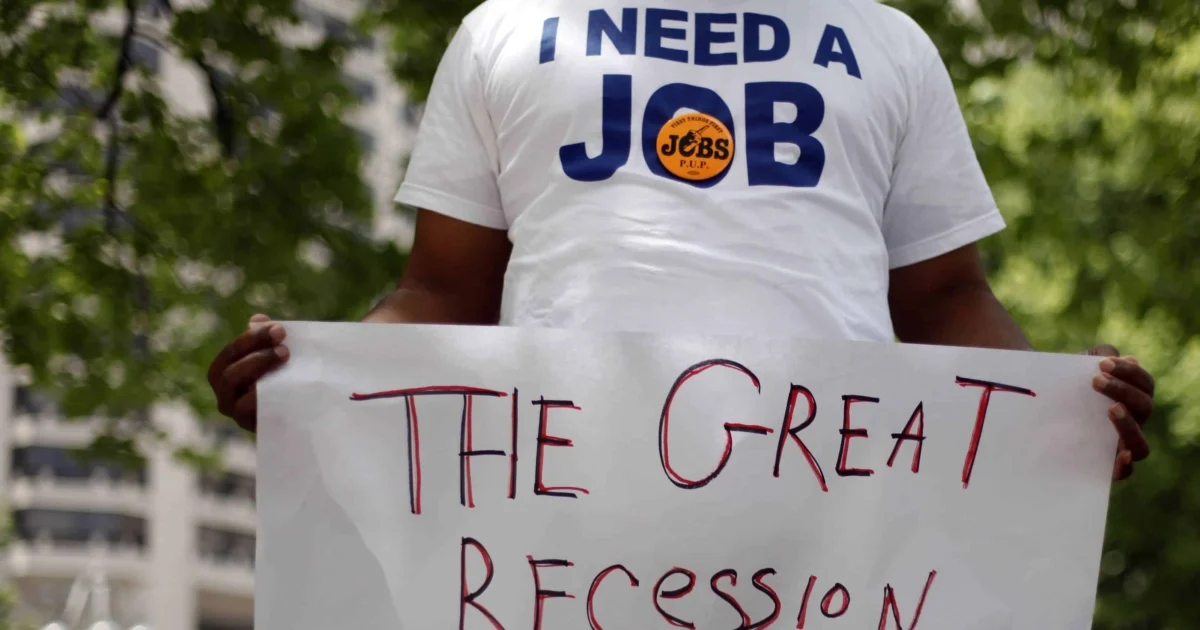
However, the efficacy of this system has been systematically eroded. Since the Great Recession, a concerning trend has emerged among individual states: a "race to the bottom." By tightening eligibility requirements, slashing the duration of benefits, and reducing the total amount of income replaced, many states have effectively gutted the system’s ability to function as a genuine safety net.
A History of Neglect and the Lessons of COVID-19
The fragility of our current infrastructure was laid bare during the COVID-19 pandemic. When millions of Americans were suddenly displaced, the federal government was forced to scramble, creating three entirely new, emergency programs to fill the gaps in the existing UI framework.
The results were catastrophic. State agencies, which had suffered from decades of under-investment and were operating at 50-year lows in funding, were overwhelmed. They were tasked with managing record-breaking claim volumes while relying on "antiquated technology" and skeleton staffs forced to pivot to remote work overnight. The delay in getting benefits to those who desperately needed them was not merely an administrative failure; it was a human tragedy. Furthermore, the slow rollout and outdated digital infrastructure created a vacuum that sophisticated criminal syndicates exploited, leading to billions of dollars in fraudulent claims.
The lesson is clear: reactive policy is expensive and inefficient. We are currently repeating the mistakes of the past by ignoring the need for structural reform until the next shock—whether from AI or another global event—forces our hand.
The Modern Jobseeker’s Struggle: Ghost Postings and Long-Term Unemployment
The challenge of re-entering the workforce has become significantly more complex in the digital age. Jobseekers today face a "low-hire" economy characterized by high levels of attrition and discouragement.
Recent data highlights a troubling phenomenon: as many as one in three job postings online are "fake" or "ghost jobs." These postings are often kept up by companies to create the illusion of growth or to build databases of candidates for roles that are not actively being filled. For the displaced worker, this means sending out hundreds of resumes with zero feedback, leading to rising levels of long-term unemployment.
This trend is contributing to historic lows in the labor force participation rate. When individuals spend months searching for roles that do not exist, they naturally become discouraged and drop out of the workforce entirely. The Employment Service—a division of the Department of Labor designed to match workers with available jobs and provide career coaching—has been steadily dismantled over the years. Rebuilding this service is essential to bridge the gap between displaced workers and a rapidly changing job market.
Chronology of Reform: A Half-Century of Ignored Advice
The irony of the current situation is that the solutions are not new. For decades, bipartisan commissions have studied the UI system and reached consistent, actionable conclusions.
- 1980: A bipartisan commission issues a landmark report calling for modernized standards for UI eligibility and benefit levels to protect workers against economic fluctuations.
- 1996: A second bipartisan commission reinforces the need for federal standards to prevent the "race to the bottom" seen at the state level.
- 2000s–2010s: Despite these recommendations, federal funding for UI administration continues to decline, leading to the "skeleton staff" infrastructure that failed during the pandemic.
- 2020–2021: The COVID-19 crisis exposes the fragility of the system, forcing a massive, albeit delayed, federal intervention.
- 2025–2026: Legislators recognize the impending impact of AI on the workforce and move to reintroduce long-overdue reforms.
Legislative Pathways: The Wyden-Bennet-Beyer Proposal
There is currently a glimmer of hope on Capitol Hill. Senator Ron Wyden, Senator Michael Bennet, and Congressman Don Beyer have introduced bicameral legislation that aims to finally codify the recommendations of the 1980 and 1996 commissions.
This proposed legislation seeks to:
- Establish Federal Minimum Standards: Preventing states from further gutting benefits and ensuring a consistent baseline for all American workers.
- Modernize Technology: Investing in digital infrastructure that can handle spikes in volume without collapsing or falling prey to fraud.
- Restore the Employment Service: Reinvigorating local Department of Labor offices to provide human-centered career counseling and job placement assistance.
These reforms are designed to create a "shock-absorber" system that can handle the inevitable displacement caused by technological shifts like AI, rather than forcing the government to build an entirely new system in the middle of a crisis.
Implications: The AI-Driven Future
The conversation surrounding AI often focuses on the "what-ifs"—the potential for massive productivity gains versus the risk of widespread job displacement. However, the true implication for policy is the need for resilience.
If AI begins to displace workers at scale, the current UI system will be entirely incapable of handling the demand. Without a reformed, robust safety net, we risk social instability and long-term economic scarring. The workforce of the future will require more frequent transitions between jobs, industries, and skill sets. A system that penalizes workers for being unemployed or makes it impossible to access benefits during a transition period is fundamentally incompatible with the modern, AI-augmented economy.
Conclusion: Breaking the Habit of Crisis-Driven Governance
The pattern of waiting until the economy is in the throes of a collapse before investing in our social safety net is a habit that must be broken. As Michele Evermore, a Senior Policy Fellow for Economic Security, emphasizes, the solutions to mass unemployment were available decades ago.
We have the policy blueprints. We have the legislative vehicles. We have the historical data to show exactly what happens when we choose inaction over preparedness. The question is no longer whether we can afford to reform the Unemployment Insurance system, but whether we can afford the consequences of failing to do so before the next great disruption arrives.
The time to act is now, while the labor market is still breathing, and before the next wave of technological displacement renders our current, outdated safety net entirely obsolete.
