





By Editorial Staff
August 31, 2026
As the global economy stands on the precipice of a radical transformation driven by artificial intelligence, the United States finds itself uniquely vulnerable. While the predicted mass displacement of workers by AI has yet to fully materialize into a nationwide economic catastrophe, experts are warning that the nation’s primary defense against job loss—the Unemployment Insurance (UI) system—is fundamentally broken.
According to Michele Evermore, Senior Policy Fellow for Economic Security at the National Employment Law Project (NELP), the U.S. is repeating the errors of the past by ignoring systemic weaknesses until they are triggered by a full-blown emergency. With long-term unemployment rising and labor force participation hitting historic lows, the call for a comprehensive overhaul of the UI system has moved from a policy preference to an urgent national security imperative.
Main Facts: A System in Disrepair
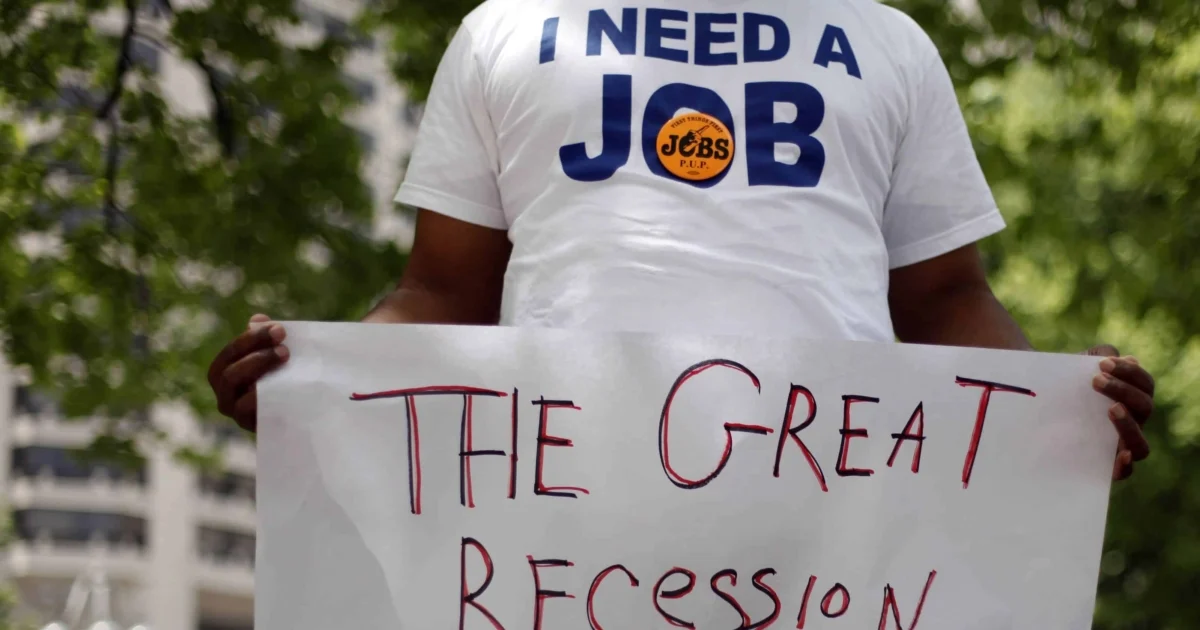
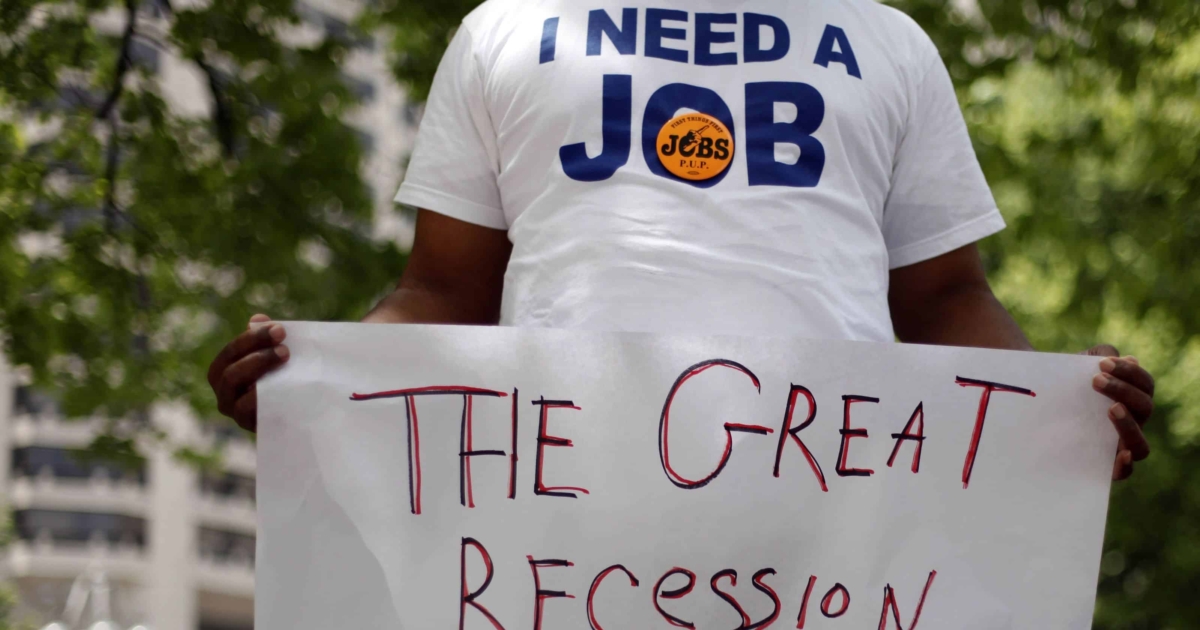
The current UI system is failing to meet its core objectives: stabilizing household income, facilitating meaningful job transitions, and acting as a countercyclical economic stabilizer. Economic studies suggest that every dollar distributed through unemployment benefits generates nearly two dollars in local economic activity. However, in the wake of the Great Recession, many states have engaged in a "race to the bottom," systematically reducing benefit amounts, narrowing eligibility criteria, and shortening the duration of support.
The result is a safety net that is structurally incapable of supporting a 21st-century workforce. Today’s jobseekers face a hostile labor market where as many as one in three job postings are estimated to be fraudulent or "ghost" listings. This environment of low hiring and high ambiguity leaves the long-term unemployed increasingly discouraged, further eroding labor force participation.
Chronology: A History of Neglect
To understand the current crisis, one must look at the historical trajectory of U.S. labor policy.
- 1980–1996: Bipartisan commissions were established to analyze the efficacy of the UI system. Both eras concluded that the system required fundamental updates to keep pace with economic volatility. Despite these expert recommendations, the core architecture of the system remained largely untouched by major federal legislation.
- The Great Recession (2008–2009): States began the process of cutting benefits and tightening eligibility to preserve state trust funds, setting a precedent that weakened the system’s protective capacity.
- The COVID-19 Pandemic (2020): When millions were suddenly displaced, the inadequacy of the system was laid bare. With agencies operating at a 50-year low in funding due to decades of legislative neglect, the government was forced to create three separate, temporary programs to handle the influx of claims.
- 2020–2022: Under-investment in technology and staffing led to disastrous delays. The reliance on legacy, antiquated systems made these new programs prime targets for organized criminal fraud, which successfully exploited the bureaucratic chaos.
- 2025–2026: As AI begins to reshape sectors from professional services to manufacturing, legislators have begun reintroducing reform bills—nearly 45 years after the first major warnings were issued.
Supporting Data: The Cost of Inaction
The metrics of our current economic malaise are stark. The labor force participation rate remains at historic lows, a trend that cannot be blamed solely on demographics.
The "Ghost Job" Phenomenon
Modern job seekers report an exhausting cycle of sending out hundreds of resumes without receiving a single response. Data indicates that a significant percentage of current job postings are essentially inactive, created by companies to build talent pools for roles that do not currently exist or to signal growth to investors. This "low-hire" economy disproportionately impacts those who have been out of the workforce for months, turning temporary unemployment into long-term systemic detachment.
Funding and Infrastructure
The U.S. Department of Labor’s Employment Service, the very agency designed to assist workers in finding new employment, has been systematically dismantled through decades of budget cuts. Consequently, when the pandemic hit, the agency lacked the "skeleton staff" and modern software necessary to process claims efficiently. The result was a catastrophic delay that left millions without a bridge to their next opportunity, forcing Congress to scramble to patch a system that should have been robust by design.
Official Responses and Legislative Efforts
Recognizing the danger of a hollowed-out safety net, a coalition of lawmakers has introduced comprehensive legislation aimed at modernizing the system. Senators Ron Wyden (D-OR) and Michael Bennet (D-CO), along with Congressman Don Beyer (D-VA), have championed bicameral legislation that incorporates the recommendations dating back to the 1980 and 1996 bipartisan commissions.
These legislative efforts focus on three primary pillars:
- Federal Standards: Establishing minimum requirements for states to prevent the "race to the bottom" regarding benefit duration and eligibility.
- Modernization of Infrastructure: Providing the necessary funding to transition from 20th-century legacy technology to modern, fraud-resistant digital platforms.
- Reinvigoration of the Employment Service: Restoring the role of local Department of Labor offices as active hubs for job placement and vocational guidance.
While these bills offer a path forward, they face the perennial hurdle of political inertia. Supporters argue that the legislation is not merely about social support—it is about economic stability. If the workforce is left to wither during the transition to an AI-augmented economy, the resulting loss in consumer spending and productivity could lead to a recessionary spiral far worse than those experienced in the past.
Implications: Preparing for the AI Shift
The implications of failing to act are profound. We are currently in a "wait and see" period regarding AI-driven job loss, but the infrastructure of the labor market is already showing signs of fraying.
The Risk of Social Stratification
If the UI system remains in its current, weakened state, the displacement caused by AI will not be managed; it will be suffered. The burden will fall disproportionately on mid-career workers whose skills are being automated out of existence. Without a safety net that provides both income stability and genuine re-employment assistance, we risk creating a permanent underclass of discouraged workers who are effectively shut out of the economy.
Economic Resilience
The U.S. economy requires a "countercyclical stabilizer" to function effectively. When unemployment rises, the UI system acts as a floor for consumer demand. If that floor is removed, small businesses in local communities will see a rapid decline in revenue, creating a multiplier effect of job losses.
The Need for Proactive Policy
As Michele Evermore argues, the lesson of the last 50 years is clear: crisis management is an ineffective substitute for systemic preparedness. By the time mass unemployment becomes a daily headline, it is already too late to build the digital architecture and staffing capacity needed to support millions of citizens.
The task ahead is twofold. First, Congress must pass the proposed reforms to ensure the basic safety net is functional. Second, the Department of Labor must be empowered to move beyond simple "claims processing" and return to its historical mandate of active workforce development.
We are at a crossroads. We can continue to rely on a frayed, antiquated system that requires constant emergency patching, or we can heed the lessons of history. The rise of AI is an opportunity to re-evaluate the social contract, but that re-evaluation must be grounded in the reality that a strong economy requires a resilient, protected workforce. The time to build that protection is not when the crisis hits—it is now.
