



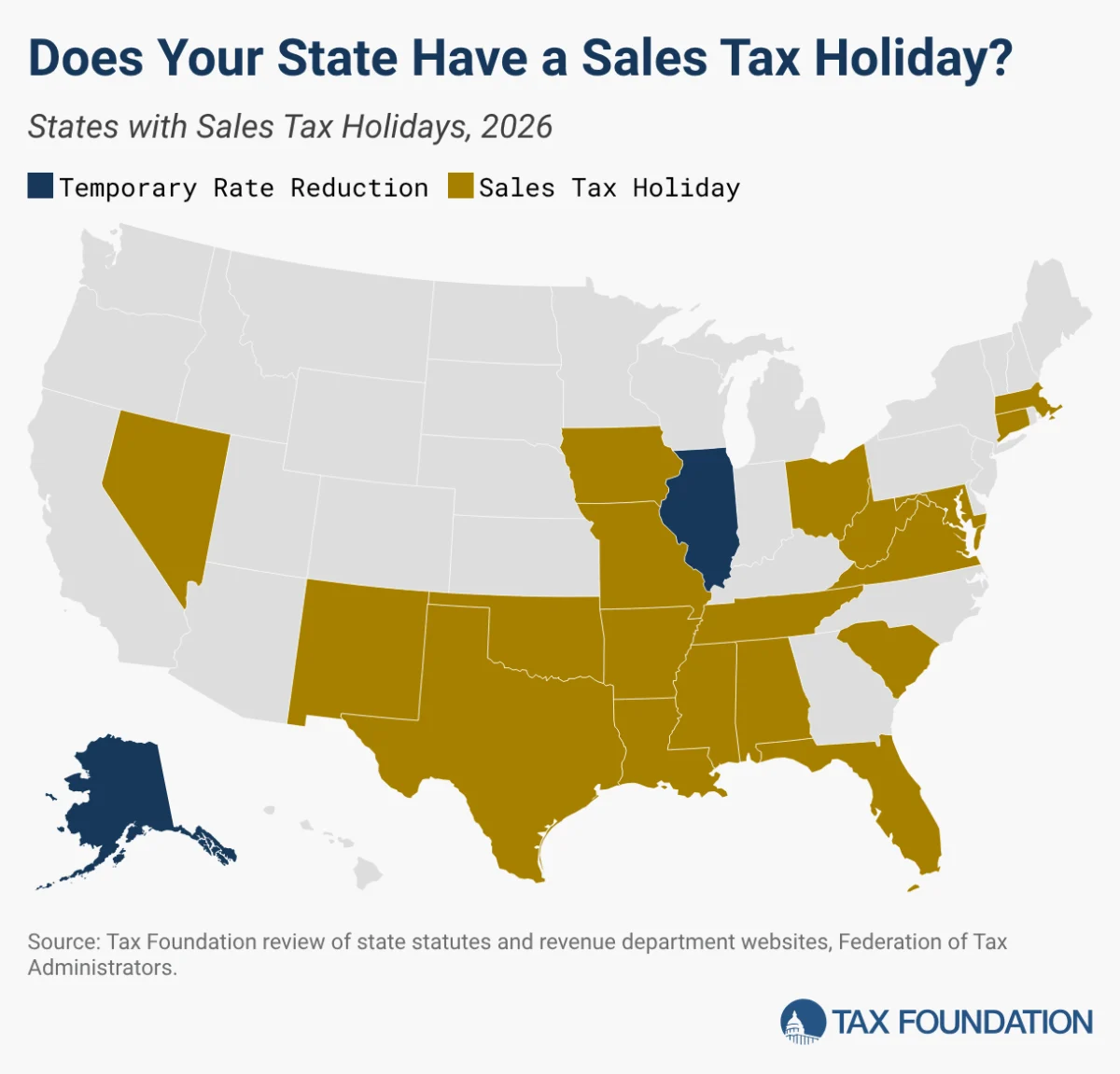
Despite their enduring popularity on the campaign trail, sales tax holidays have increasingly come under fire from economists and policy analysts. These temporary exemptions, designed to provide consumers with a reprieve from state and local sales taxes, are expanding across the United States. In 2026, 20 states are hosting such events—an increase from 19 the previous year—signaling that while the policy may be economically flawed, its political utility remains potent.
By suspending taxes on selected goods—ranging from back-to-school supplies to hurricane preparedness gear—for a limited window, states create a highly visible, albeit superficial, tax break. However, beneath the surface of these "holidays" lies a complex web of administrative burdens, market distortions, and ineffective fiscal policy that fails to provide the long-term relief taxpayers deserve.
The State of Play: A Growing Trend
The landscape of state tax policy is currently defined by a persistent reliance on these "gimmick" holidays. Illinois, for instance, has rejoined the fold, reinstating a holiday that was previously active in 2010 and 2022. Alabama has expanded its reach as well, adding a new sales tax holiday on SNAP-eligible food items to its existing portfolio of exemptions for severe weather and back-to-school essentials.
This trend reflects a broader trend of state legislatures seeking ways to appear responsive to the rising cost of living. However, these figures—which count states participating in statewide initiatives—often underrepresent the true frequency of such events, as they exclude local municipal exemptions, such as those found in Alaska, and temporary "gas tax holidays" implemented in various states to combat fuel price volatility.
Chronology and Legislative Patterns
The history of sales tax holidays is a testament to the power of political messaging over economic substance. These holidays are rarely, if ever, designed to stimulate the economy in a meaningful way; rather, they are scheduled to align with peak demand.
- August: The traditional home of "back-to-school" holidays, timed precisely when parents are already prepared to spend.
- Pre-Hurricane Season: Often used to incentivize the purchase of emergency supplies, a time when consumer demand is naturally elevated.
- Mid-Year Additions: States like Illinois (2026) and others often pivot to reinstating these programs when inflation concerns peak, providing a "quick fix" narrative to voters.
The legislative process for these holidays is frequently rushed. For example, Illinois Public Act 104-0468 was signed into law on June 16, 2026, leaving retailers mere weeks to update complex point-of-sale systems for the August holiday. This erratic timeline is not an outlier; it is a feature of a system that prioritizes election-cycle visibility over stable, predictable tax administration.
Supporting Data: The Illusion of Growth
Proponents frequently claim that these holidays spur economic growth by increasing retail activity. However, empirical studies—including those from the National Bureau of Economic Research—suggest that these events merely shift the timing of consumption rather than increasing the total volume of sales.
When a consumer waits until a tax-free weekend to purchase a computer or a new wardrobe, they are not "increasing" their spending; they are simply delaying it. While there is evidence of minor "impulse" purchases during these periods, the revenue lost by the state—and the costs imposed on the private sector—far outweigh the marginal benefits of these unplanned expenditures.
Furthermore, the data suggests that these holidays can be actively harmful to the lowest-income cohorts. Retailers, facing a surge in demand for a limited set of goods, often adjust prices upward to manage inventory, effectively capturing the value of the tax break. Research indicates that companies can absorb up to 20 percent of the benefit through these price adjustments, rendering the "savings" for the consumer negligible at best.
Official Responses and Political Drivers
Policymakers rarely defend these holidays with technical economic arguments. Instead, they emphasize "relief for working families." The political optics are undeniable: a politician announcing a sales tax holiday appears to be directly putting money back into the pockets of constituents.
Conversely, the "losers" in this equation—small businesses, tax administrators, and long-term economic stability—rarely have a collective voice in the press releases announcing these holidays. While some larger retailers can absorb the compliance costs of changing tax codes for a week, small businesses face a disproportionate burden. These firms must manage labor-intensive staffing shifts, navigate complex definitions of "eligible" products, and deal with the "feast or famine" revenue cycles that these holidays induce.
In Nevada, a different approach is taken with the National Guard sales tax holiday, which places the onus on the consumer to seek a rebate. While this spares retailers the administrative headache, the cumbersome nature of the process serves as a barrier, suggesting that the policy is as much about bureaucracy as it is about relief.
The Structural Implications of "Gimmick" Taxes
The persistence of sales tax holidays acts as an implicit admission by state legislatures that their year-round tax structures are overly burdensome. If a state government believes that removing a 6 percent sales tax for one week provides a necessary boost to the economy, they are implicitly acknowledging that the tax is suppressing economic activity for the other 51 weeks of the year.
1. Market Distortions and Price Caps
Most states impose price caps on eligible items to limit revenue loss. This creates a perverse incentive for consumers to purchase lower-quality goods that fall just under the threshold, rather than higher-quality items that would last longer. This distortion punishes innovation and favors budget-tier inventory, often at the expense of local businesses that might carry higher-end products.
2. The Compliance Nightmare
For online retailers, sales tax holidays are a regulatory quagmire. With different states adopting different definitions of what constitutes a "school supply" or a "preparedness item," and with these rules changing on a whim, the potential for accidental non-compliance is high. The cost of maintaining software capable of tracking 50 different state-level tax-holiday schedules is an invisible tax that ultimately gets passed on to the consumer.
3. Revenue Inefficiency
States that possess budget surpluses often choose to fund these holidays rather than investing in permanent, pro-growth tax reform, such as lowering the base sales tax rate. By choosing the "holiday" route, they opt for a short-term publicity win over the long-term economic health of the state. Because these holidays rely on revenue generated elsewhere to offset the losses, they often necessitate reliance on other, more economically damaging tax sources.
Conclusion: The Path Toward Meaningful Reform
The evidence is clear: sales tax holidays are an inefficient vehicle for tax relief. They disrupt markets, create unnecessary compliance costs for small businesses, and fail to provide the meaningful economic stimulus that their proponents claim.
If states truly wish to support their residents and foster economic growth, they should abandon the "holiday" model in favor of permanent, broad-based tax reductions. A lower, consistent sales tax rate is significantly more beneficial to the economy than a periodic, chaotic exemption period. As long as the political appeal of the "holiday" remains, however, taxpayers will continue to see these temporary fixes deployed in lieu of the deep, structural reforms necessary to create a truly competitive and equitable tax system.
For now, the 20 states participating in 2026 have chosen the path of least resistance. Until policymakers are willing to prioritize long-term stability over short-term political gains, the "sales tax holiday" will remain a permanent feature of a flawed American tax landscape.
