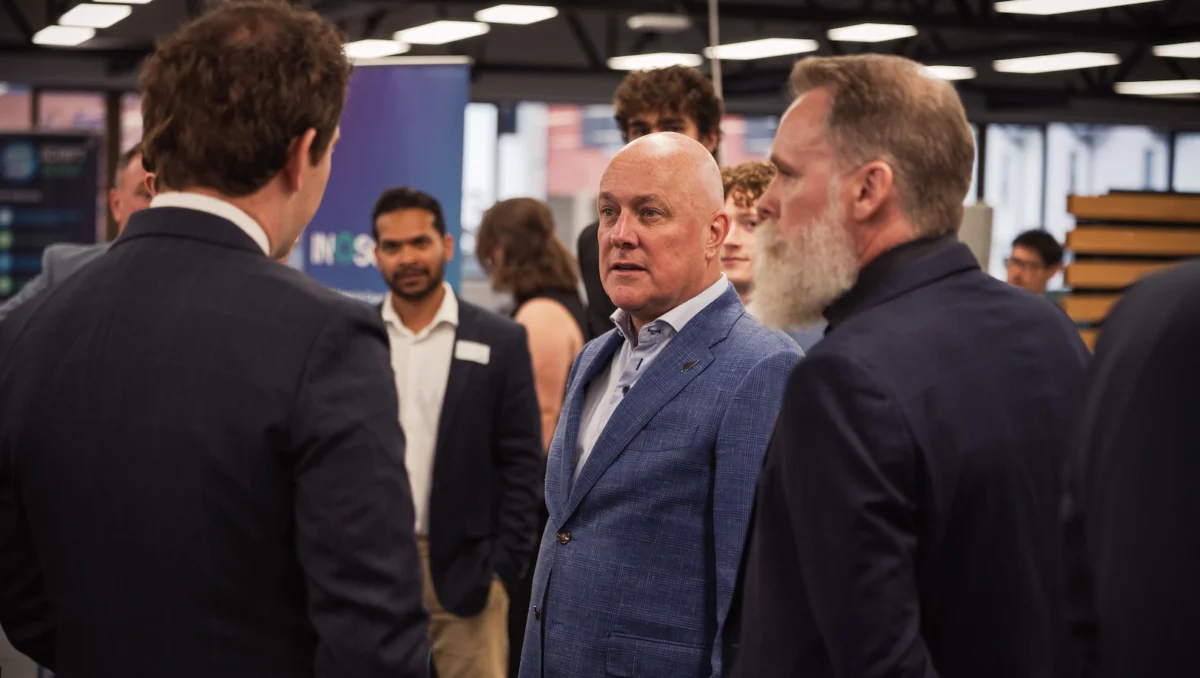





In a significant move to reshape the economic landscape of New Zealand, the startup advocacy organisation Ministry of Awesome has officially launched the New Zealand Startup Hub (NEST) Network. The pilot facility, situated in the heart of Ōtautahi Christchurch, represents more than just a new co-working space; it is the physical manifestation of a national strategy aimed at scaling the country’s high-growth startup ecosystem to 5,000 entities.
The launch event, attended by Prime Minister Christopher Luxon, underscores the government’s commitment to fostering a innovation-led economy. By consolidating founders, venture capital, academic rigour, and corporate expertise under a single roof, the NEST initiative seeks to solve the "tyranny of distance" that has historically hindered New Zealand’s burgeoning tech sector.
The Genesis of NEST: A Hub for High-Growth Ambition
The newly unveiled facility at 829 Colombo Street spans an expansive 1,100 square metres. It is designed as a "collision space"—an environment intentionally engineered to facilitate the accidental and purposeful meetings that often spark transformative business ideas.
The hub is the first in what is intended to be a nationwide network. Its primary goal is to address the fragmentation that has historically plagued the New Zealand startup scene. Too often, promising founders have found themselves siloed from the capital they need to scale or the mentorship required to navigate international markets. NEST aims to collapse these barriers by creating a centralised ecosystem where the entire startup lifecycle—from ideation to Series C funding—can be supported.
"The goal is to create the density of people and expertise that helps startups grow," says Graham Scown, CEO of Ministry of Awesome. "We are not just providing desks; we are providing the infrastructure for New Zealand’s economic development."
Chronology: From Concept to Launch
The road to the opening of the Colombo Street hub has been a multi-year effort in policy development and community engagement.
- Early 2024: Ministry of Awesome identifies a need for a unified, national physical presence to accelerate startup growth. Initial feasibility studies highlight the lack of "collisions" between early-stage founders and established mentors.
- Mid-2024: Strategic partnerships are solidified with local government and academic institutions. The concept of the NEST Network is formalised, with a focus on Christchurch as the pilot site due to its unique post-earthquake innovation culture.
- Late 2024: Construction and fit-out of the 829 Colombo Street site begin, incorporating specialized zones including podcast recording studios, high-tech meeting rooms, and flexible event spaces.
- October 2026: Official ribbon-cutting ceremony. Prime Minister Christopher Luxon formally opens the hub, signaling federal backing for the project.
Supporting Data: Why 5,000 Startups Matter
The target of 5,000 high-growth startups is not an arbitrary figure. It is based on economic modeling that suggests New Zealand needs to significantly increase its export-led innovation to maintain its standard of living.
According to Ministry of Awesome data, the "density effect"—where startups are clustered together—increases the rate of success by a factor of three compared to dispersed founders. The current economic climate, characterised by high interest rates and cautious venture capital, has made it difficult for isolated startups to survive. By pooling resources, the NEST hub reduces overhead costs for founders while increasing their visibility to institutional investors.
Furthermore, the "Rocket Lab Effect" remains the primary inspiration. As Graham Scown noted at the launch, the success of a single "unicorn" like Rocket Lab does more than generate wealth; it creates a "talent diaspora." Employees who gain experience in a scaling unicorn eventually leave to start their own ventures, creating a cycle of growth that ripples throughout the entire economy.
Official Responses and Political Implications
Prime Minister Christopher Luxon’s presence at the launch was a calculated signal to the technology and investment sectors. The current administration has made no secret of its desire to pivot toward a more digitally-driven, export-focused economy.
"We need to stop thinking of startups as small businesses," the Prime Minister remarked during his keynote address. "They are the engines of our future export economy. The NEST hub is exactly the kind of public-private partnership that ensures our best minds aren’t just staying in New Zealand, but building the next generation of global leaders from here."
Opposition voices, however, have questioned the reliance on a single hub model. Critics argue that while physical hubs are excellent for urban centers, they risk alienating rural or regional founders who cannot move to Christchurch. Ministry of Awesome has countered this by emphasizing that the NEST Network is designed to be a digital-first platform, with the physical hub serving as the "central nervous system" rather than the only access point.
The Ecosystem: Who is inside the NEST?
The strength of the NEST model lies in its diversity of stakeholders. The hub is not merely for software developers; it is designed to be a cross-pollination chamber:
- Founders: Early-stage entrepreneurs working on anything from SaaS platforms to deep-tech hardware.
- Mentors: Seasoned business veterans who have already navigated the "exit" or IPO process.
- Academic Partners: Researchers from local universities who can translate laboratory breakthroughs into commercial products.
- Corporate Partners: Large New Zealand firms looking to "buy, build, or partner" with agile startups.
- Government Reps: Officials who can provide guidance on regulatory compliance, grants, and international trade missions.
By having these groups share a common coffee machine and event space, the hub eliminates the "gatekeeper" problem. An entrepreneur with a prototype can, in theory, walk down the hall and find a mentor to critique their pitch or a potential investor to discuss a seed round.
Challenges and Future Outlook
Despite the optimism, the road to 5,000 startups is fraught with structural challenges. The first is capital. New Zealand’s venture capital market has historically been risk-averse compared to the United States or Israel. NEST aims to mitigate this by inviting angel syndicates and institutional investors to host regular office hours within the hub.
The second challenge is talent retention. New Zealand’s most promising tech workers are frequently lured away by higher salaries in Australia or the United States. To combat this, the NEST hub is focusing heavily on "community-building"—creating a culture where founders feel supported not just in their business, but in their professional and personal development.
As the Christchurch pilot begins its first year of operation, the eyes of the nation will be on its performance metrics. If the hub can demonstrate a measurable increase in funding rounds and product launches within the next 24 months, the Ministry of Awesome plans to roll out similar facilities in Auckland, Wellington, and Dunedin.
Conclusion: A New Chapter for Kiwi Innovation
The NEST hub is a bold experiment in social and economic engineering. By betting on the power of proximity, the Ministry of Awesome is attempting to build a self-sustaining ecosystem that functions on a national scale. Whether it can truly hit the 5,000-startup mark remains to be seen, but the intent is clear: New Zealand is no longer content to be a passive observer of the global tech revolution.
With the support of the government and the enthusiasm of a new generation of founders, the Colombo Street facility serves as a testament to the belief that with the right environment, the "next big thing" can be built in Aotearoa. As the doors open and the first cohorts move in, the focus shifts from planning to execution—a phase that will determine if the NEST can truly become the cradle of New Zealand’s next wave of global unicorns.
