




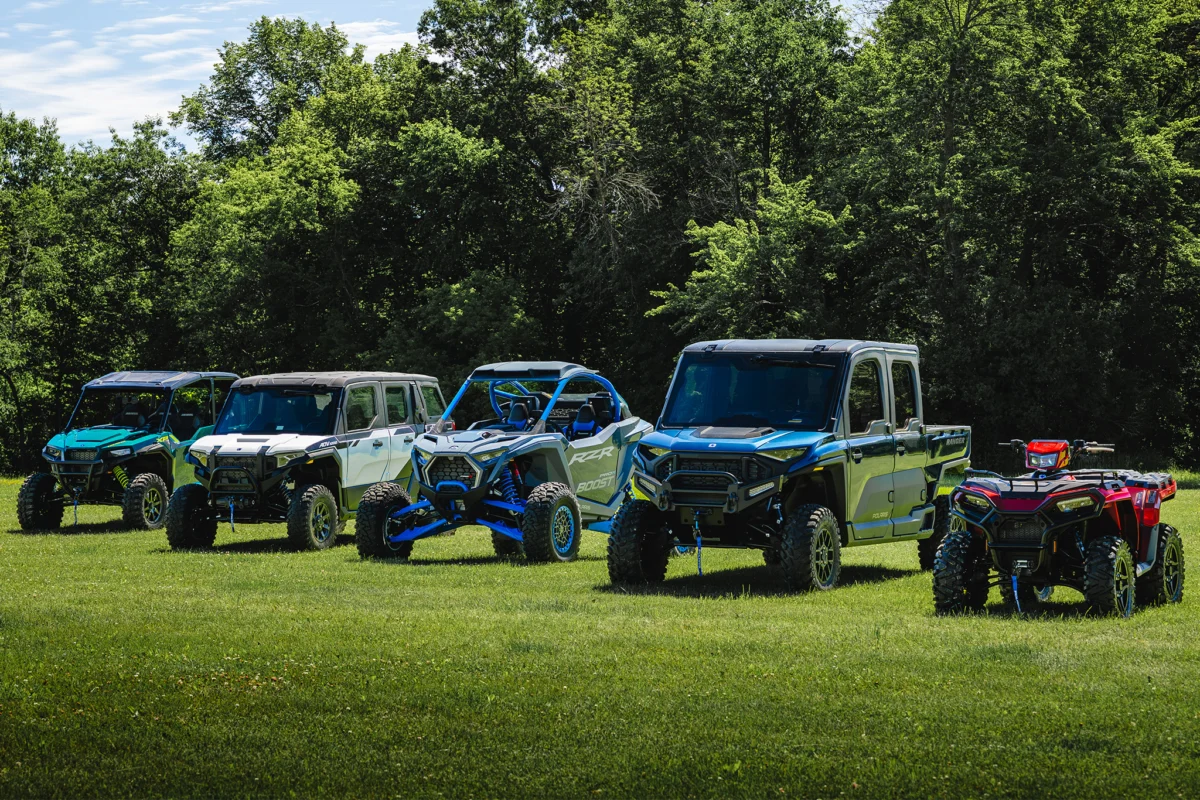
The performance side-by-side (SxS) industry is currently undergoing a transformation reminiscent of the golden age of muscle cars. Much like the Detroit "horsepower wars" of the 1960s, manufacturers are locked in a relentless arms race to deliver more torque, higher speeds, and more aggressive capability to off-road enthusiasts. Polaris, a perennial leader in the powersports sector, has officially reclaimed the throne with the introduction of the RZR Pro R Boost.
By bolting a high-performance turbocharger to its already formidable 2.0-liter four-cylinder engine, Polaris has pushed the ceiling of factory-produced UTV power to a staggering 275 horsepower. This isn’t just an incremental update; it is a declaration of dominance in a market that has seen intense pressure from competitors like Can-Am and Kawasaki.
The Core Specs: A New Benchmark for Off-Road Power
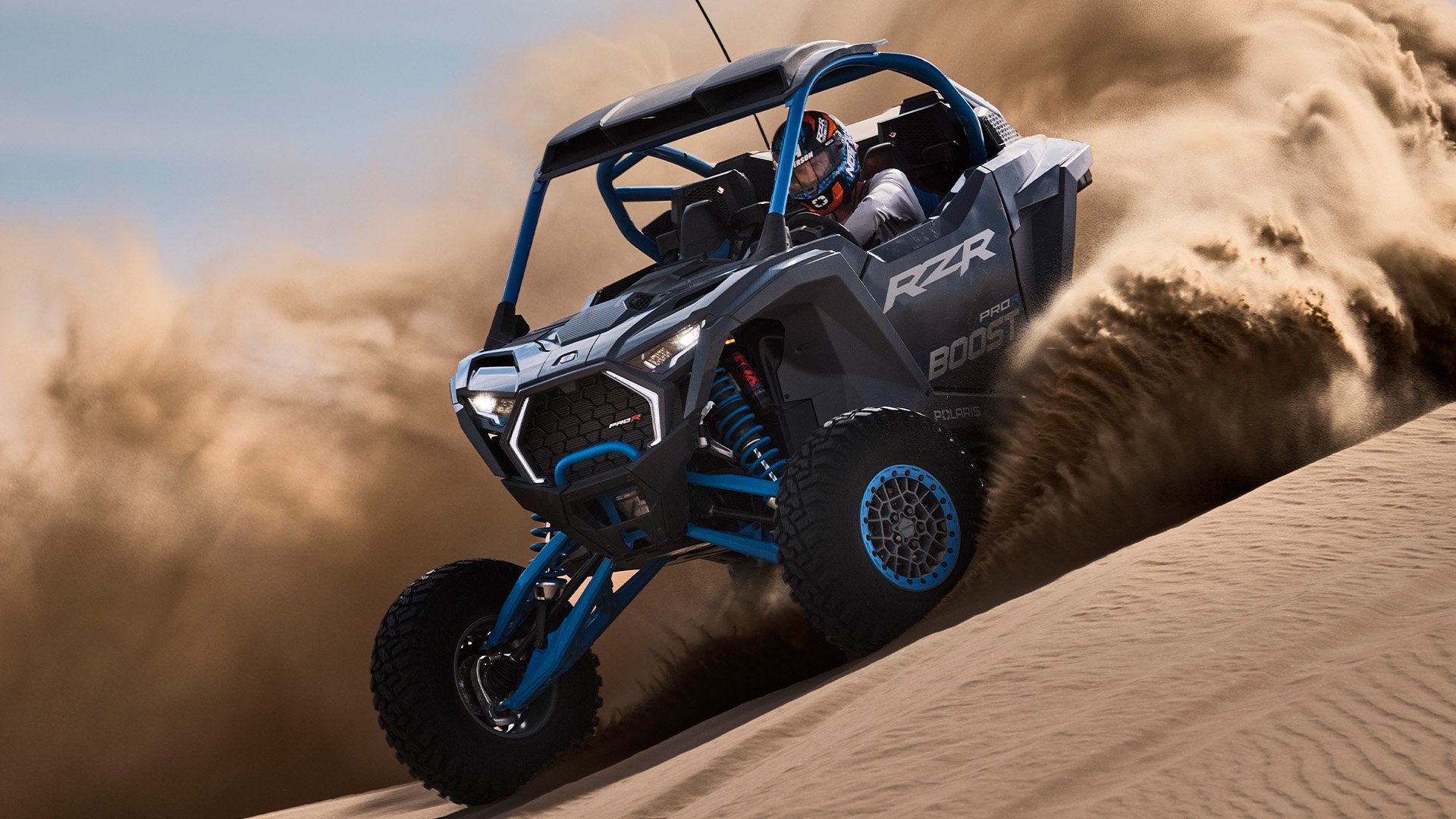
At the heart of the RZR Pro R Boost lies the same architecture that powered the acclaimed RZR Pro R, but with significant internal and external reinforcements to handle the massive forced-induction gains. The naturally aspirated variant of this engine was already an industry leader, but the addition of a 60-millimeter Garrett turbocharger transforms the driving experience entirely.
The engine now produces a factory-rated 275 horsepower at 7,000 rpm and 223 lb-ft of torque at 6,000 rpm. Perhaps more impressive than the raw peak numbers is the engineering philosophy behind the power delivery. Polaris has designed this system to maintain peak output even in extreme conditions, specifically promising consistent performance in ambient temperatures as high as 115 degrees Fahrenheit. Furthermore, the turbo is engineered to maintain peak boost and power delivery up to 10,000 feet in elevation—a critical feature for riders navigating the thin air of mountain passes and high-altitude desert trails.
While the top speed remains electronically capped at 92 mph—a decision likely driven by tire safety ratings and chassis dynamics—the acceleration curve is substantially sharpened. The RZR Pro R Boost is designed to reach that top speed with a level of urgency that makes its predecessors feel docile by comparison.
A Chronology of the Horsepower War
To understand the magnitude of the RZR Pro R Boost, one must look at the recent evolution of the high-performance UTV category.
- 2021-2022: Polaris sets the industry standard with the original RZR Pro R, utilizing a massive 2.0-liter naturally aspirated engine that produced 225 horsepower. At the time, it was the most powerful engine ever placed in a stock side-by-side.
- 2023: The market sees a shift as competitors begin to catch up. Can-Am releases the Maverick R, a groundbreaking machine boasting 240 horsepower and a high-tech dual-clutch transmission, challenging the RZR’s long-standing dominance.
- 2024: Kawasaki enters the fray with the Teryx H2, utilizing a supercharged engine derived from their legendary Ninja streetbike lineage to produce 250 horsepower.
- Late 2026: Polaris responds to the competitive pressure by unveiling the RZR Pro R Boost. By moving to forced induction, they have not only leapfrogged the competition but have pushed the category into a new performance tier that was previously reserved for heavily modified, aftermarket-built racing machines.
Drivetrain Reinforcements: Cooling and Durability
Adding 50 horsepower to an already powerful platform is a recipe for mechanical failure if the surrounding components are not upgraded. Recognizing this, Polaris engineers focused heavily on the "thermal management" of the vehicle.
The most significant change is the introduction of a dual-radiator cooling system. This setup ensures that the engine, the transmission, and the turbocharger assembly each have dedicated cooling pathways, preventing the heat soak that typically plagues high-performance forced-induction vehicles in desert environments.
The transmission, specifically the Constant Velocity Transmission (CVT) system, has also undergone a complete redesign. The "high-capacity" clutching system features improved airflow through the clutch cover and larger cooling fins on the sheaves. These design choices are intended to combat the "belt-melt" syndrome that has historically been the Achilles’ heel of high-horsepower UTVs. By keeping the belt within its optimal operating temperature range, Polaris expects to significantly extend the service intervals and overall lifespan of the drivetrain.
Beyond cooling, the driveline has been beefed up to handle the increased rotational force. The half-shafts have been reinforced to resist snapping under the stress of high-torque launches, and the front differential—a point of contention for some owners of earlier, less-powerful RZR models—has been completely overhauled for maximum structural integrity.
Suspension and Handling: The Dynamix Advantage
Power is meaningless without the ability to put it to the ground, and here, the RZR Pro R Boost relies on the sophisticated Dynamix suspension platform. On the "Ultimate" and "Ultra" trims, the vehicle features active suspension technology that adjusts damping settings up to 200 times per second based on vehicle inputs such as steering angle, throttle position, and brake pressure.
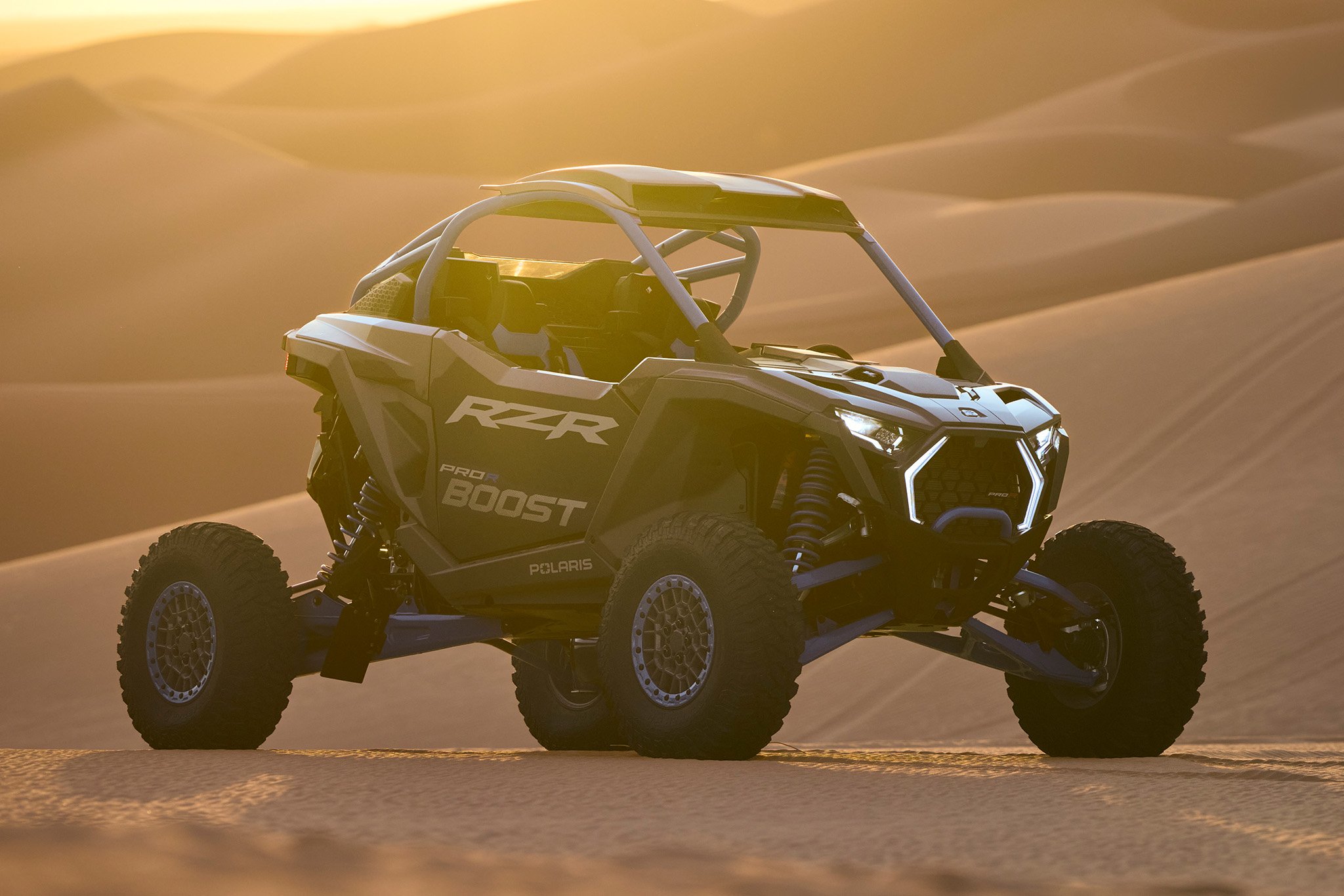
The "Ultra" model, in particular, showcases the pinnacle of Polaris technology, featuring hydraulic active sway bar links. These links allow the suspension to disconnect or stiffen in real-time, providing the vehicle with the unique ability to stay flat through high-speed corners while maintaining maximum articulation when crawling over rocks. Complementing this is a lightweight carbon fiber hood and seat bezel package, which helps keep the center of gravity low, and 32-inch BF Goodrich tires designed specifically to handle the increased speed and torque of the Boost model.
Official Stance and Market Implications
In a statement regarding the release, Polaris representatives emphasized that the RZR Pro R Boost was built for the customer who refuses to compromise. "Our users are taking these machines into the most brutal environments on the planet," the company noted. "Whether it’s the dunes of Glamis or the high-altitude trails of the Rockies, the Boost provides a level of confidence and capability that simply didn’t exist in a factory-stock package until today."
The implications for the industry are profound. With the Pro R Boost starting at $49,999 and reaching $56,999 for the top-tier four-door Ultra model, the side-by-side industry is officially entering luxury-vehicle pricing territory. This price point signals a shift in the demographic of the UTV buyer; these machines are no longer just "farm tools" or "entry-level toys," but high-performance status symbols that offer a driving experience comparable to entry-level exotic sports cars.
What This Means for Future Off-Roading
The release of the RZR Pro R Boost poses a challenge for the rest of the industry. As manufacturers continue to chase the 300-horsepower mark, we can expect to see further innovations in transmission technology—likely a move away from traditional CVTs toward dual-clutch or sequential gearboxes—and a continued focus on active chassis control.
For the consumer, this is a golden age. The competition has forced rapid technological advancement, resulting in machines that are faster, more durable, and more technologically advanced than ever before. While the price tag is undeniably high, the sheer amount of engineering, reinforced components, and active safety technology packed into the Pro R Boost justifies the premium for the most dedicated off-road enthusiasts.
As we look toward the future, the question remains: how much power is enough? With the RZR Pro R Boost, Polaris has set a new high-water mark. For now, they hold the crown, but if history is any indication, the rest of the industry is already back at the drawing board, looking for the next way to push the limits of what a side-by-side can achieve.
