




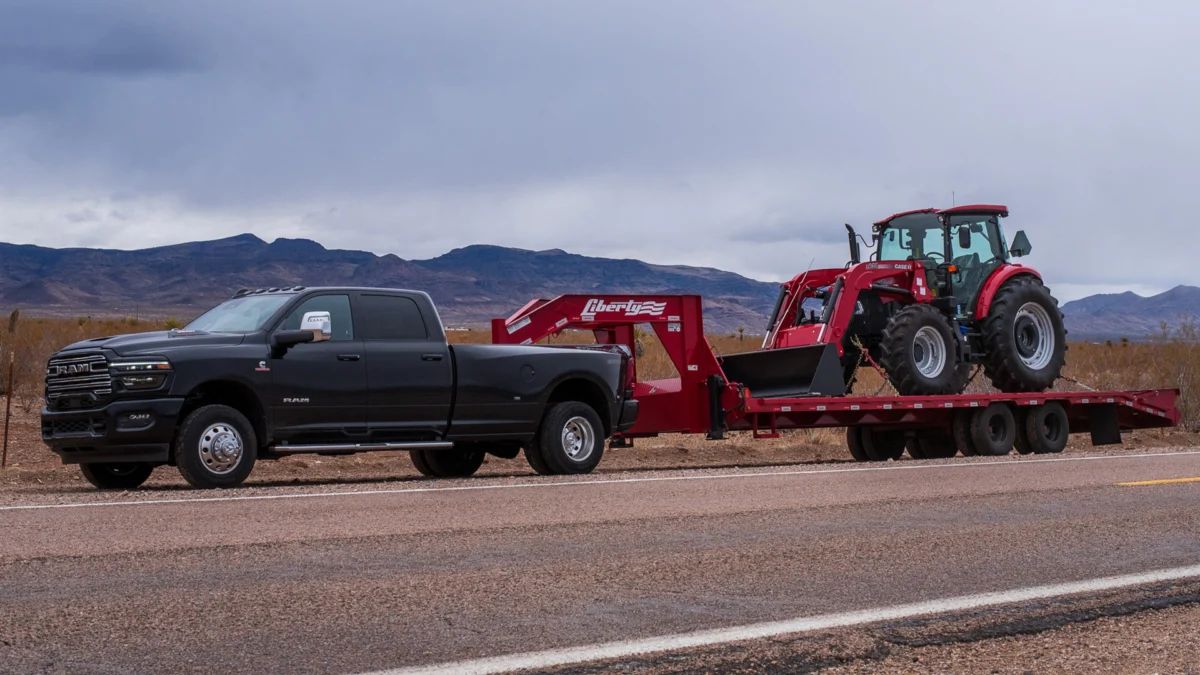
For those who operate heavy machinery—whether it’s a vintage dump truck hauling tons of aggregate or a modern Kubota tractor maintaining a sprawling orchard—the constant hum of a diesel engine is the soundtrack of progress. However, for farmers in California’s Merced and Madera counties, that rhythm was recently interrupted by a brazen string of thefts that targeted the very lifeblood of their operations: dyed agricultural diesel.
Following a two-month investigation by the Merced County Sheriff’s Office, authorities have apprehended a 55-year-old local suspect connected to the theft of approximately 500 gallons of fuel. While the volume of stolen goods might seem modest in the context of global energy markets, the impact on local agricultural operations has been profound, highlighting a growing vulnerability in rural communities where the margins for error are razor-thin.
The Anatomy of the Crime: A Logistical Challenge
Stealing 500 gallons of diesel is not a crime of opportunity; it is a crime of intent. Unlike lifting a tool from a truck bed or siphoning a few gallons from a passenger vehicle, the theft of half a thousand gallons requires significant logistical planning.
Law enforcement officials have yet to confirm whether the suspect acted in isolation or as part of a broader, organized operation. However, the sheer logistics of the theft raise questions about the perpetrator’s equipment. To move 500 gallons, a thief would need specialized pumps, heavy-duty hoses, and, most importantly, a clandestine storage solution. If the fuel was transported in the standard five-gallon jerry cans found in a garage, the thief would have needed to make 100 trips—a process that would have been time-consuming, loud, and incredibly risky. It is highly probable that the suspect utilized a dedicated transfer tank, likely mounted in the bed of a pickup truck, allowing for rapid extraction from farm storage tanks under the cover of darkness.
The Significance of "Red Diesel"
The fuel stolen from these farms was not the standard diesel found at a retail gas station. It was "off-road" or agricultural diesel, identifiable by a red dye mandated by the federal government.
In the United States, diesel fuel is taxed heavily for use on public highways to fund infrastructure projects. However, farm equipment, which rarely travels on public roads, is exempt from these excise taxes. The red dye serves as a regulatory marker; if a vehicle is pulled over and found to have red-dyed fuel in its tank, the owner faces significant fines.
By targeting agricultural diesel, the thief was stealing a product that is roughly 70 to 90 cents cheaper per gallon than on-road diesel. With diesel prices in the Madera County region hovering around $6.73 per gallon for retail, the stolen farm diesel carried a street value of approximately $3,000. While $3,000 might not trigger a major federal investigation, for a local farmer, it represents more than just a financial loss—it represents a disruption of the planting or harvest cycle.
Chronology of the Investigation
The apprehension of the suspect was the culmination of an intensive 60-day investigation. The timeline of events, as pieced together by the Merced County Sheriff’s Office, unfolded as follows:
- Initial Reports: Over the course of several weeks, multiple farmers in the Merced and Madera county regions reported "shortfalls" in their storage tanks. Initially, some attributed the losses to evaporation or leaks in aging equipment.
- Pattern Recognition: As reports grew more frequent, local law enforcement began to coordinate, recognizing a geographical pattern that pointed toward a recurring perpetrator.
- Surveillance and Intel: Using a combination of community tips and local patrol monitoring, detectives began focusing on suspicious vehicles observed near rural fuel depots at irregular hours.
- The Arrest: After gathering sufficient evidence, including physical surveillance and potential witness statements, the Sheriff’s Office moved to execute an arrest of the 55-year-old suspect.
- Ongoing Proceedings: As of this week, the investigation remains open. Authorities are currently exploring whether the suspect is connected to other similar thefts in neighboring jurisdictions, suggesting that this arrest may be the tip of the iceberg in a larger rural crime wave.
The Economic Implications for Small-Scale Agriculture
To understand why this crime is particularly egregious, one must understand the economic reality of the modern American farm. Many of the operations targeted in these thefts are "mom-and-pop" enterprises. Unlike industrial-scale corporate farms that benefit from massive economies of scale and sophisticated security infrastructure, small-scale farmers often operate on razor-thin margins.
When a farmer loses 500 gallons of fuel, the cost is two-fold. First, there is the direct financial loss of the fuel itself. Second, and perhaps more importantly, there is the "opportunity cost" of downtime. During critical windows such as planting or harvesting, a tractor that sits idle because its tank is empty can lead to thousands of dollars in lost crop yield.
In California, where the cost of doing business is among the highest in the nation—due to labor regulations, water costs, and land taxes—theft acts as a tax on efficiency. When a thief steals diesel, they are not just taking a commodity; they are stealing the productivity of the land.
Official Responses and Security Measures
The Merced County Sheriff’s Office released a stern statement following the arrest, emphasizing the broader consequences of such crimes. "Agricultural fuel thefts have a direct financial impact on local farmers and can disrupt critical farming operations," the statement noted. "This investigation remains ongoing, and additional charges or arrests may follow."
In response to the thefts, local agricultural associations have begun advising farmers to adopt more robust security measures. These include:
- Motion-Activated Lighting: The most basic deterrent for rural areas where electricity is available.
- Remote Monitoring Systems: Modern tank-level sensors can now send alerts to a smartphone if the level in a fuel tank drops unexpectedly during non-operational hours.
- Locking Mechanisms: High-security, tamper-resistant locks on all tank valves and fill caps.
- Community Vigilance: Farmers are being encouraged to share information about suspicious vehicles via "Rural Watch" programs, a tactic that has proven successful in reducing livestock and equipment theft in other parts of the country.
Conclusion: A Broader Trend
While the arrest in Merced County provides a measure of justice for the affected farmers, it serves as a sobering reminder of the challenges facing the agricultural sector. As energy costs fluctuate and economic pressures mount, rural assets are increasingly becoming targets for theft.
The story of these 500 gallons is a microcosm of the risks inherent in modern farming. It is a sector that relies on trust, remote geography, and high-value equipment—a combination that, unfortunately, invites bad actors. As the investigation continues, the local community remains on high alert, serving as a reminder that in the agricultural heartland, the security of a fuel tank is as vital as the security of the crop itself. For now, the farmers of Merced and Madera can breathe a slight sigh of relief, knowing that the specific threat has been neutralized, but the broader call for vigilance remains in full effect.
